The Radio Guest
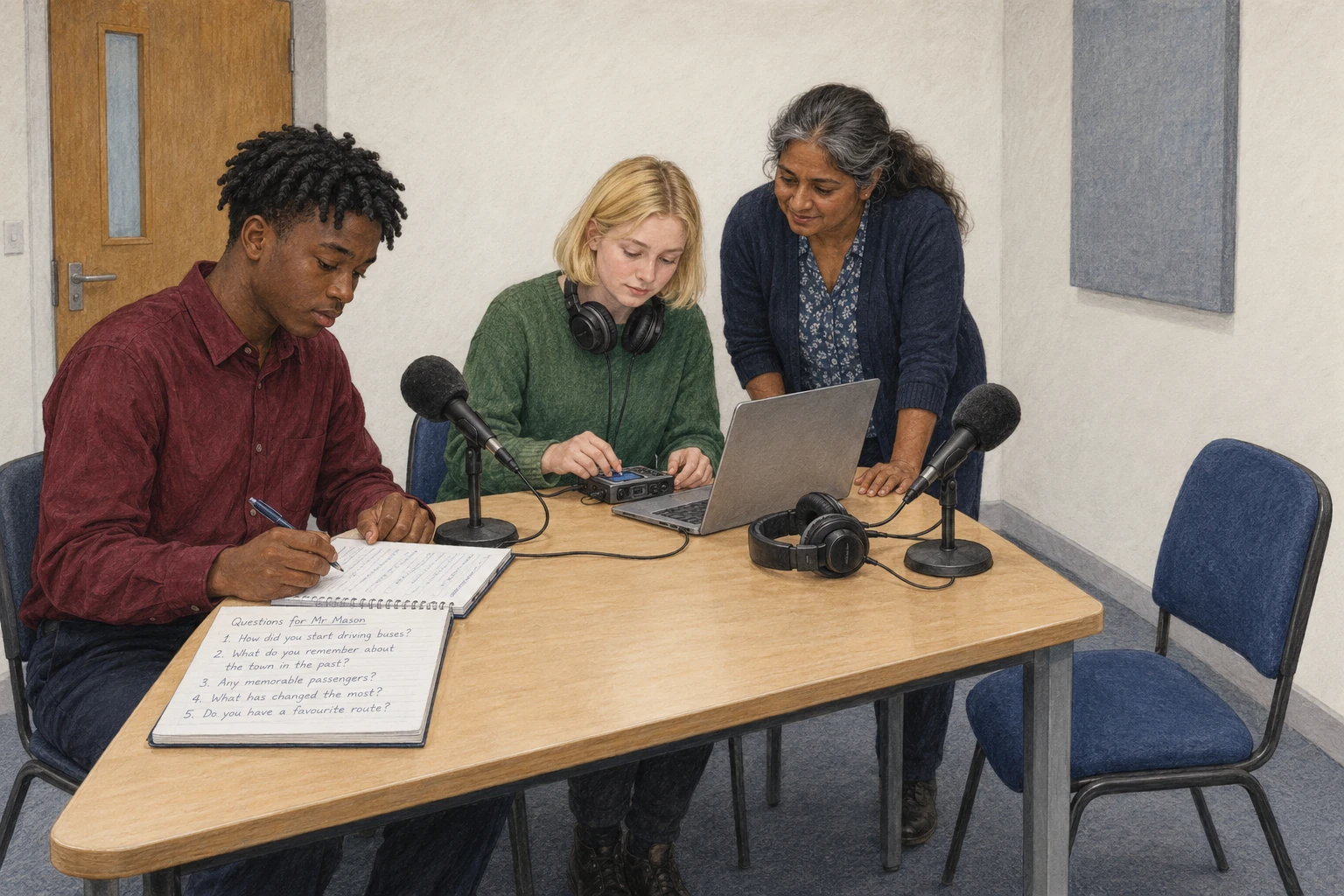
School Readers · Level 19Benjamin has prepared twelve questions for the school audio project. Their guest, Mr Mason, drove buses in the town for many years, and Benjamin wants to ask about every part of the job. Eleanor checks the recorder while Mrs Scott sets out two microphones. The guest chair is still empty. Benjamin reads the opening line again, imagining a smooth interview in which each answer leads neatly to the next question on his list.

When Mr Mason arrives, they welcome him and explain that the recording is for a school project. Mrs Scott checks that he is happy with the plan before they begin. Benjamin asks his first question about an ordinary working day. Mr Mason starts describing a winter morning when a passenger left a handmade birthday card on the bus. It is not one of the stories Benjamin expected to hear.
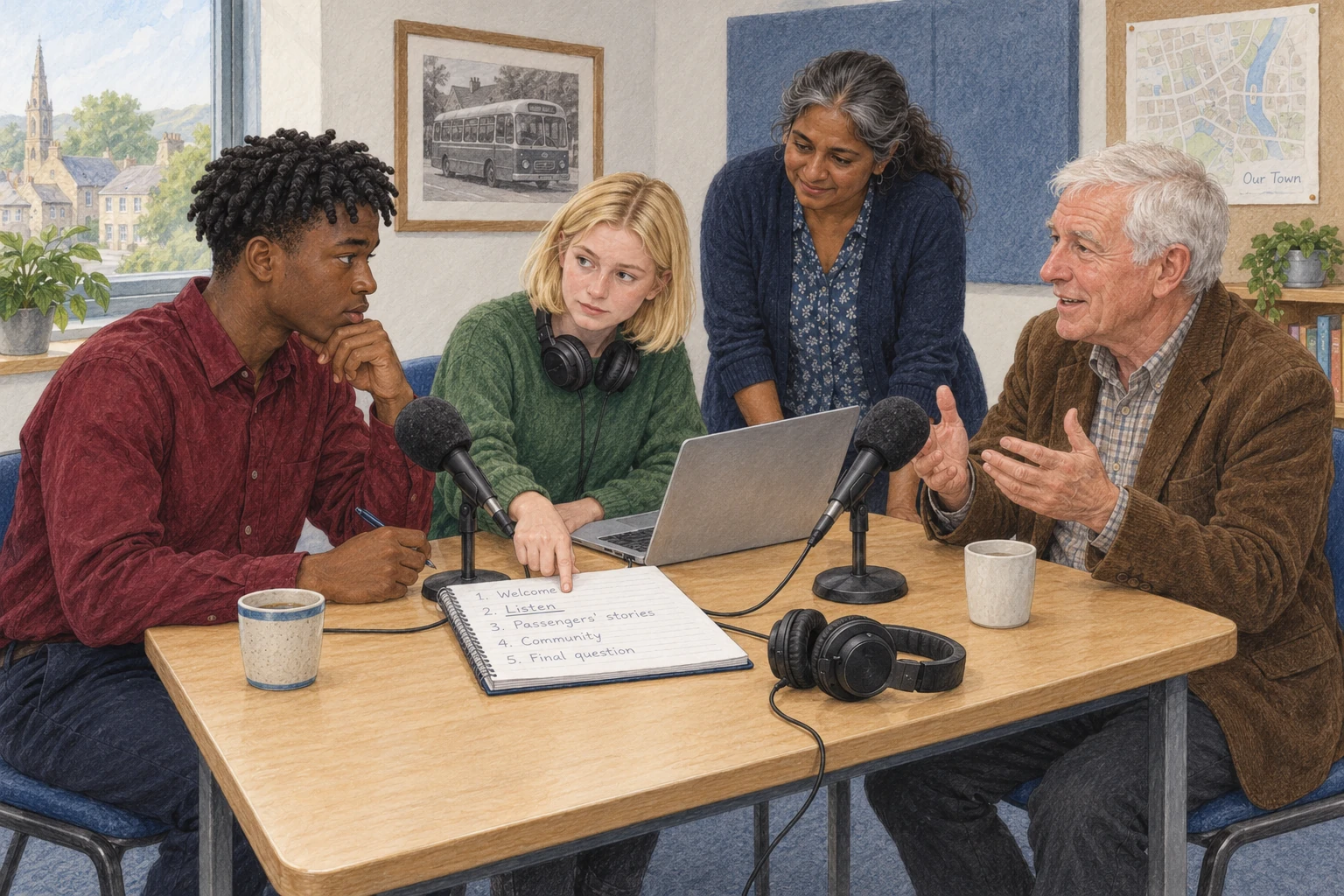
He nearly moves straight to his second question about bus engines. Eleanor catches his eye and points quietly to the word listen on their planning sheet. Benjamin waits. Mr Mason explains that the card was for a grandchild and had taken the passenger a long time to make. The driver kept it safely until the passenger returned to ask about it. The answer has become a story about people rather than vehicles.
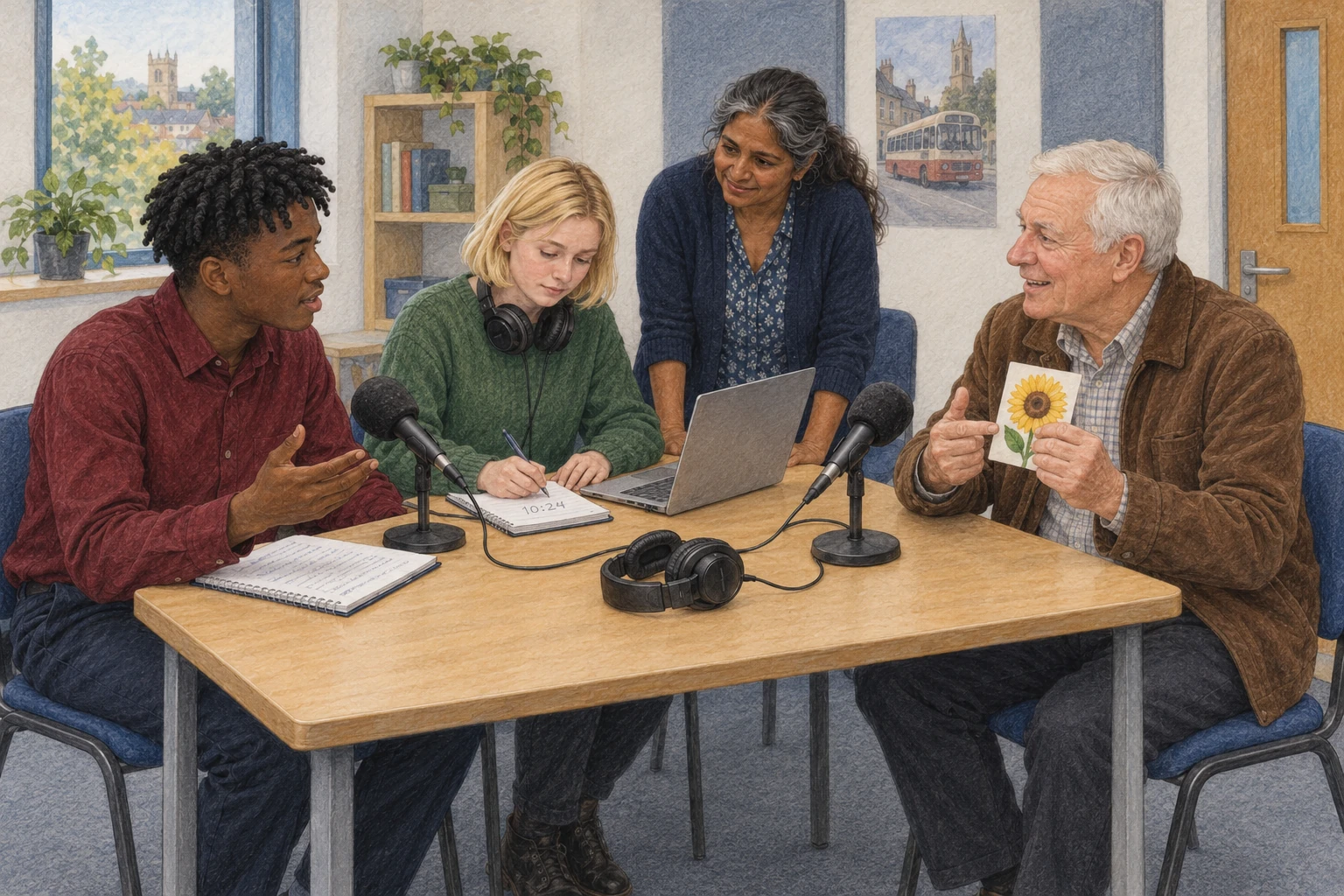
Benjamin asks what helped Mr Mason remember the card. The guest smiles and describes the large painted sunflower on its front. “You have asked me something I had not thought about for years,” he says. Eleanor notes the time on their recording sheet so they can find this part later. Benjamin leaves the engine question for now and follows the story with another short question instead of pulling it back towards his original order.
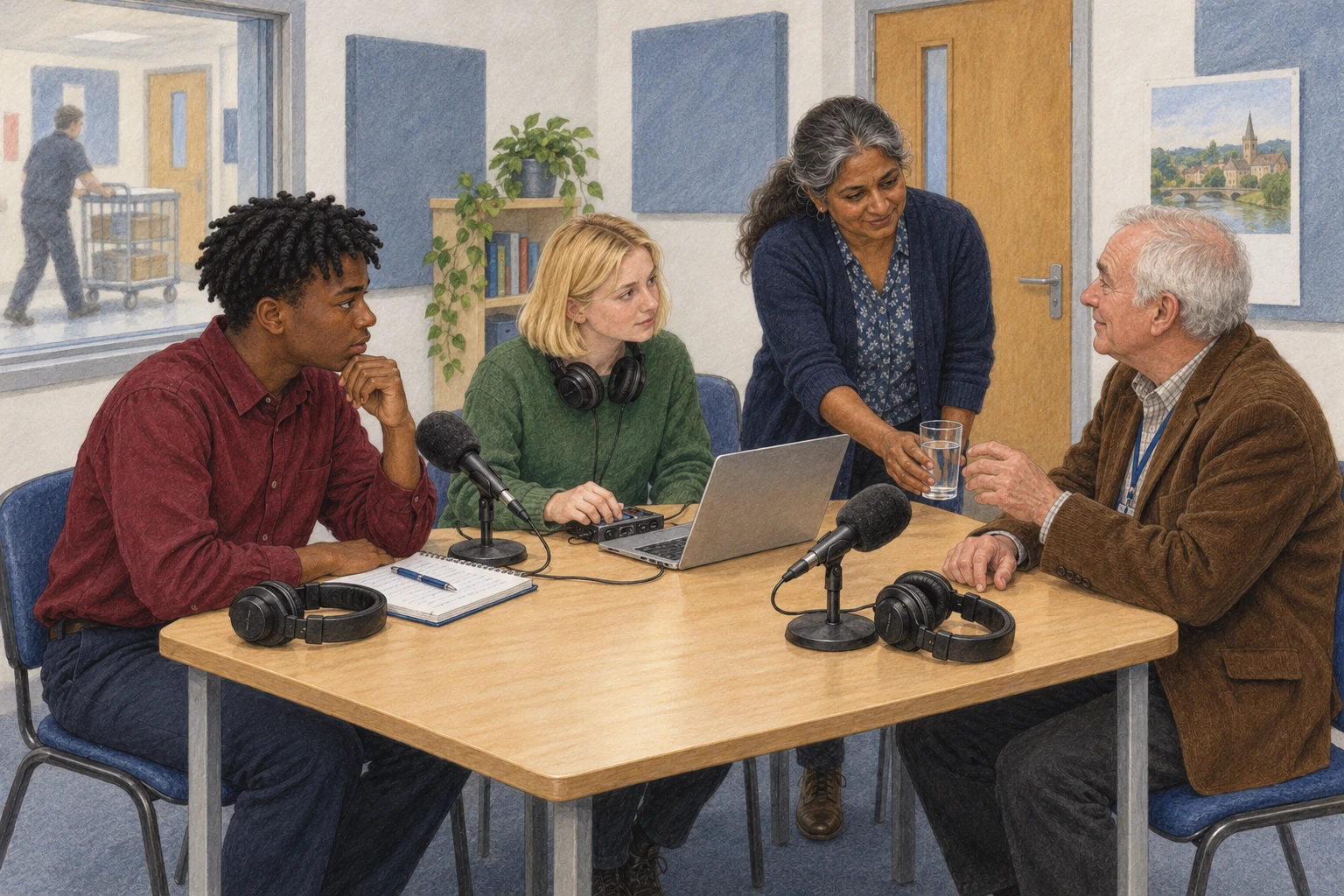
Halfway through, a delivery trolley rattles past the room. The sound covers part of Mr Mason’s answer. Benjamin worries that asking him to repeat it will seem rude. Mrs Scott shows their agreed pause signal, and Eleanor stops the recorder. They explain the noise, ask whether he would like a break and check how he wants to continue. Mr Mason is happy to repeat the short part after a drink of water.
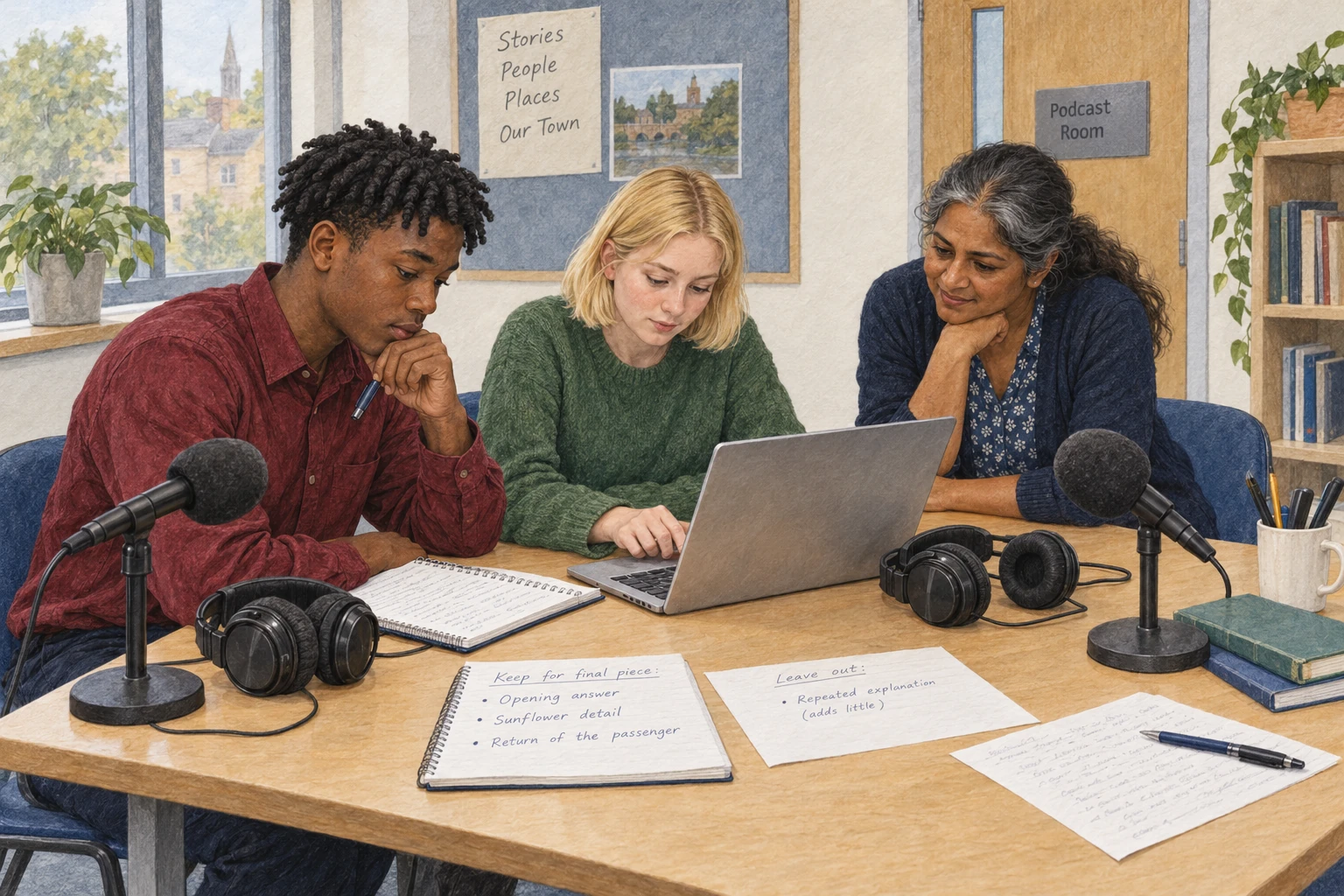
After the guest leaves, the students listen to the interview together. There is more material than they can use in their short school piece. Benjamin wants to include every question because he worked hard to prepare them. Eleanor asks what a listener needs to follow the card story. They choose the opening answer, the sunflower detail and the return of the passenger, leaving out a repeated explanation that adds little to the sequence.
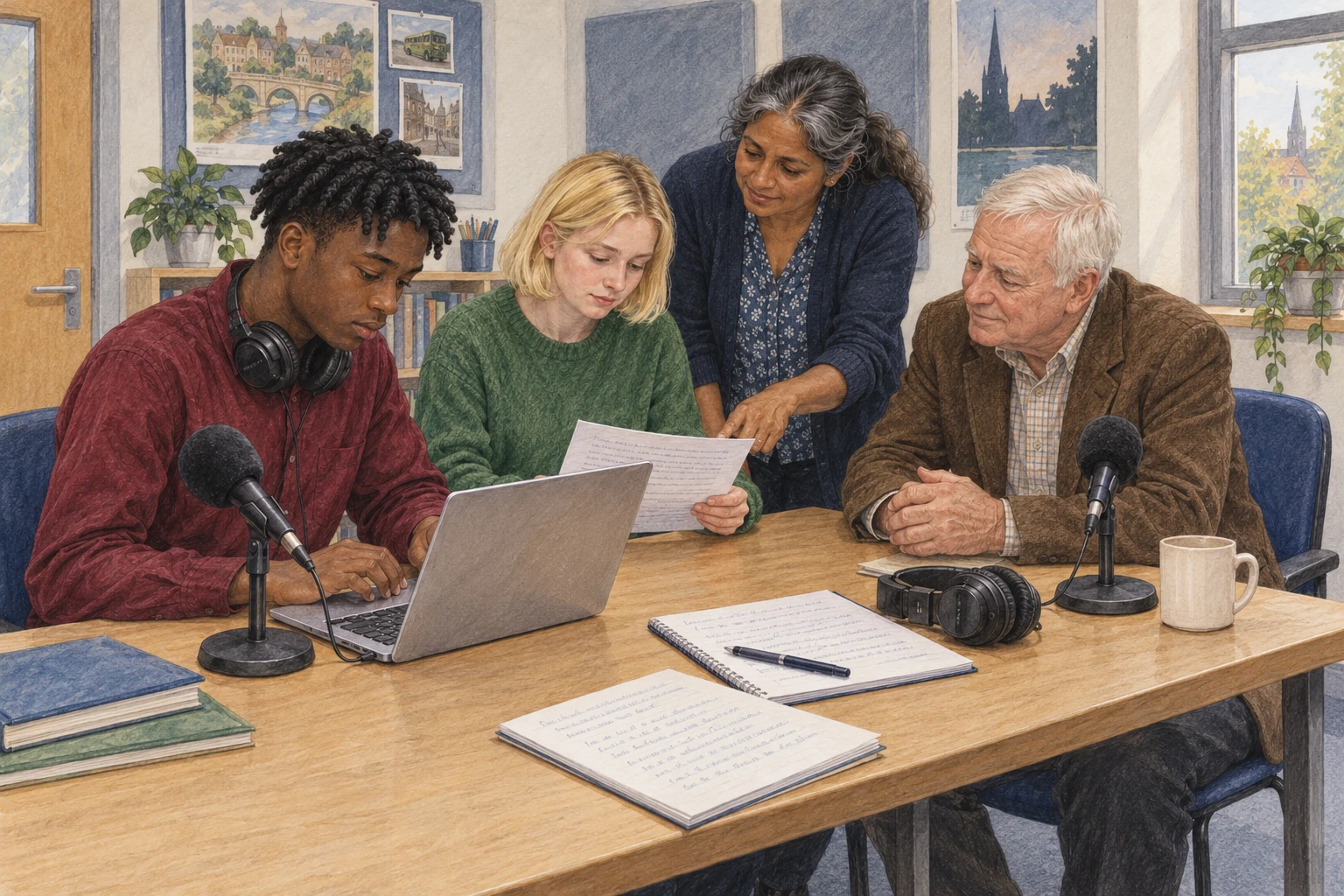
They keep Mr Mason’s meaning intact while preparing the excerpt with Mrs Scott. Before sharing it through the school, she arranges for him to hear the chosen part and its introduction. He corrects one detail: the passenger returned the following morning, not later on the same day. Benjamin checks the original recording, then changes the introduction so the timeline agrees with what their guest actually said.
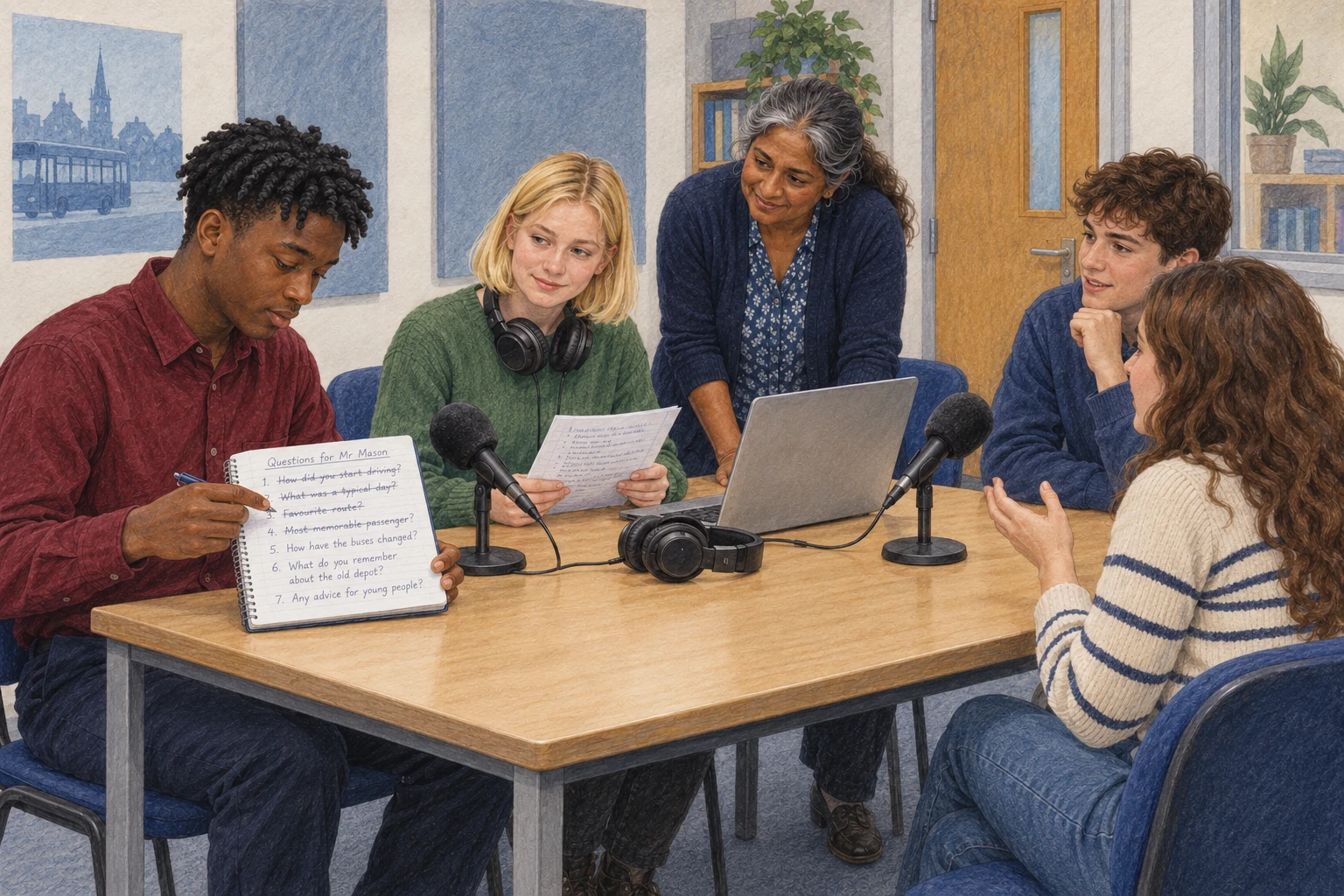
At the class listening session, students ask about the birthday card rather than the engines. One person remembers losing something on a bus and another talks about a card kept at home. Benjamin looks at the unused questions in his notebook. They helped him prepare, but the most interesting question was the one he thought of while listening to an answer he could not have planned in advance.
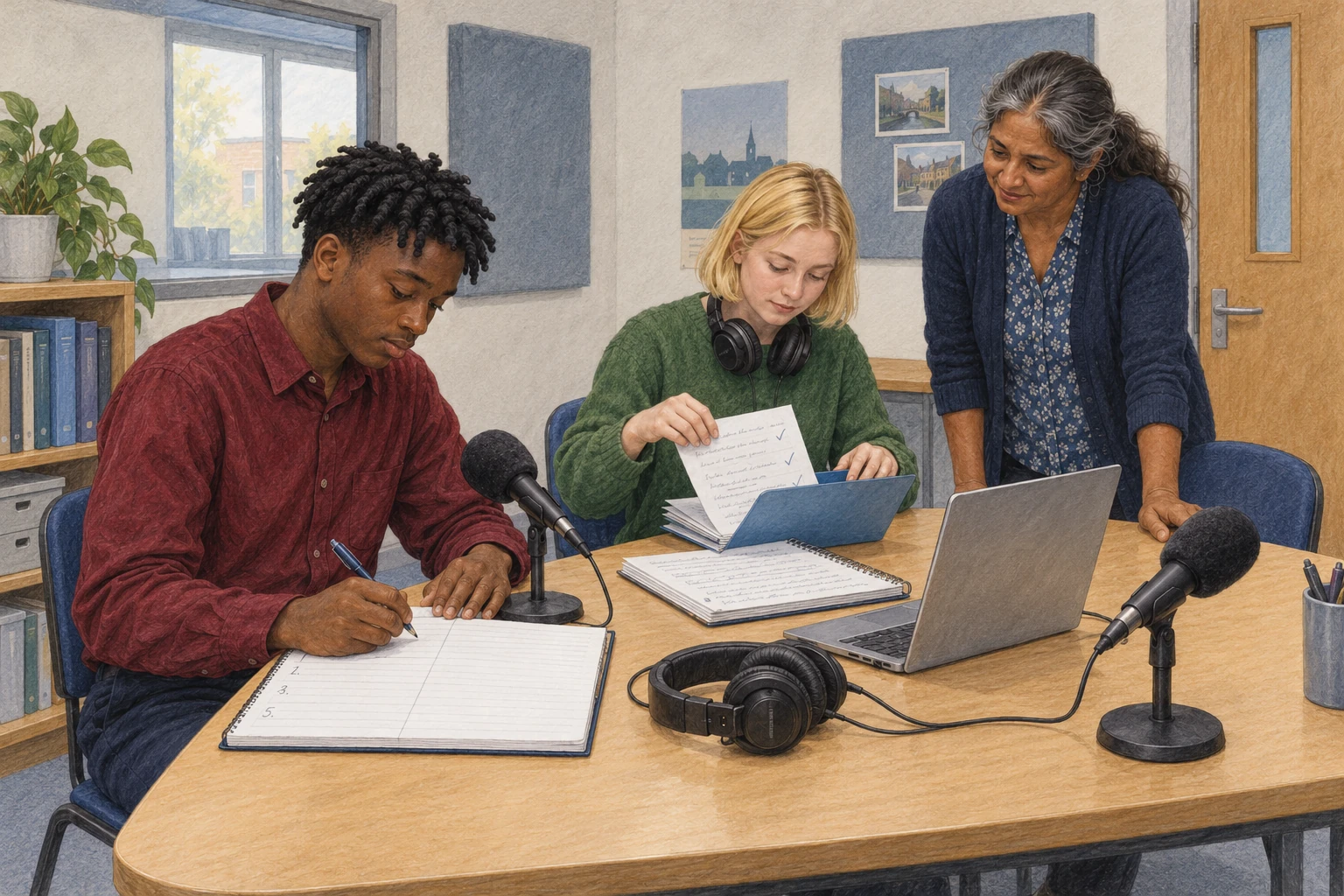
Eleanor files the checked excerpt beside the original recording notes. Benjamin keeps his list, adding a wide empty margin for the next guest. The blank space is deliberate. He still wants to arrive ready to ask good questions, but he no longer expects a conversation to behave like a row of boxes waiting to be filled. Sometimes the next useful question begins in the answer someone has already chosen to give.