The River Survey
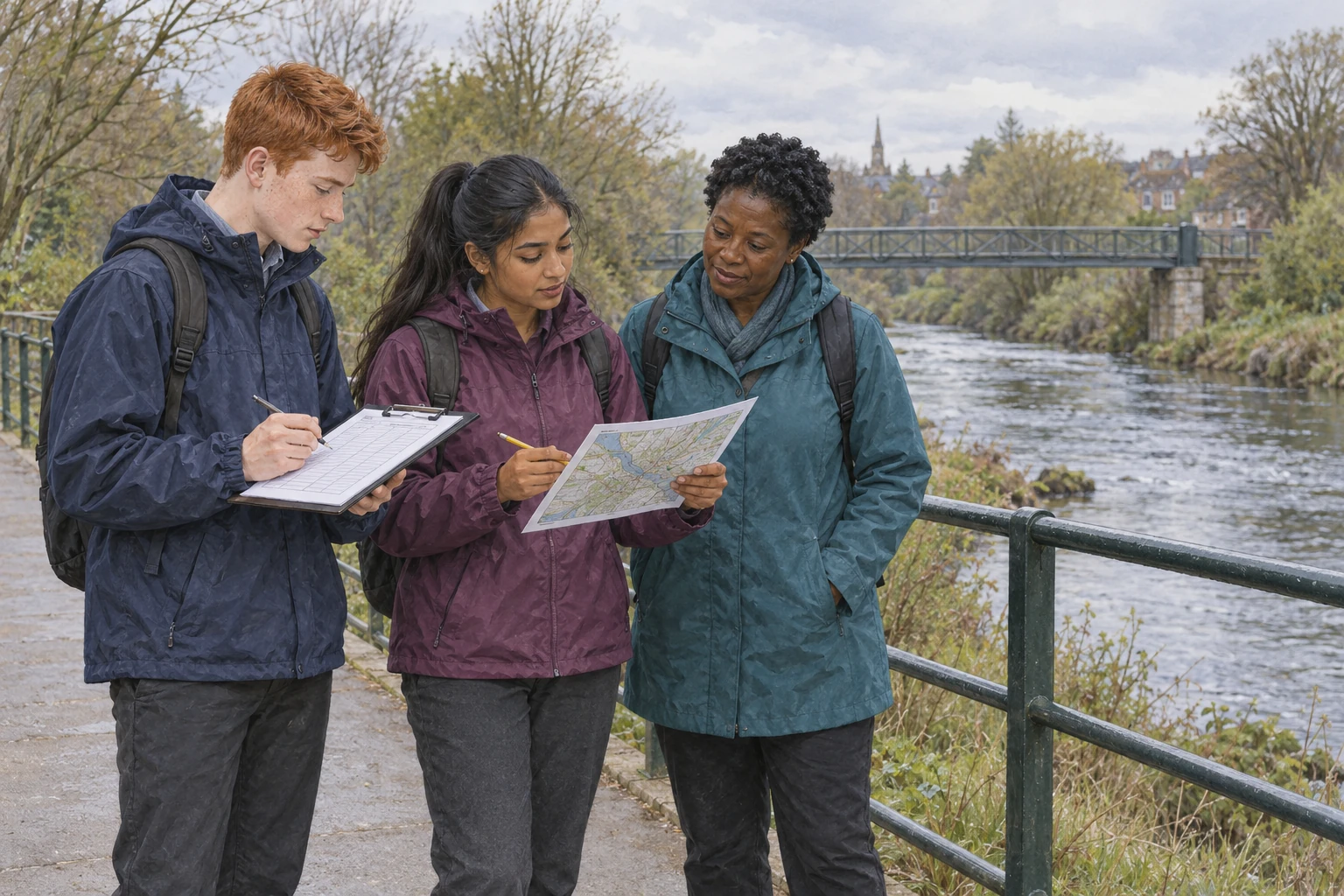
School Readers · Level 18Nathan and Jessica are helping their geography class survey litter beside the local river. Ms Brooks has divided a stretch of the public path into short sections so every group can count in the same way. Nathan carries the record sheet, and Jessica checks the map. They will stay on the dry path behind the railing, observing what they can see without entering the water.
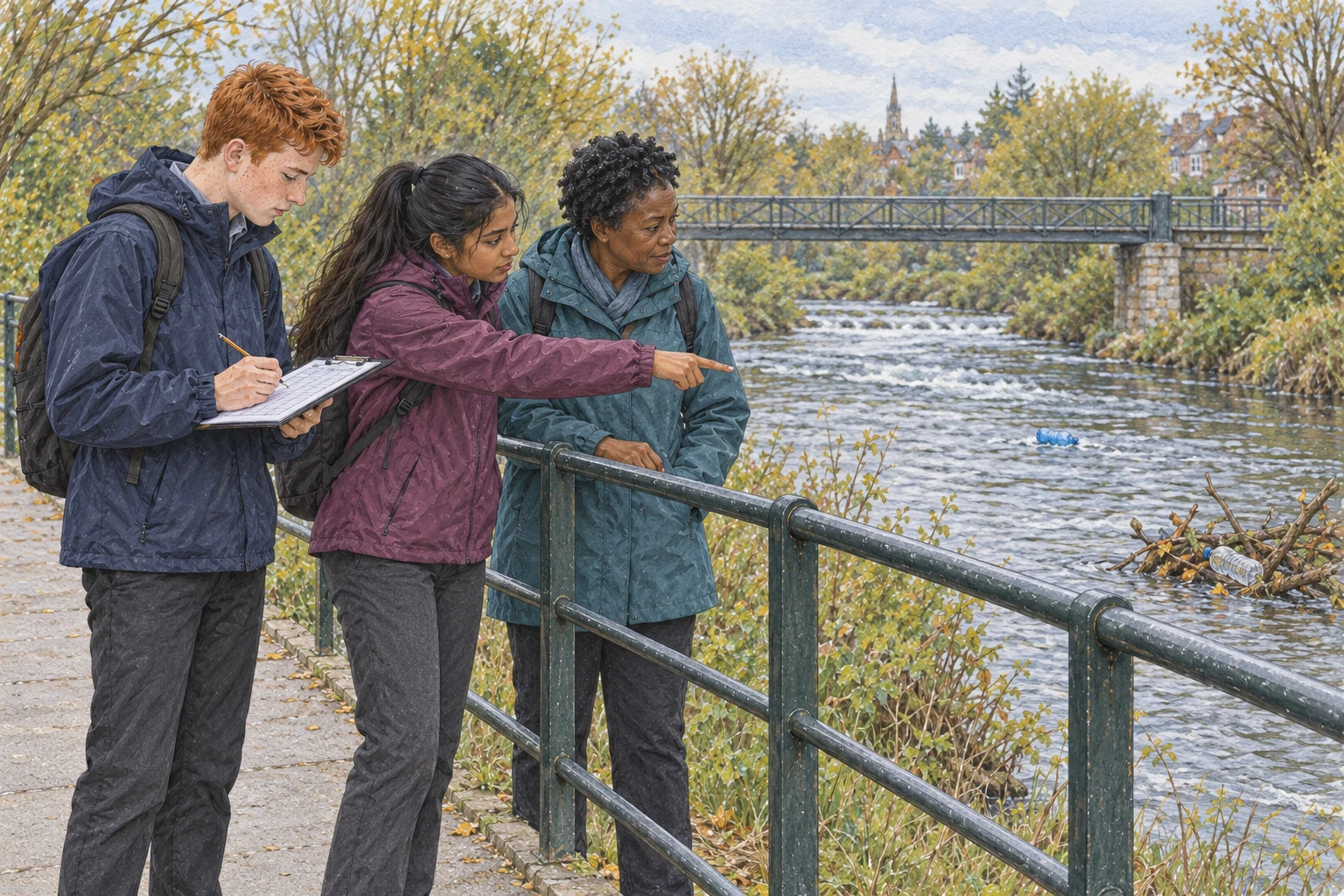
At the first section, Nathan spots a plastic bottle caught beside a branch. He marks one bottle on the sheet. Farther along, Jessica points to a pale shape turning in the current. Nathan is ready to add another mark, but the shape slips beneath the footbridge before they can see it clearly. It could be plastic, or it could be a light-coloured leaf.
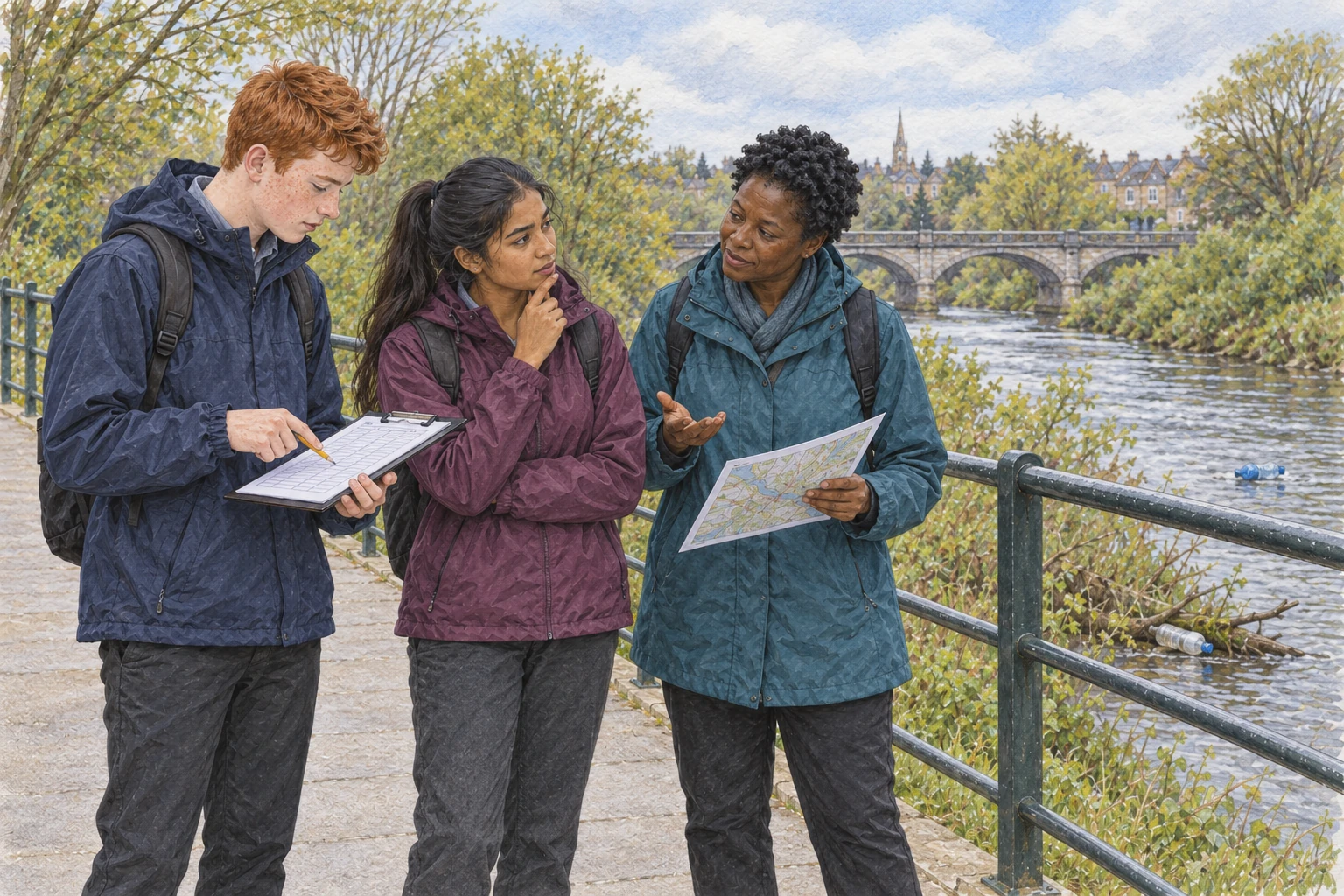
“We should count it just in case,” Nathan says. Jessica is not sure. Their sheet asks them to record the kind of litter, not every object moving past. Ms Brooks listens to both ideas, then asks what another group would need to know to understand their result. Nathan looks at the tiny box where he was about to write a certain number.
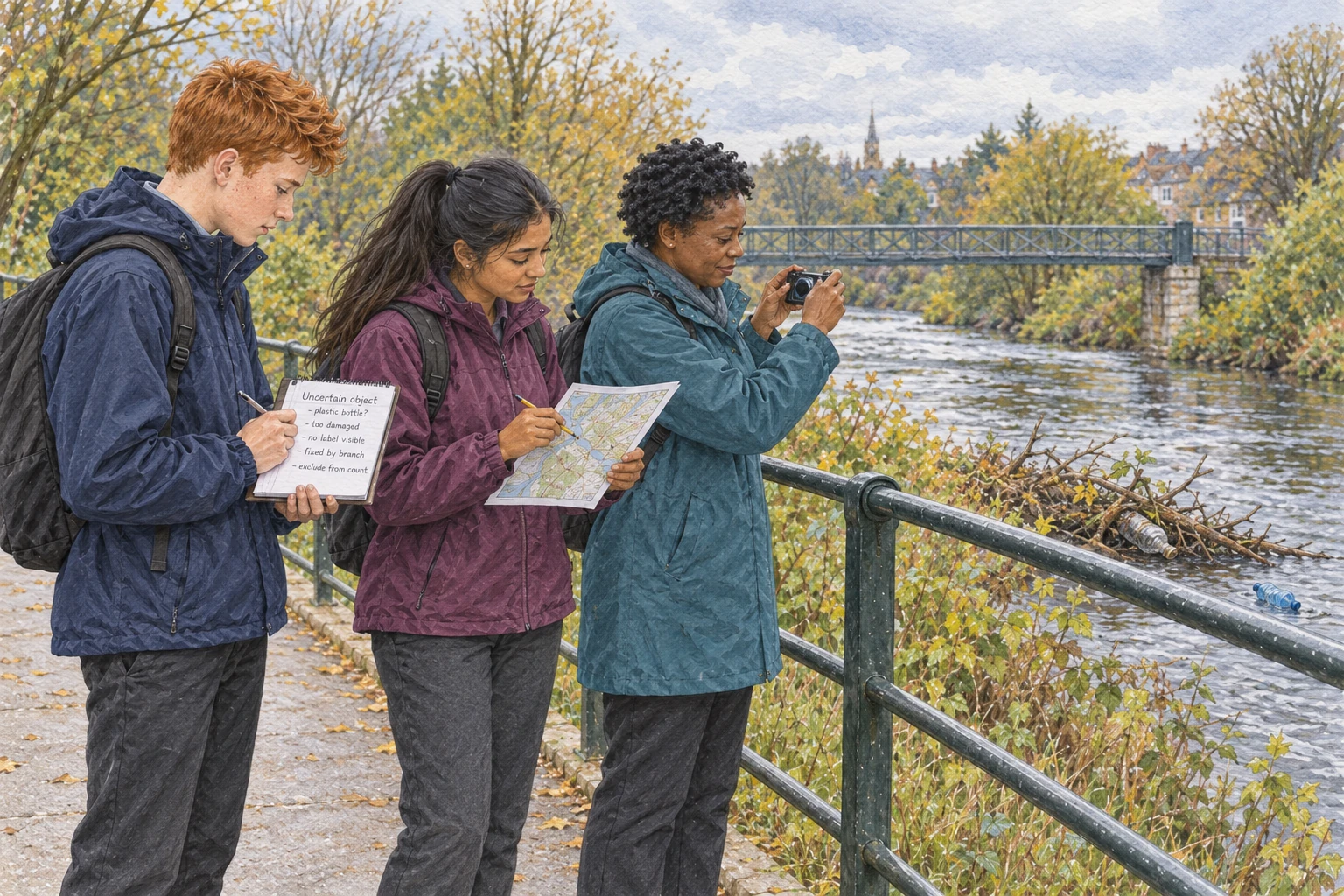
They add a separate note describing the uncertain object. Jessica marks the place on their map, and Nathan records what they could and could not identify. They leave it out of the confirmed bottle count. From the path, they also photograph the bottle beside the branch so the class can discuss the fixed object without anyone trying to reach over the railing.
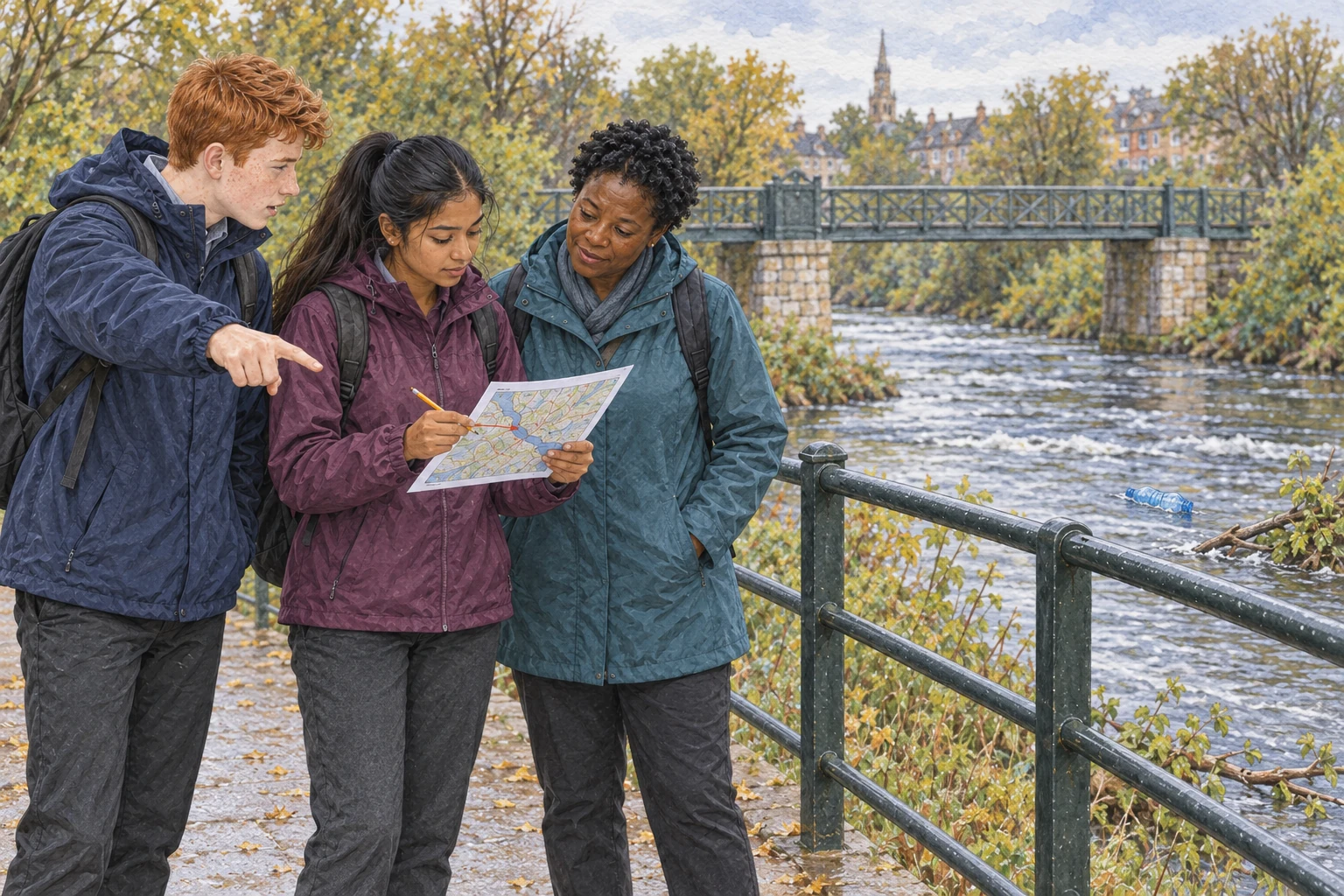
At the next section, the current carries another bottle past them. A few minutes later, the same crushed blue shape appears beyond the bridge. Nathan recognises its folded middle. If they count it in both sections, their result may suggest two bottles when they have seen only one. Jessica adds an arrow to the map showing where it moved.
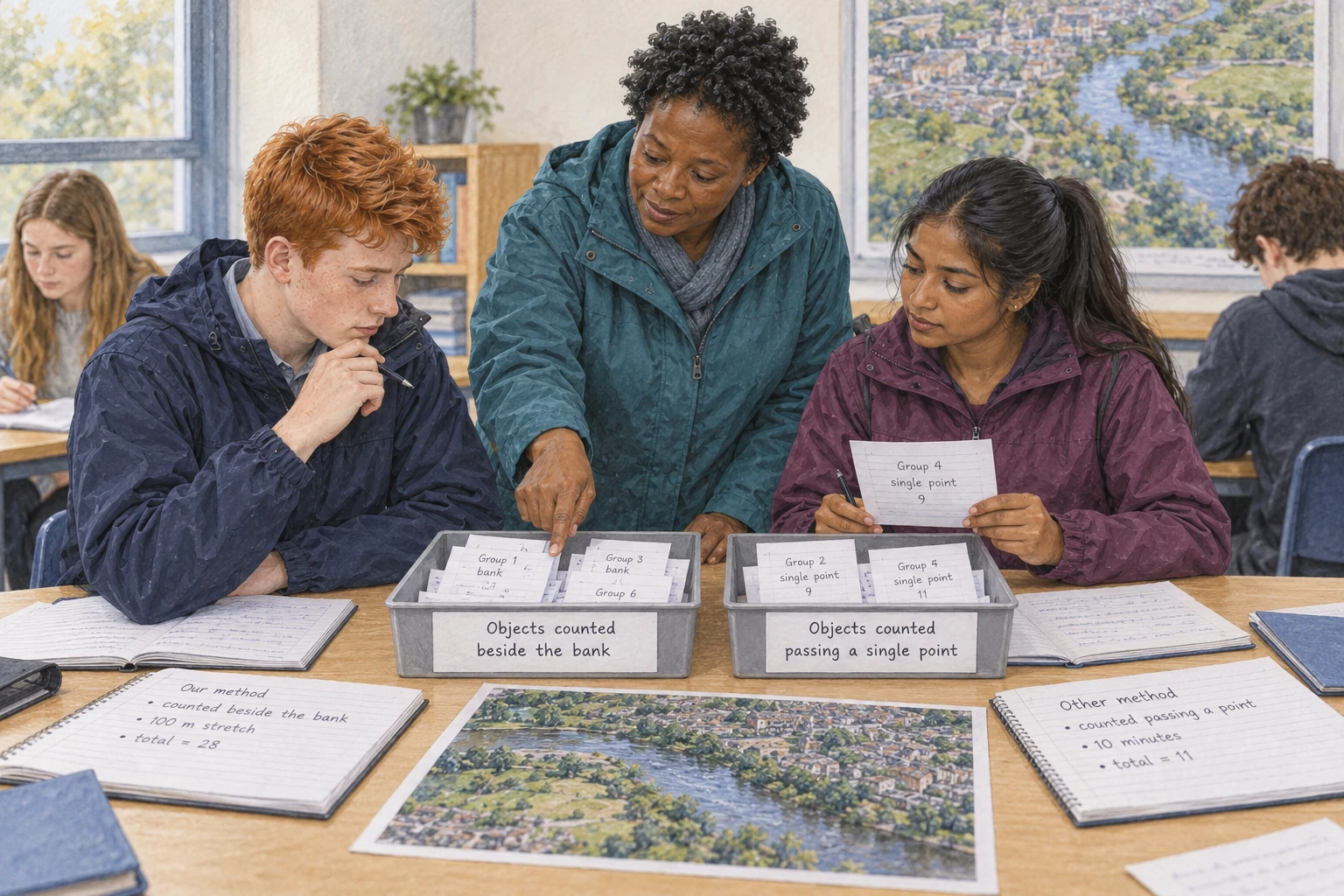
Back at school, they compare their method with the other groups. Some counted objects beside the bank, while others counted things passing a single point. The numbers cannot be compared fairly without explaining that difference. Ms Brooks helps the class sort the records into two groups, keeping each note with the count that it explains rather than making one misleading total.
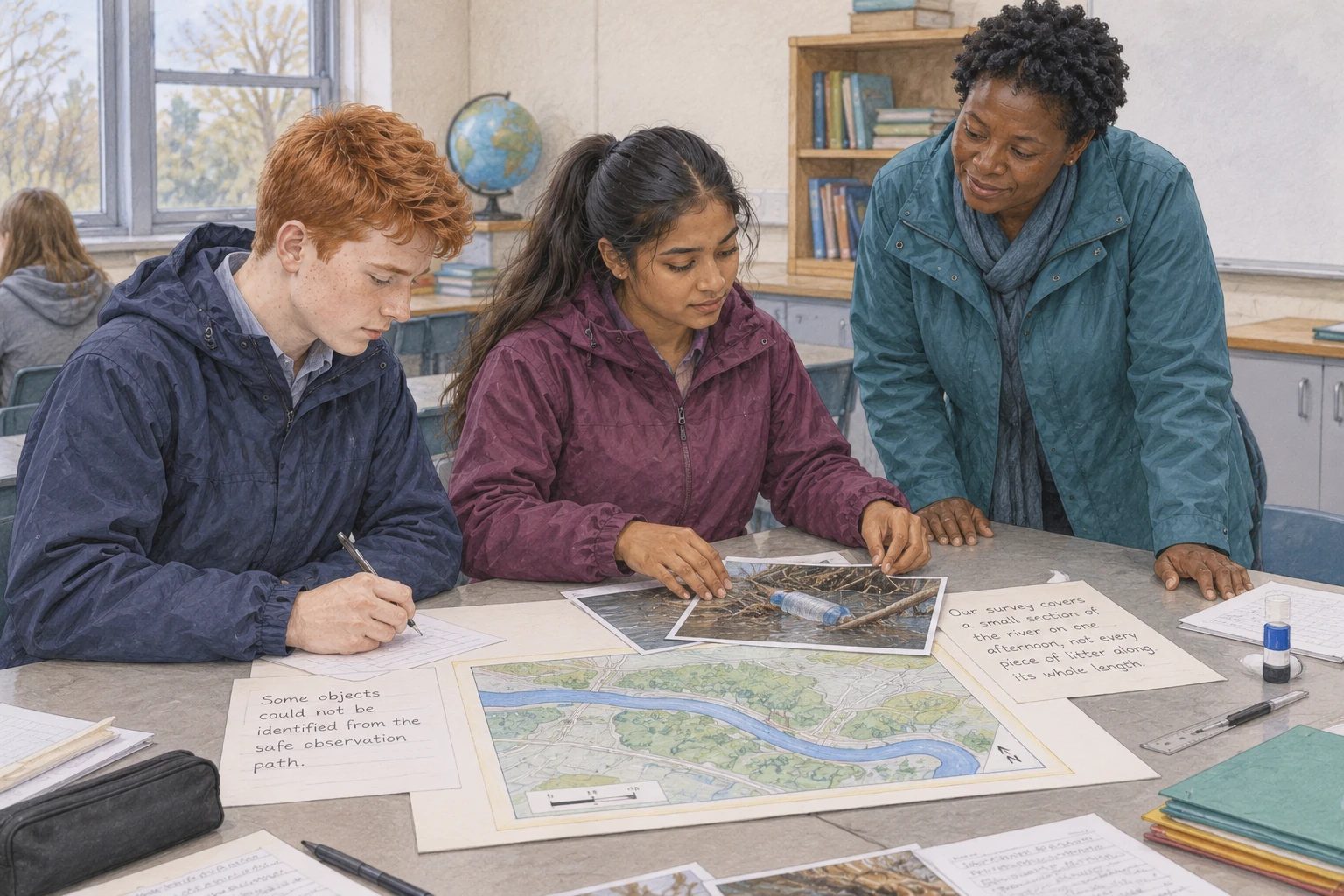
Nathan and Jessica prepare a short display of their findings. The photograph shows the trapped bottle, and their map explains the moving one. They write that some objects could not be identified from the safe observation path. Their report describes a small part of the river on one afternoon, not every piece of litter along its whole length.
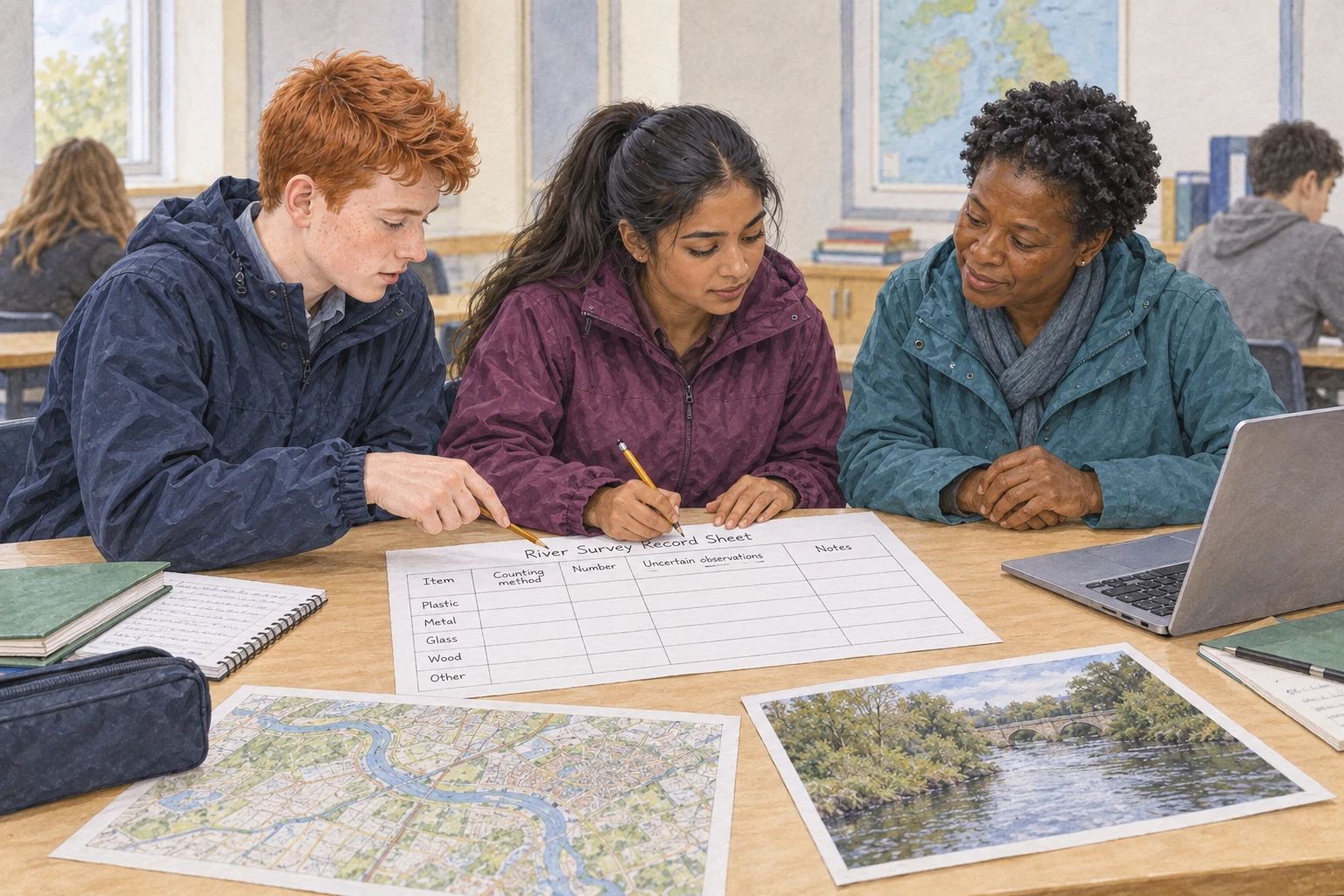
When the class plans another survey, Nathan suggests agreeing on the counting method before they leave. Jessica adds a space for uncertain observations on the new sheet. He had thought that a fuller page would make a better result. Now he knows that a useful record needs clear limits as well as careful looking, especially when the same river keeps carrying things onwards.