The Second-Hand Song
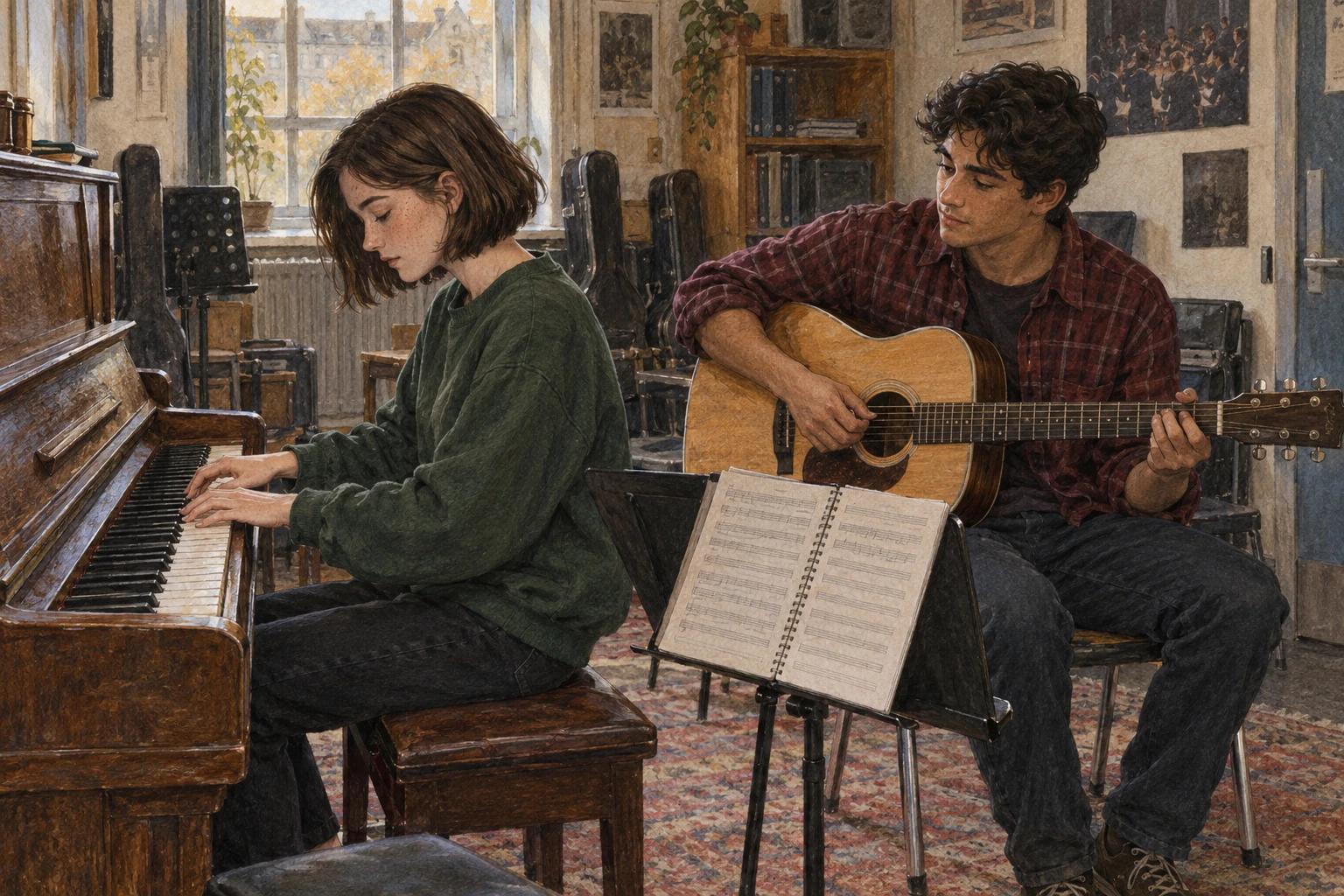
School Readers · Level 21Esme plays the little tune again. Four notes rise, three fall, and the last one hangs in the music-room air. Callum picks out a gentle pattern on his guitar. “That works.” They need an original song for the school concert, and after a week of false starts, Esme has finally found a beginning. She writes it in their notebook before it can disappear. Callum adds a question mark beside the ending.
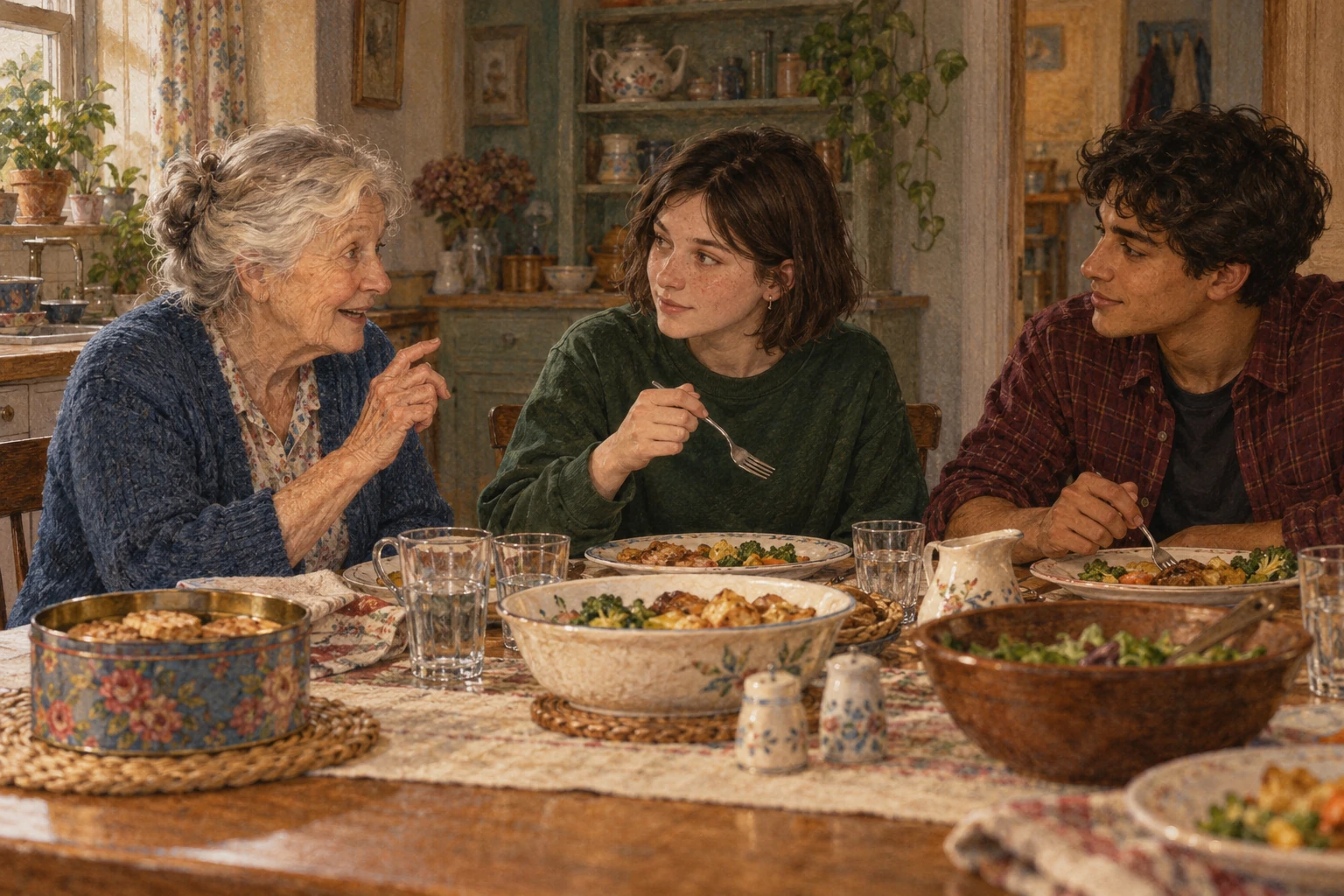
Over dinner, Esme hums the tune. Nan Vera looks up. “I haven’t heard that for years.” Esme stops. “Heard what?” Nan sings the next line, which Esme has not written yet. The words are about a kettle refusing to boil. Esme puts down her fork. “Is it a proper song?” “Your great-uncle used to sing it,” Nan says. “Proper enough for him, anyway.”
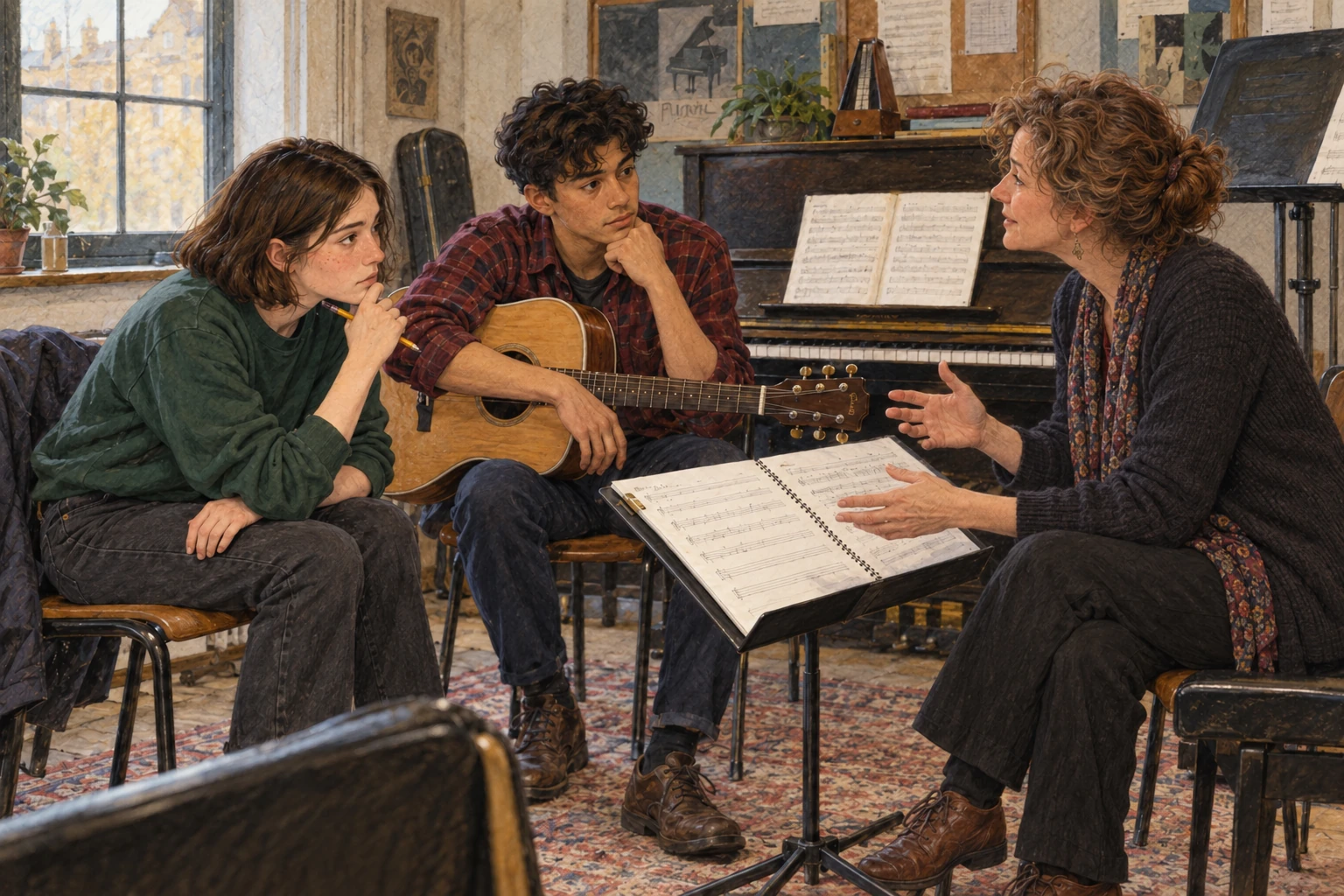
Next day, Esme tells Callum. He plays the first few notes. “We could change these.” “Then it would be almost the same song with a different hat.” Callum smiles, but she does not. She had been pleased with herself, and now the notebook feels like evidence against her. Their teacher says remembering a tune is different from deliberately copying one. They still need to work out what belongs to their new piece.
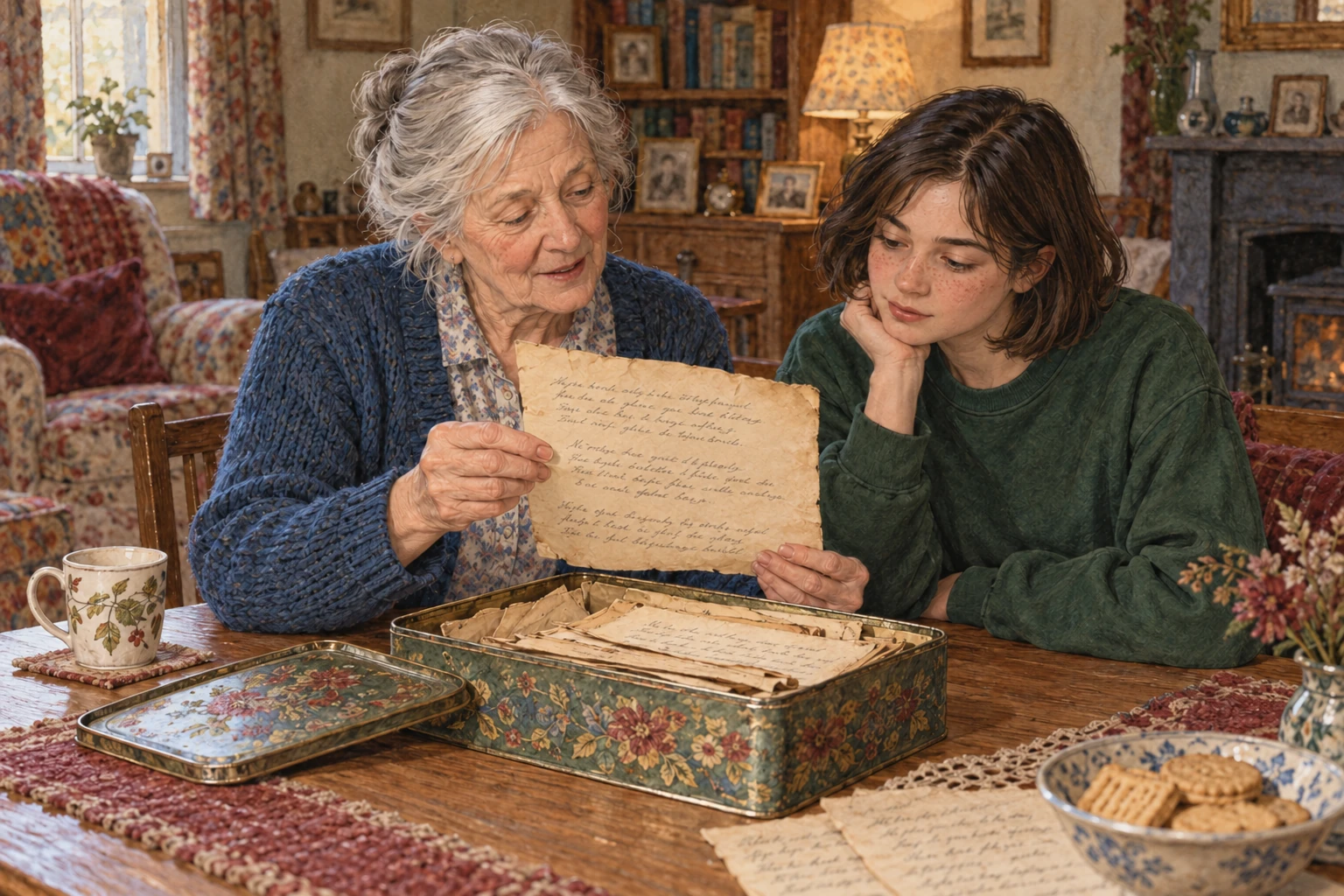
Nan finds an old biscuit tin full of family papers. There are shopping lists, postcards and a folded song sheet in Great-Uncle Frank’s handwriting. The kettle song has three verses and no written music. “He made up words to things,” Nan says. “Sometimes the tunes were his. Sometimes they weren’t.” She cannot tell them where this one began. Esme photographs the sheet with her permission and leaves the original in the tin.
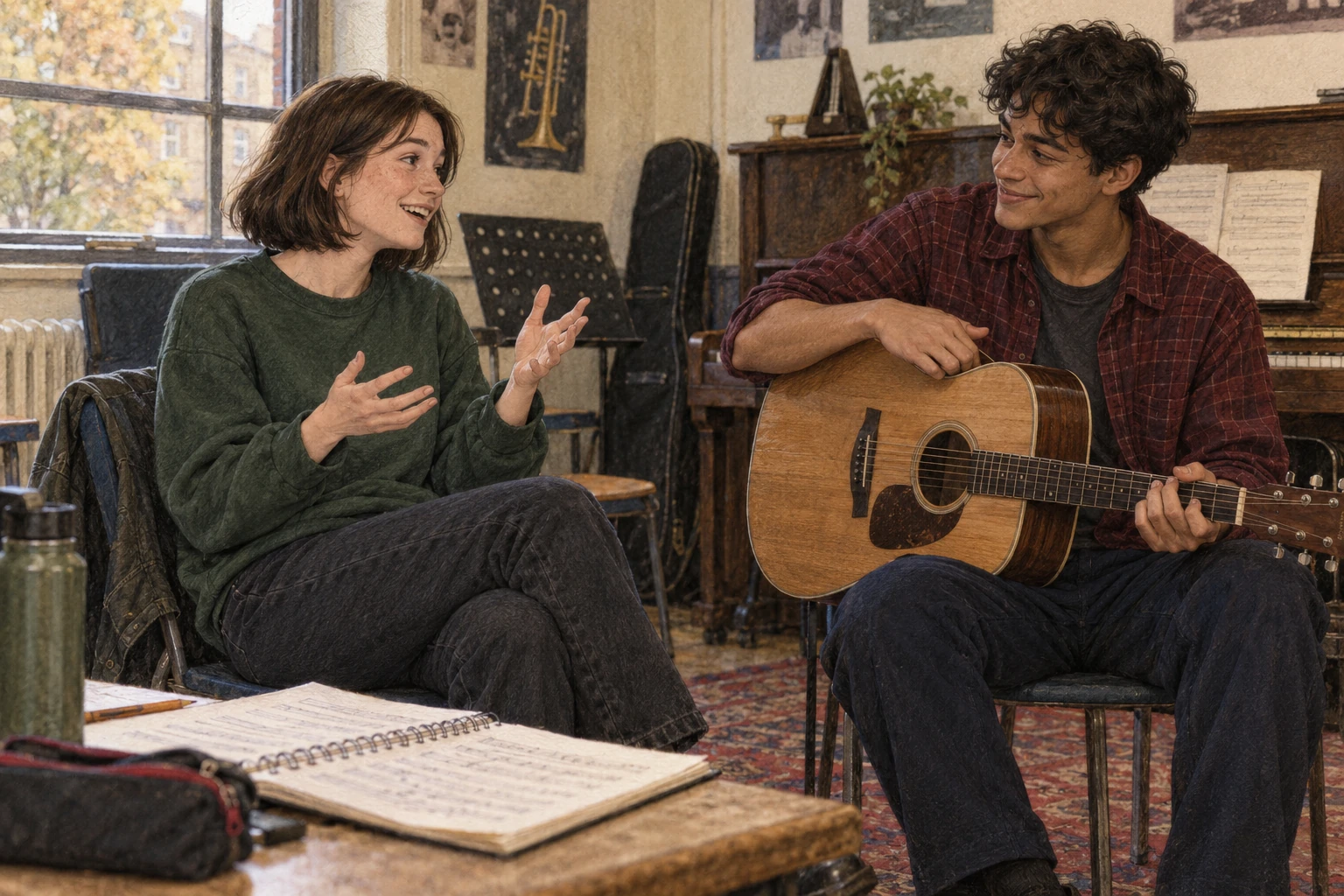
Back in the practice room, they play the remembered line, then stop. Changing just a few notes still pulls them towards the same tune. Callum closes the notebook. “Tell me something from today.” Esme describes missing her bus while searching for her pass, which was already in her hand. He laughs and taps a rhythm on the guitar’s wooden side. She says the story again, this time to the beat.
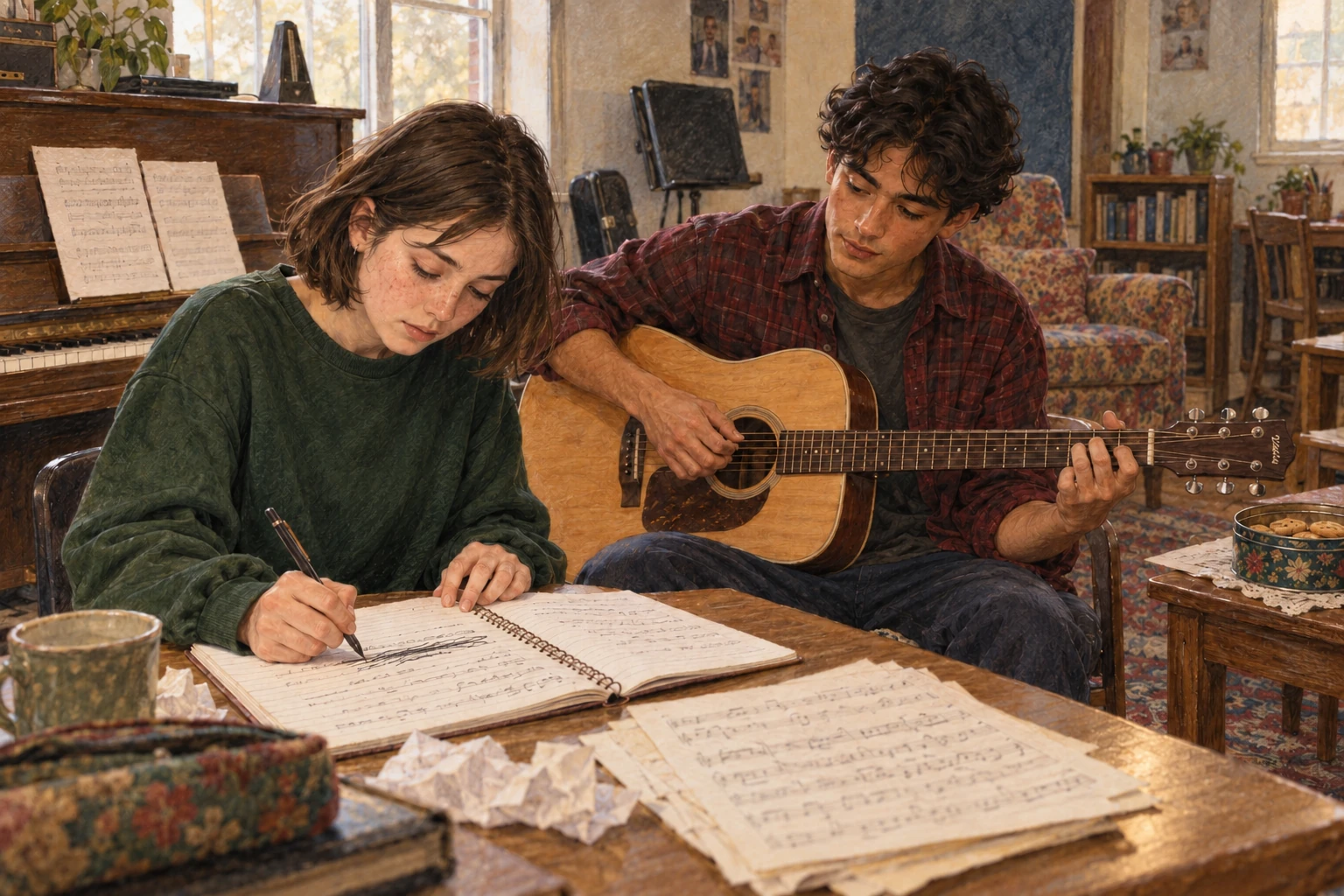
The words do not fit neatly. One line is too crowded; another ends before the beat does. They shorten the first and leave space in the second. Esme tries a low note where she would normally go high. Callum answers with a chord. By the end of lunch, the new song sounds nothing like the kettle tune. It sounds like being late, flustered and trying to act as if everything is fine.
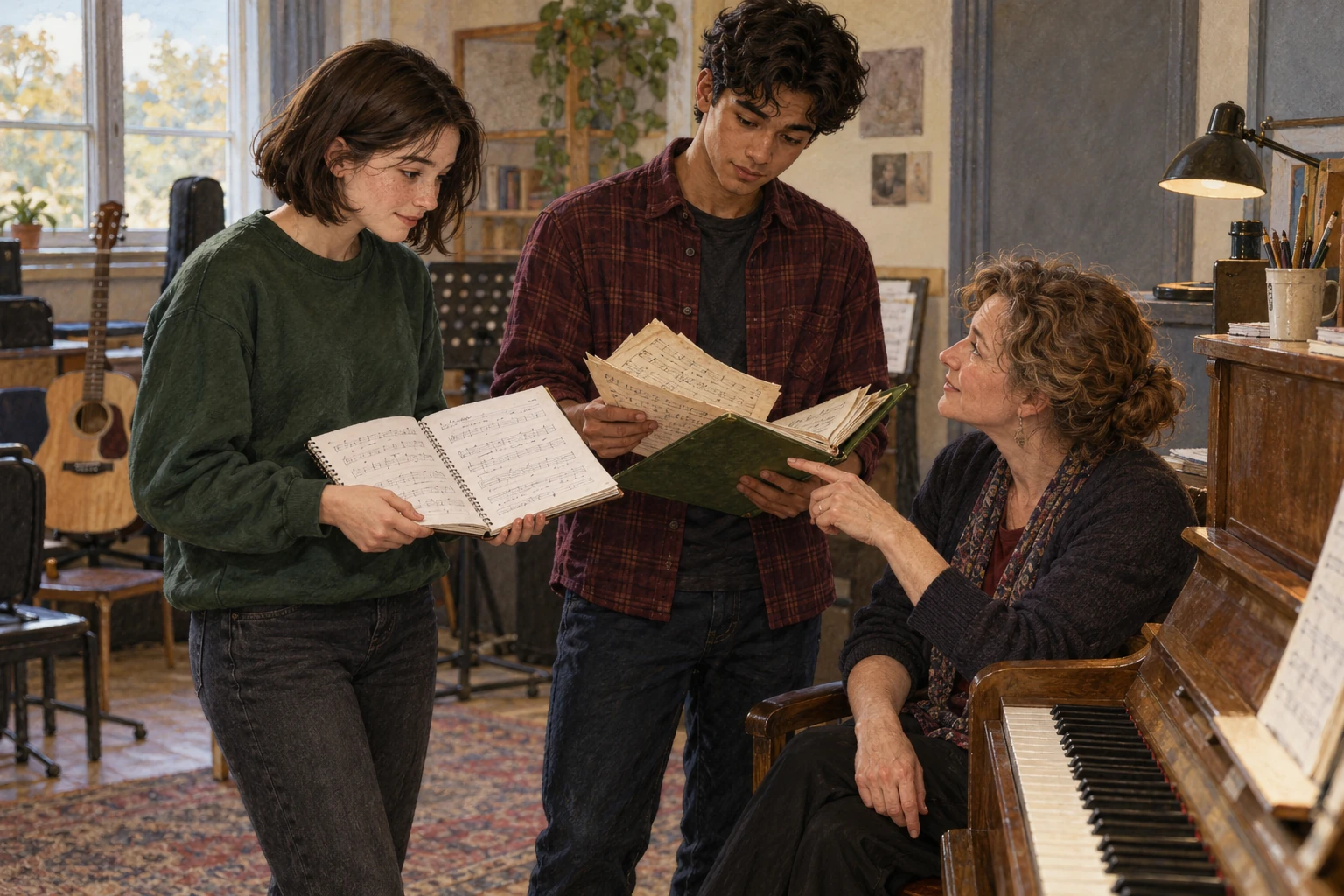
They play both tunes to their teacher, explaining what happened. She hears the difference, then asks them to keep their drafts and check the concert’s requirements with her. Esme adds dates to the pages. Callum writes down who suggested each part, though they soon agree the changes are too mixed to divide neatly. They put both names on the new song and leave the family verse in a separate folder.
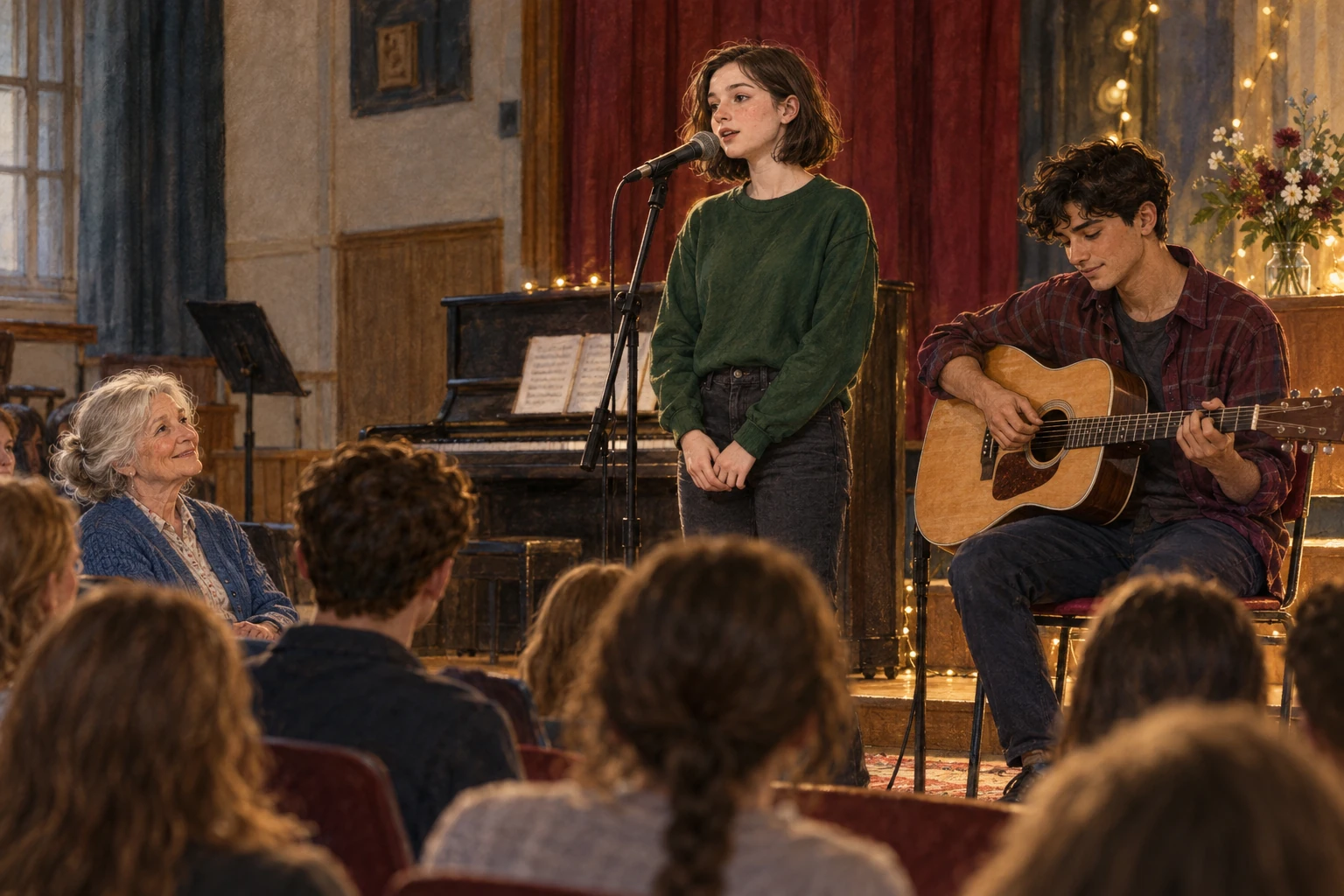
At the concert, Esme nearly misses her entrance because she is looking for her pass in the wrong pocket. Callum lifts an eyebrow. She takes a breath, steps to the microphone and introduces their song. A few students laugh at the first line. By the chorus, Nan Vera is tapping her foot in the second row. Esme spots her and almost laughs in the middle of a word.
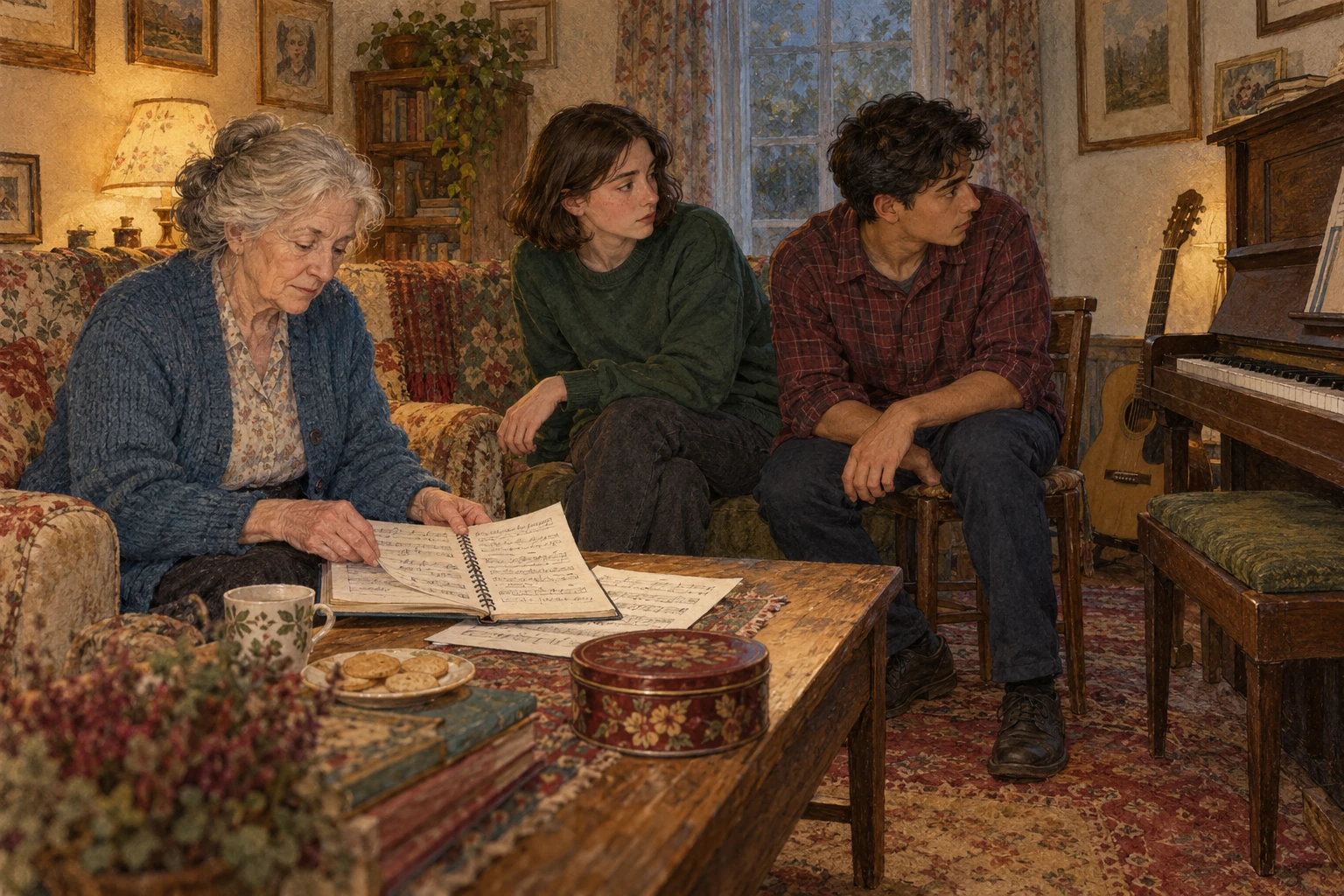
Afterwards, Nan asks for a copy. “Frank would have enjoyed that one.” Esme tells her about the terrible first draft and the line they cut because it needed three extra breaths. Callum opens the notebook to show her. Beside the crossed-out words is his old question mark. Esme draws a small bus around it. Nan looks closely. “You haven’t left your pass on the piano, have you?” They both turn round.