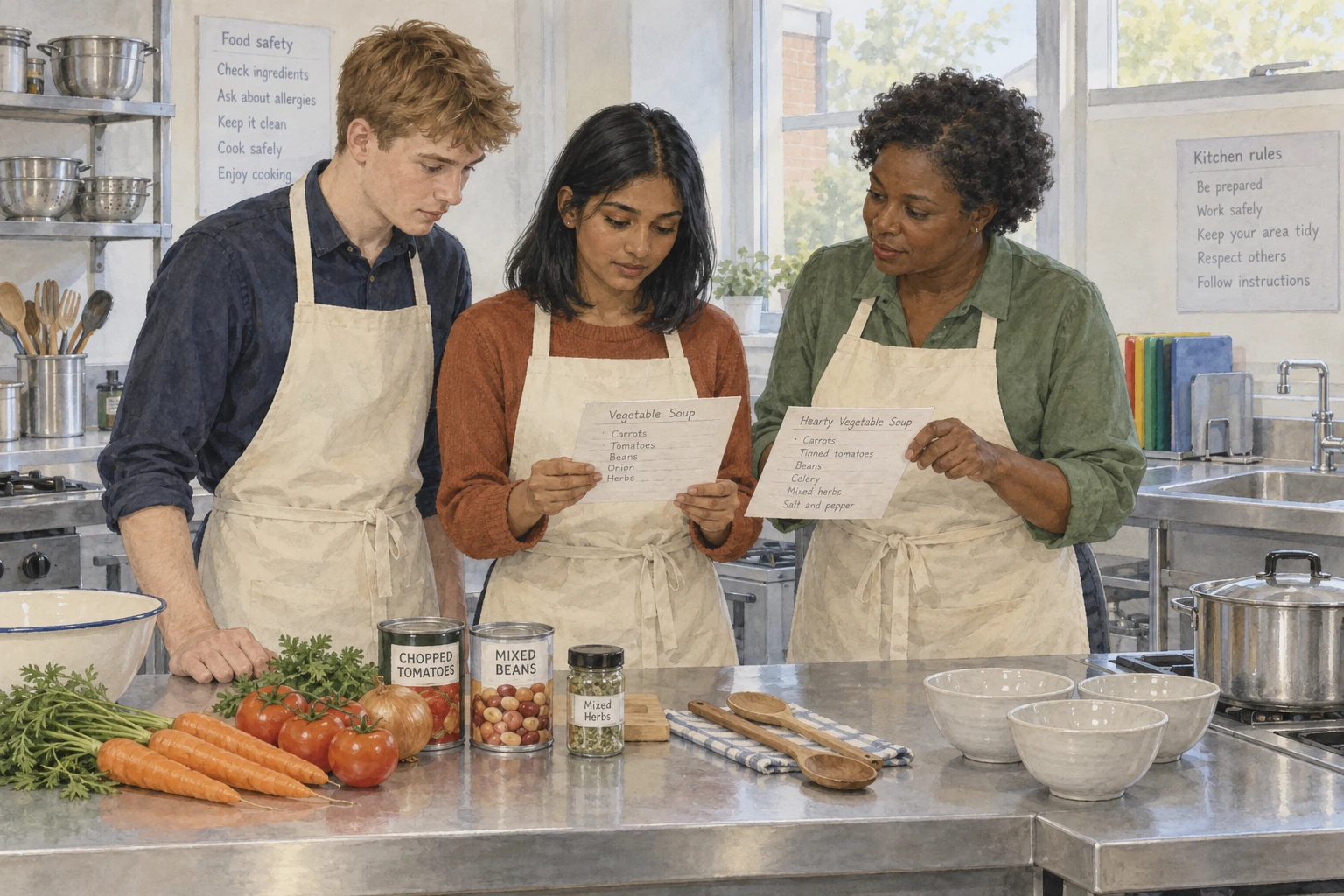
The Secret Ingredient
School Readers · Level 20Alan holds two soup recipes beside the kitchen worktop. One is the class version, with clear amounts and a short method. The other is a handwritten copy from an old school food project. Both list carrots, tomatoes and beans, but the older card ends with the words “our secret ingredient”. Catherine looks at the small herb jar. Their teacher, Ms Cook, asks what they can actually learn from the cards before cooking.
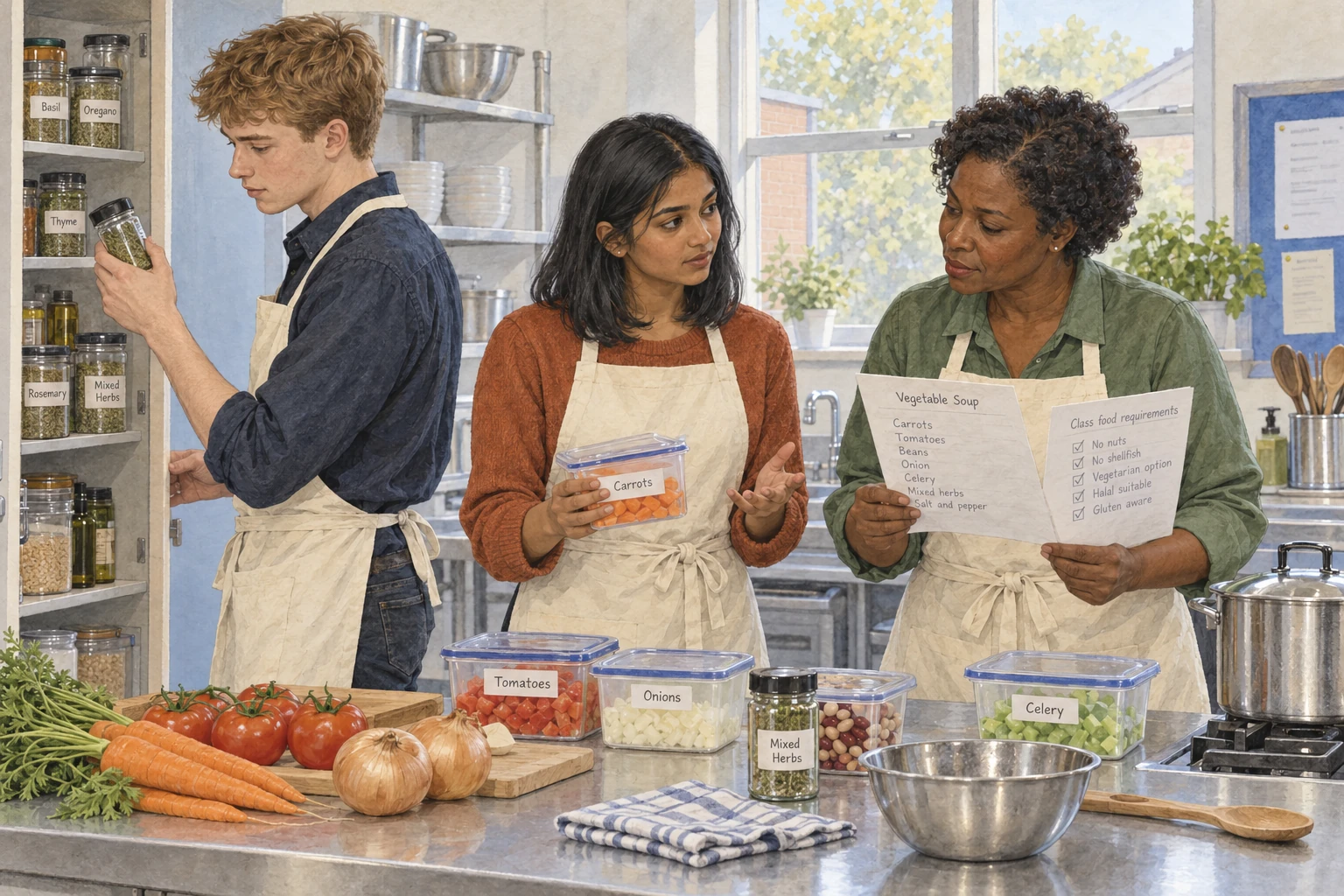
Alan thinks the secret must be a special herb. He opens a cupboard to look for something unusual, but Ms Cook asks him to leave the ingredients in their labelled containers. She checks the approved recipe and the class’s food requirements with them. An exciting name is not a reason to add something unknown. Catherine suggests asking where the older card came from rather than guessing what a hidden phrase means.
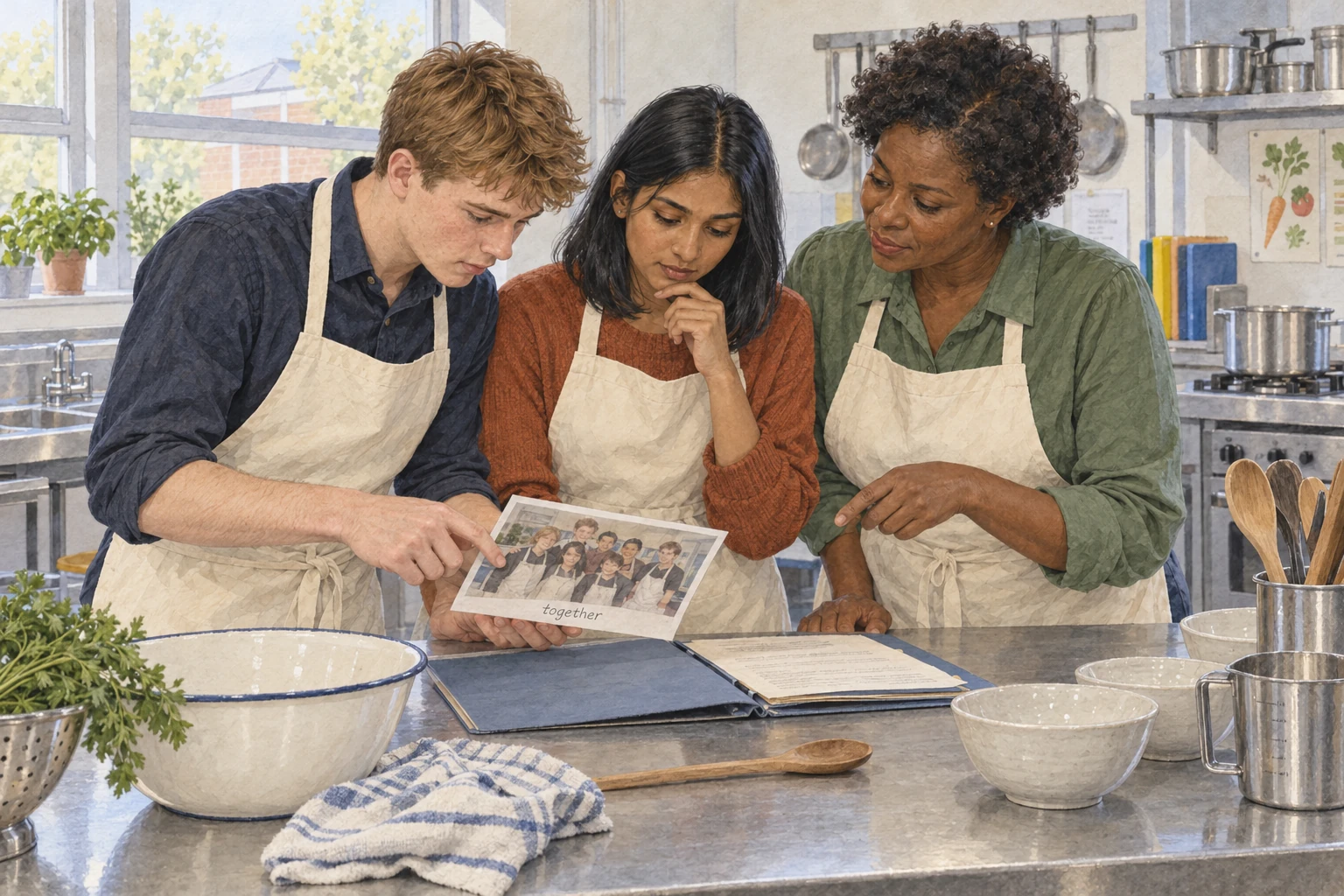
The school project folder contains a photograph of the group that wrote it. They stand around a table with bowls and a large paper speech bubble. Alan can read only the last word: together. He had expected a clue about flavour. Catherine wonders whether the secret is about how they worked. Neither idea is certain, so they ask Ms Cook to help find the short report stored behind the picture.
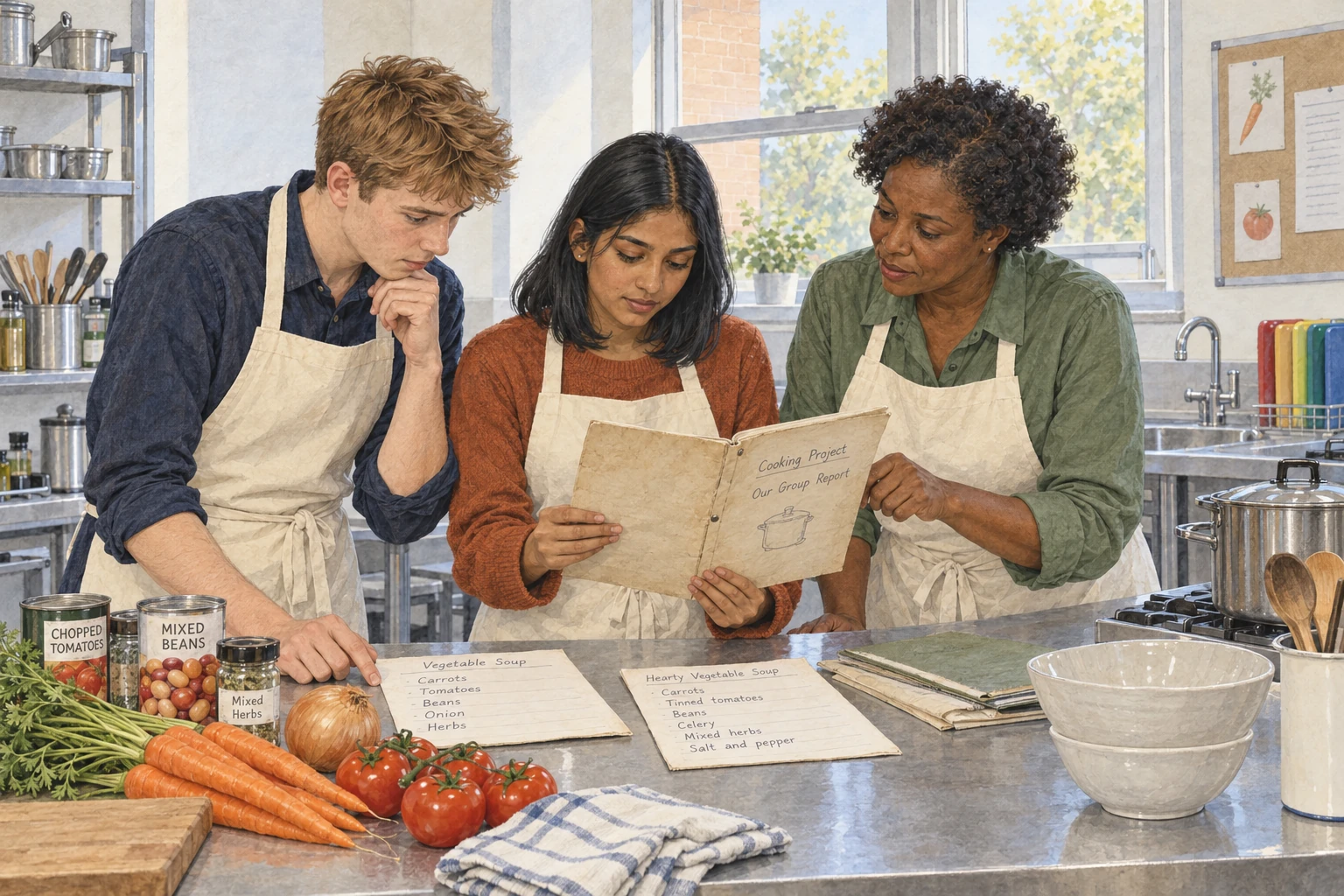
The report explains that the group first cooked separately, each trying to finish without checking anyone else’s task. Vegetables were ready at different times, and nobody remembered who was preparing the bowls. Their next attempt used a shared plan. At the end, someone called teamwork the secret ingredient. Alan looks again at the recipe. Nothing edible has been left off its list after all.
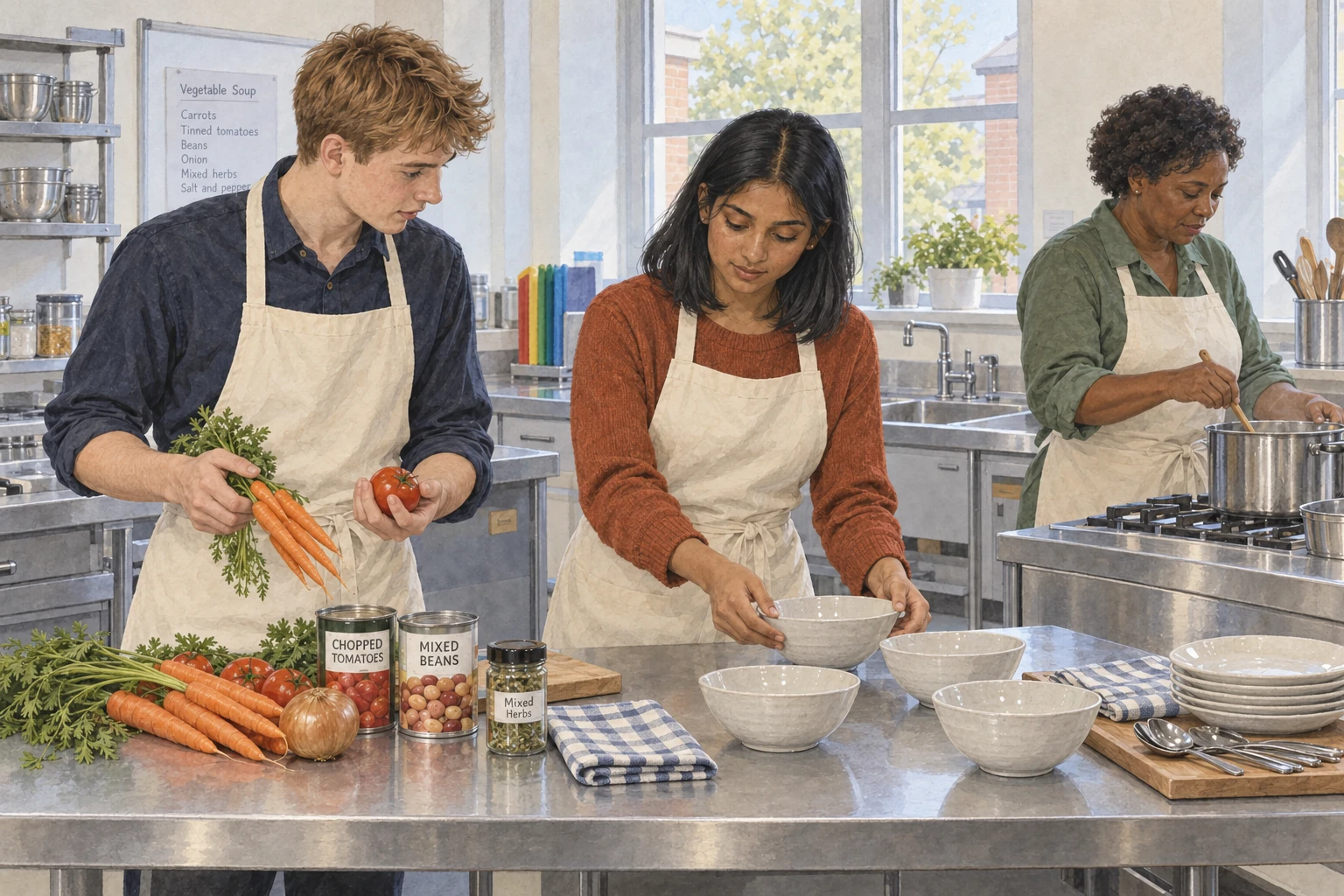
They use the approved recipe and agree their jobs with Ms Cook. Catherine prepares the serving area while Alan checks the measured vegetables. The teacher manages the heat and supervises the cooking. When Alan finishes his task, he notices Catherine is still arranging bowls. He asks what would help instead of starting a different step on his own. The recipe tells them what to make; their conversation helps them make it together.

As the soup cools safely for tasting, they notice that one set of bowls is much smaller than the other. Alan had counted the bowls but not compared their size. They ask Ms Cook how to arrange fair portions for the group. Catherine brings a matching set from the cupboard, and they check it before serving. A small pause now prevents a larger muddle when everyone is waiting at the table.

The class tastes the soup after Ms Cook confirms it is ready. A student asks about the secret ingredient on the old card. Alan explains the phrase, pointing to the shared plan rather than the herb jar. Catherine adds that teamwork did not mean everyone doing the same job. It meant checking how different jobs fitted together and speaking when a detail needed attention.

After clearing up, they write a fresh note to keep with the old project card. It explains that the phrase refers to working together, while the actual ingredients are listed in the approved recipe. Alan wants the next group to enjoy the little mystery without having to guess about food. Ms Cook checks the wording before it goes into the classroom folder.
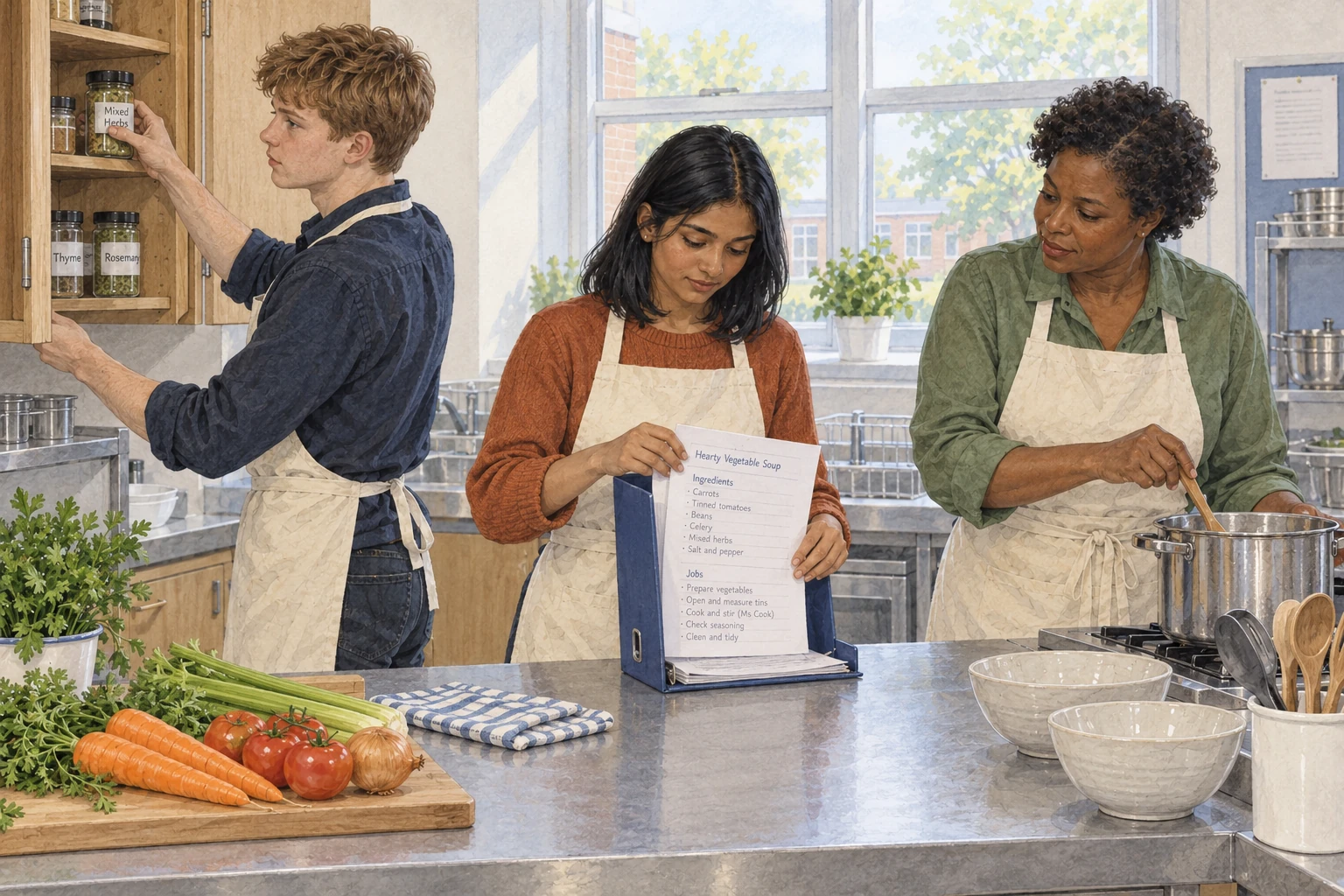
Alan closes the folder and returns the herb jar to its labelled place. He likes the old group’s phrase more now that he understands it. Their secret was never something to hide in a pot. It was a useful idea expressed in an unusual way. Next week, he and Catherine will try another recipe, with clear ingredients, agreed jobs and enough time to ask one another what is happening next.