The Unclaimed Window
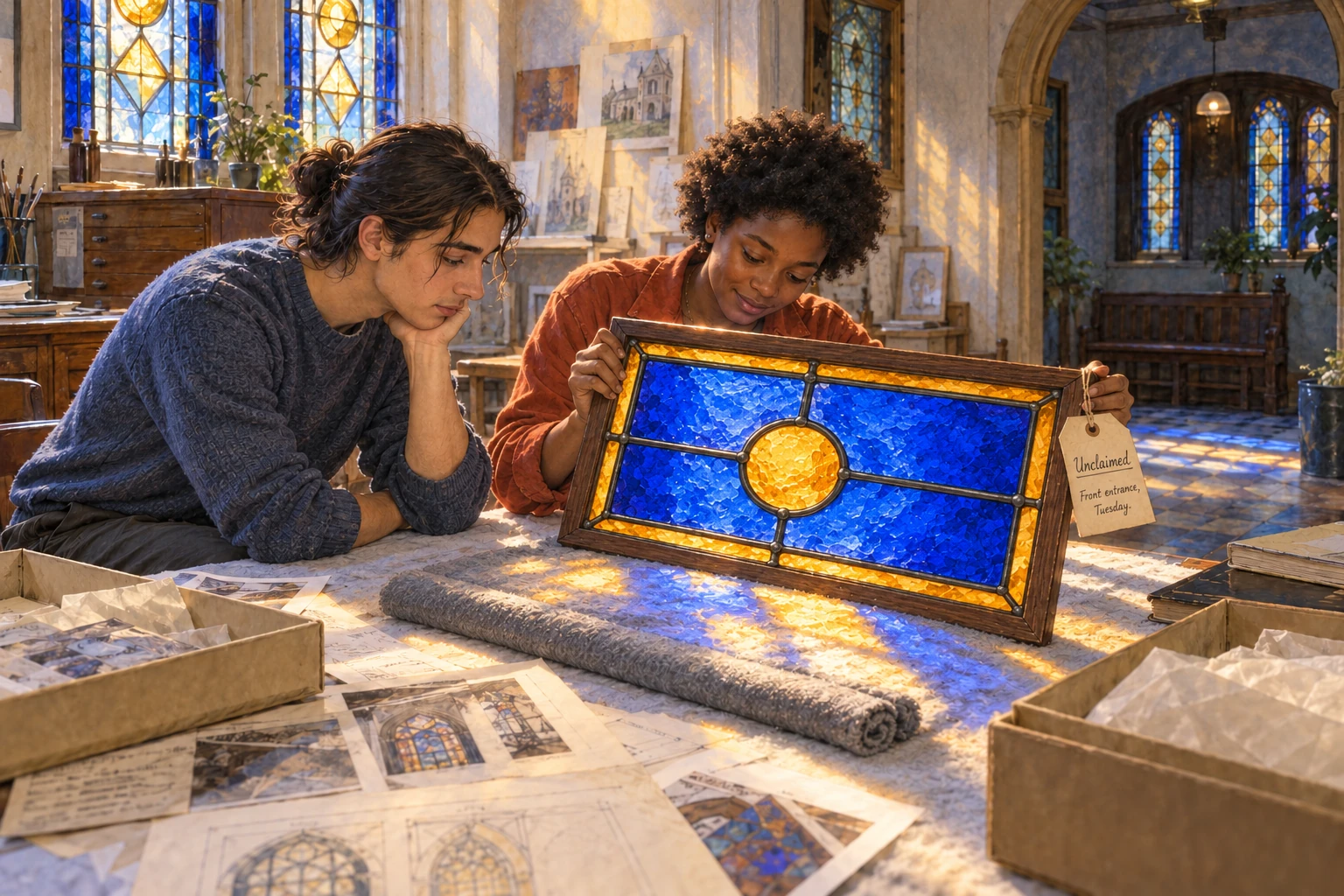
School Readers · Level 21“It’s too good for the cupboard,” Tamsin says. She holds a small framed glass panel towards the art-room window. Blue and amber shapes throw coloured patches across the table. Ivo agrees. They are helping to clear the community hall, and nobody knows who owns the panel. A paper tag tied to its frame says Unclaimed. Under that, in smaller writing, are the words: Front entrance, Tuesday.
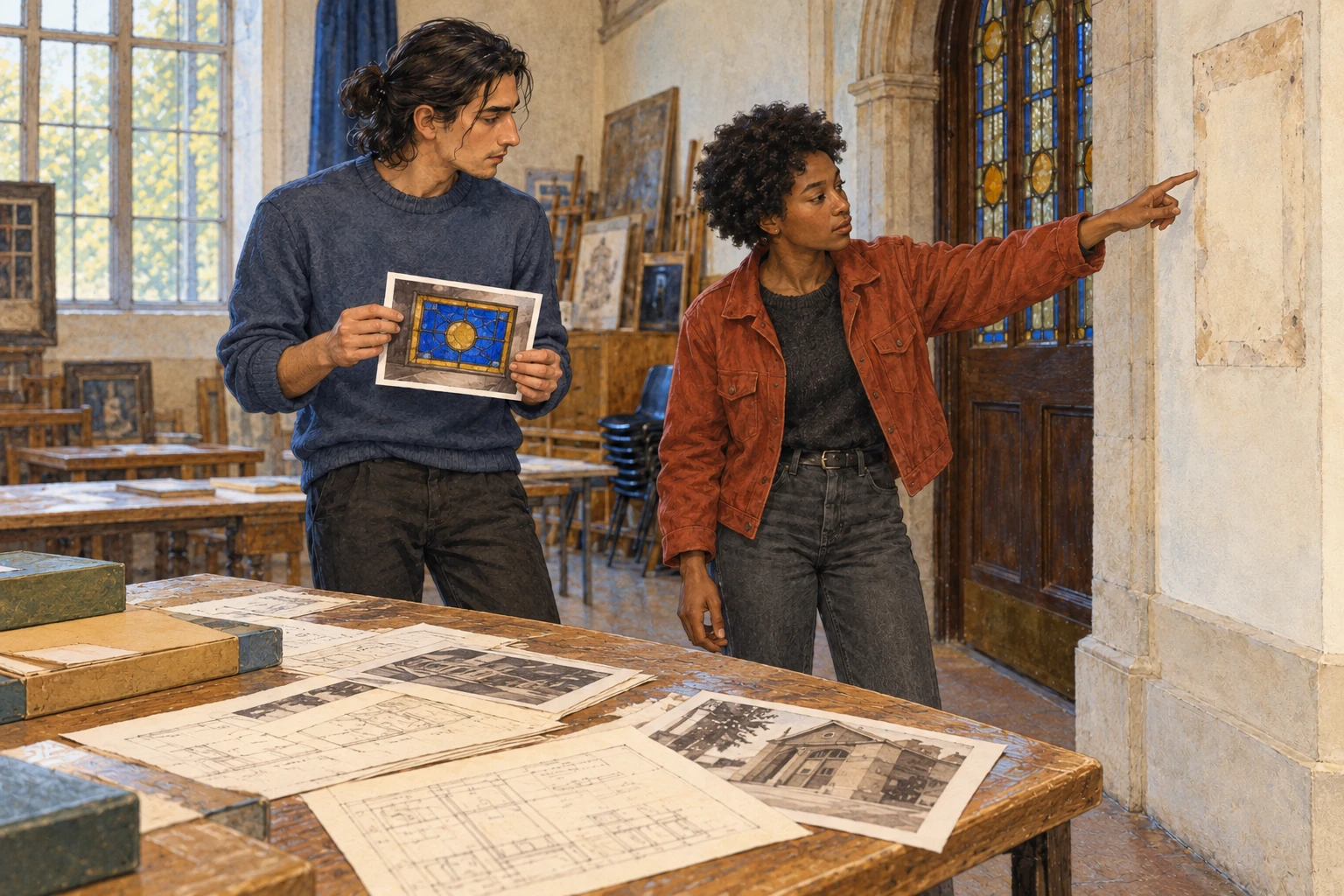
The hall manager says they may look into it, but the panel must stay safely on the table. Ivo takes a photograph instead of carrying it round. At the current front entrance, they compare the picture with the windows. None has the right shape. “Perhaps it came from somewhere else,” he says. Tamsin points to a pale rectangle on the wall. “Or the entrance used to be different.”
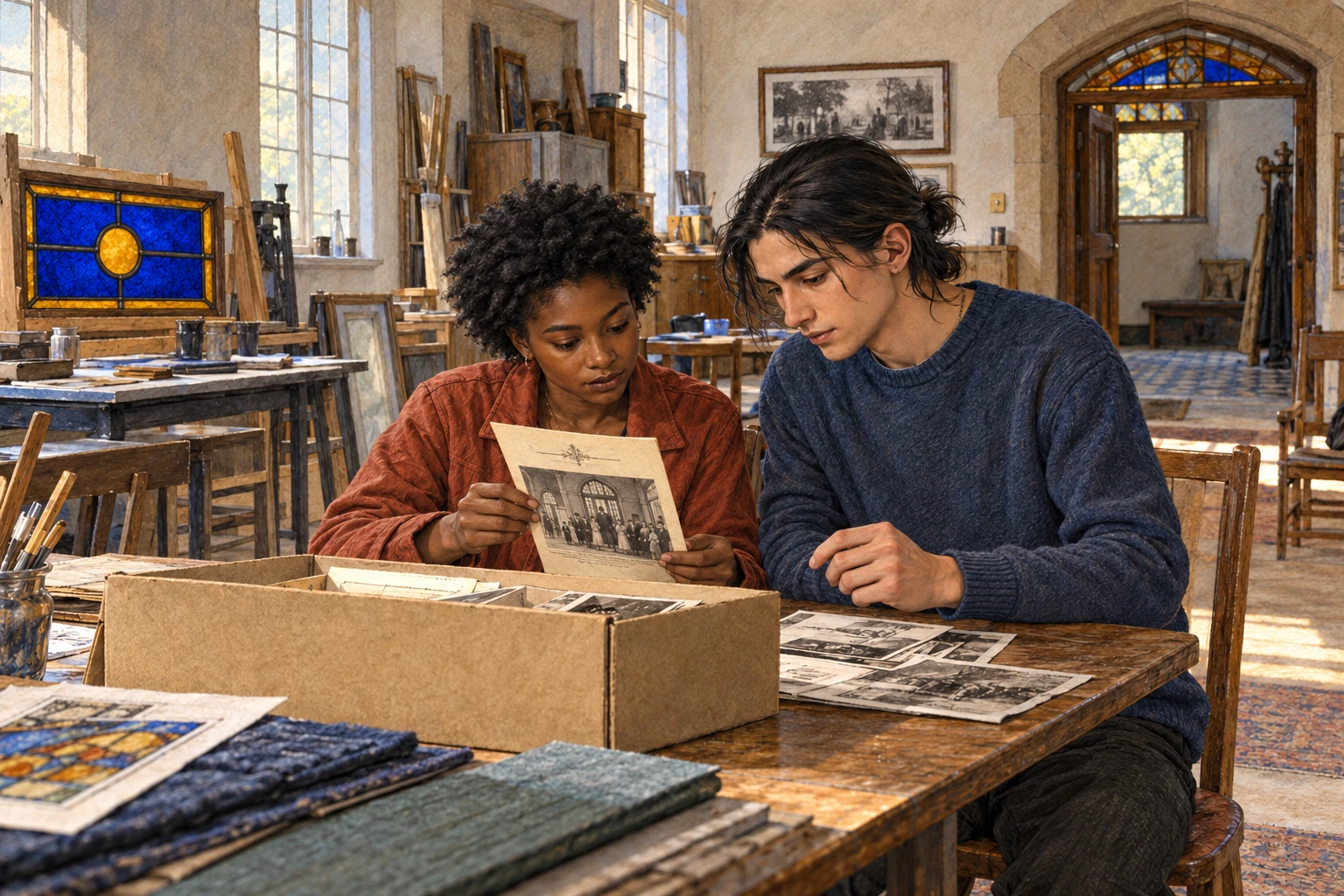
In the store room, they find a box of old hall papers. Ivo expects an invoice, something saying who paid for the glass. Instead, Tamsin uncovers a programme for a craft exhibition. On the back is a photograph of the hall before an extension was built. The original front door stood where the coat alcove is now. Above it is a dark rectangle exactly the shape of their panel.
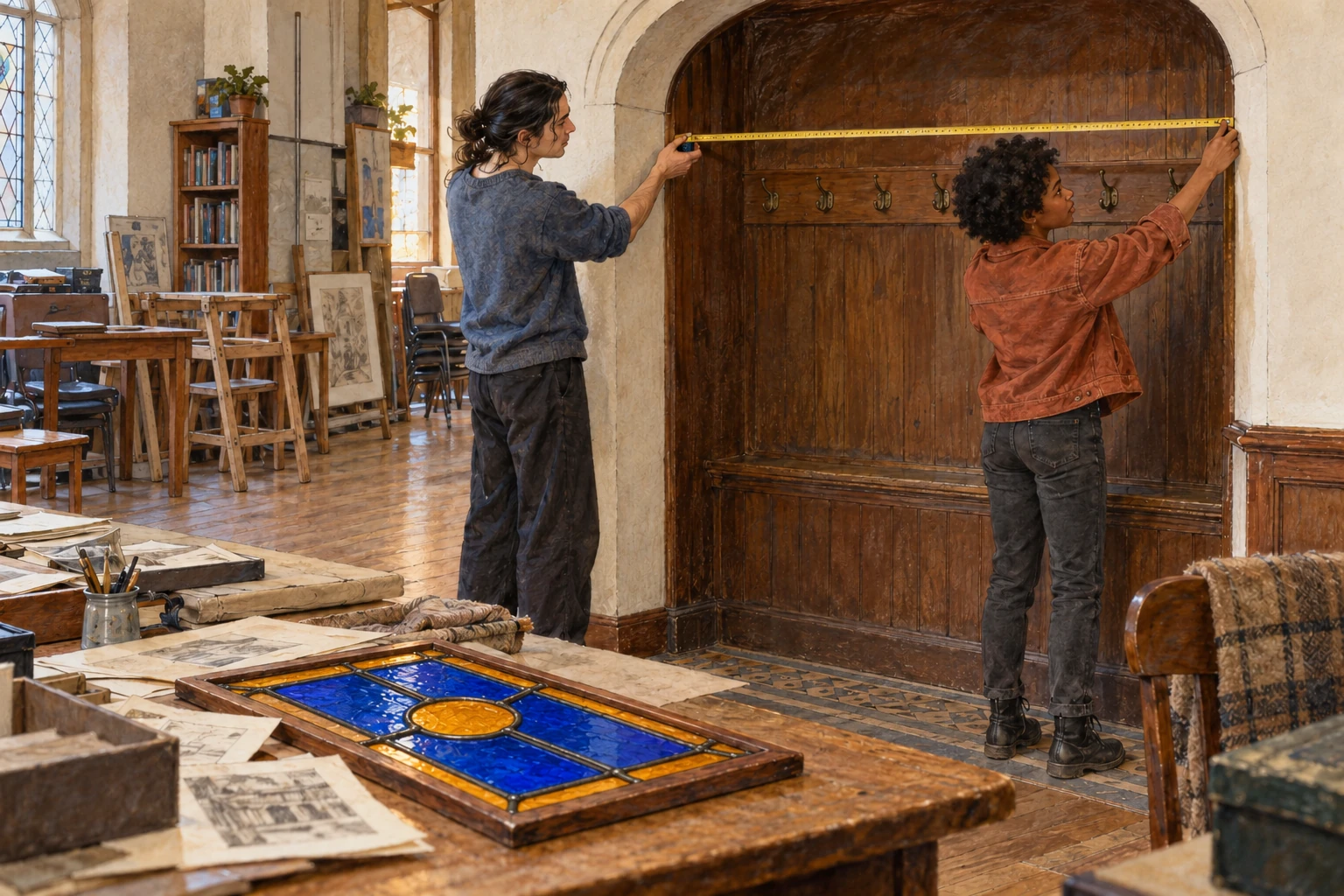
They measure the panel’s wooden frame, then the recess above the alcove. The sizes are close, but not identical. Ivo starts to celebrate. Tamsin holds up the tape. “Close isn’t the same.” The manager suggests asking Mr Bell, a retired glazier who sometimes helps with repairs. Until he comes, they leave the panel flat on its padded table and keep the photograph beside it.
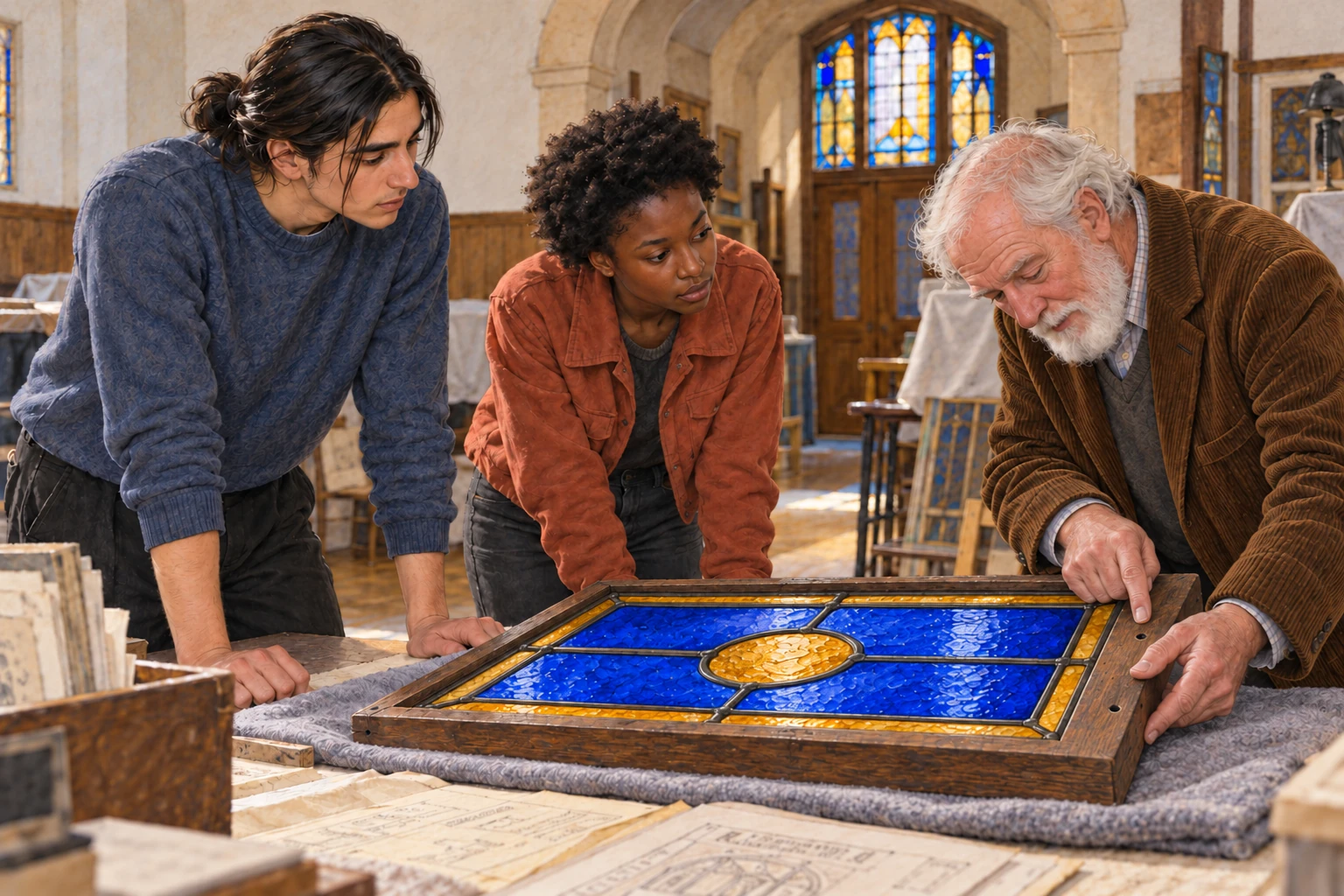
Mr Bell recognises the pattern at once. “We made three of these at evening classes.” Ivo’s excitement drops. Three panels means three possible homes. Mr Bell studies the frame. He points to two tiny screw holes along one side. The panel had been hung as a door, not fixed above one. “I made the frame,” he says. “But I can’t remember what they put inside it.”
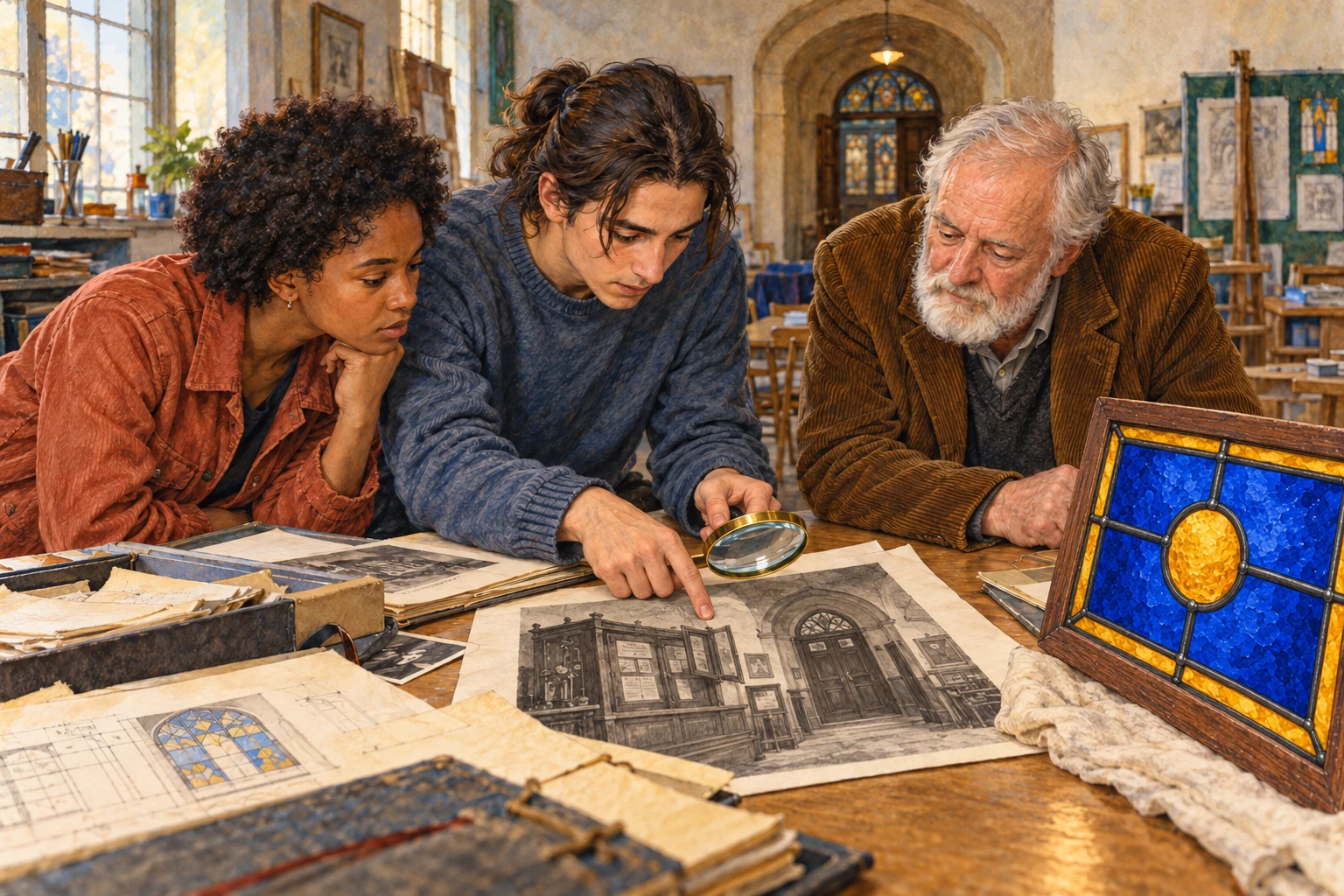
They search the photograph again, this time with a magnifying glass. Beneath the dark rectangle is a shallow notice cabinet. Its glass door stands open, almost disappearing against the entrance wall. Ivo turns the photograph towards the manager. “We’ve been looking above the wrong thing.” The panel was part of the cabinet, which was removed when the new entrance opened. The recess is where the cabinet once stood.
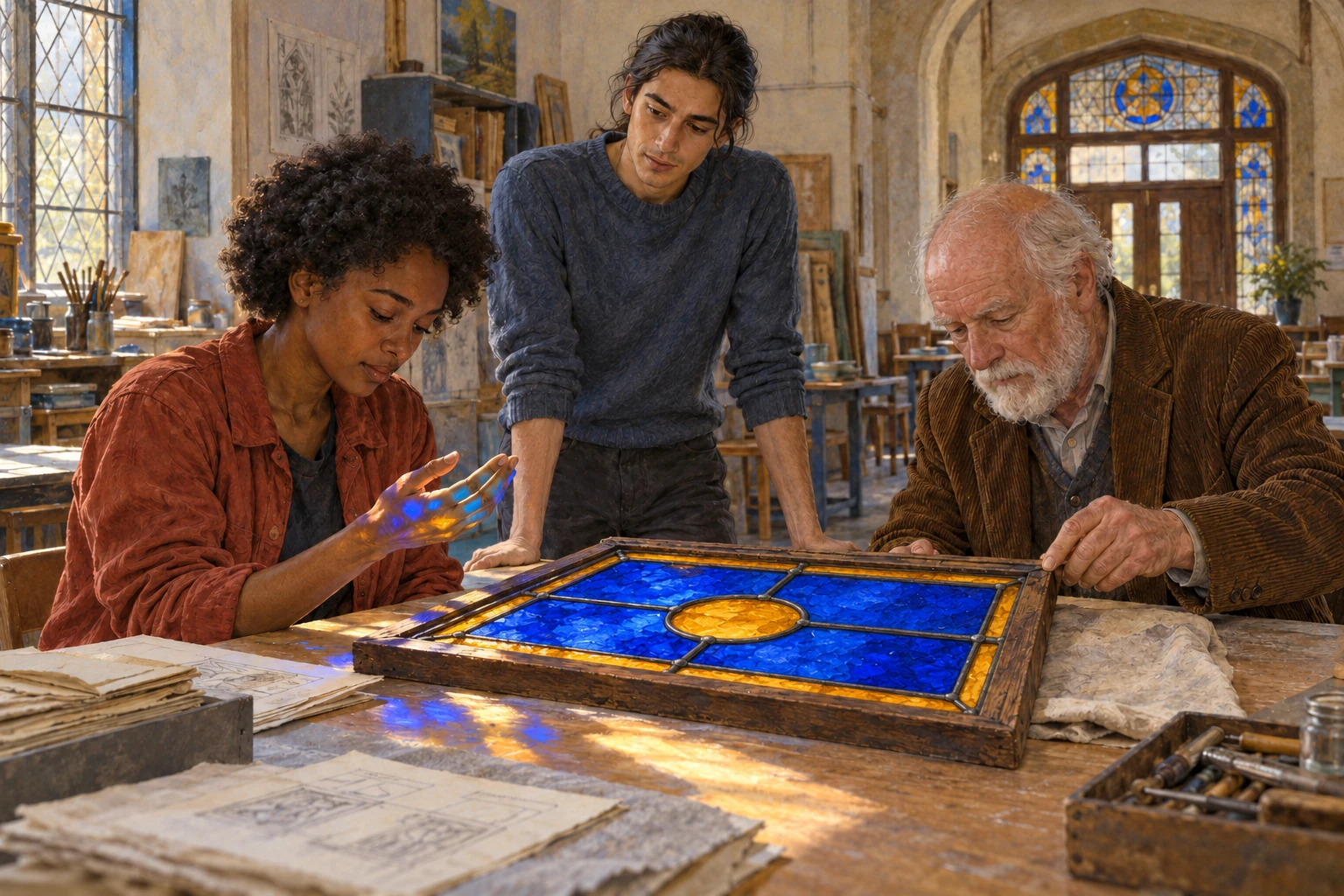
The manager finds a later note in the papers. The cabinet was damaged, but its door was saved for repair. Someone arranged to collect it on a Tuesday and never came. Tamsin rubs a blue reflection from her hand, though it is only light. “All those years in a cupboard because of a missed collection.” Mr Bell checks the panel and confirms it is sound in its wooden frame.
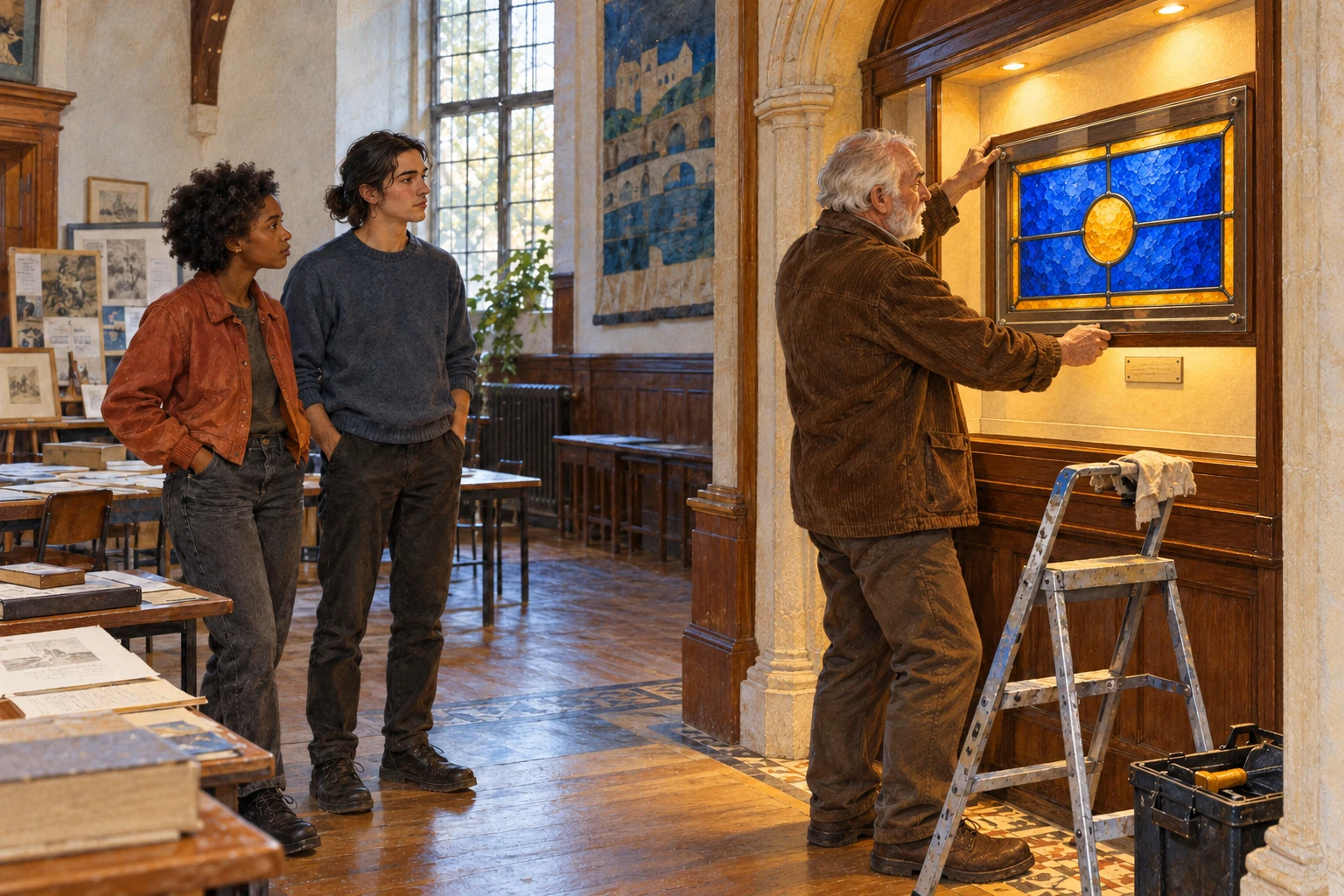
The hall committee agrees to display it inside the old entrance alcove. A professional installer secures it in a lit wall case, where nobody needs to handle the glass. Ivo writes a label about the evening class, leaving room for the other makers’ names. Mr Bell can remember one surname and promises to ask an old friend about the others. Tamsin chooses a photograph showing the whole original entrance.
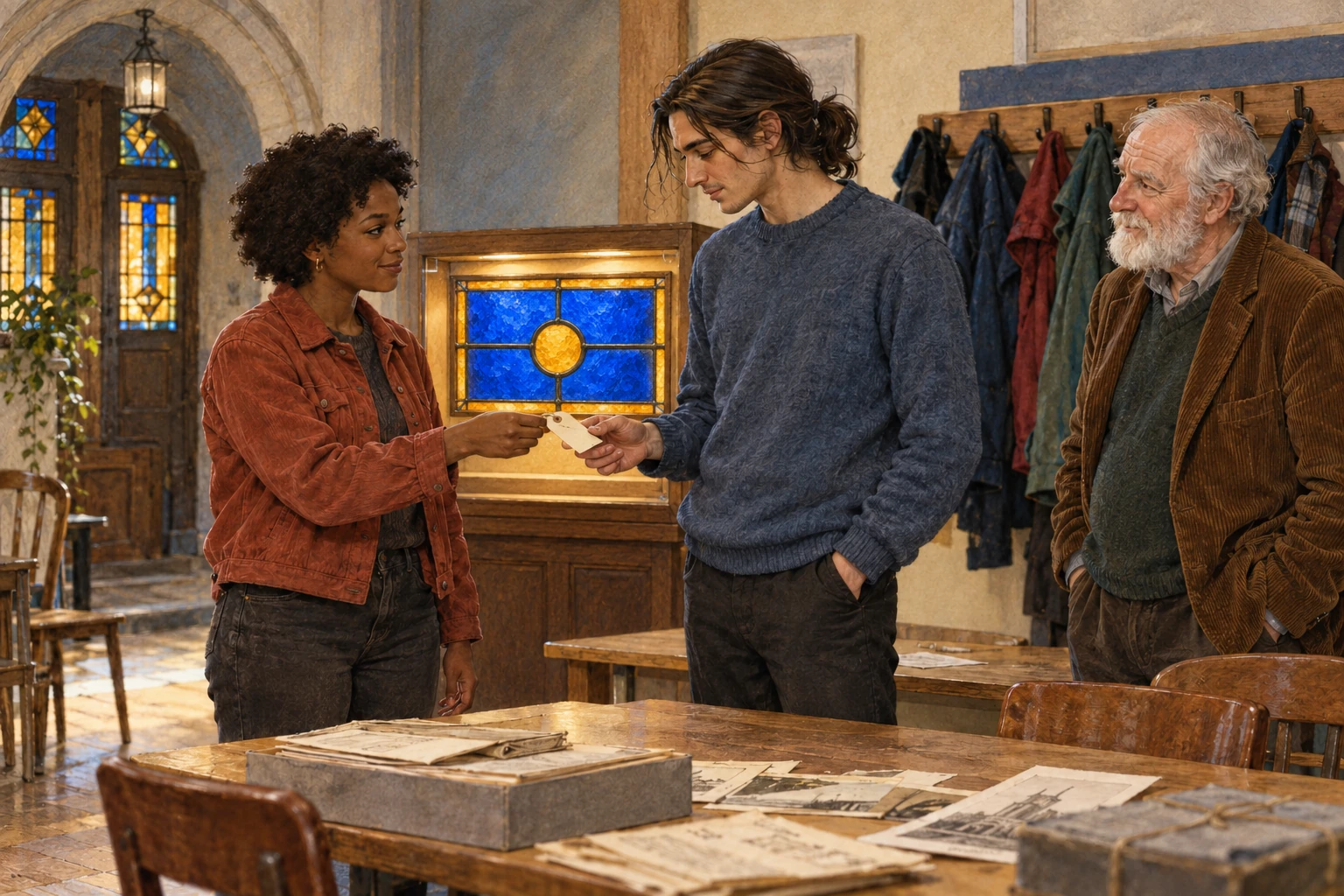
At the next hall meeting, the lit panel shines beside the coats. A woman stops to read the label, then calls her husband over. Ivo watches them comparing the photograph with the alcove. Tamsin hands him the old paper tag. “Keeping this?” He turns it over and writes the location of the display on the back. Then he puts it in the hall archive, where someone will be able to find it.