The Unfinished Mural
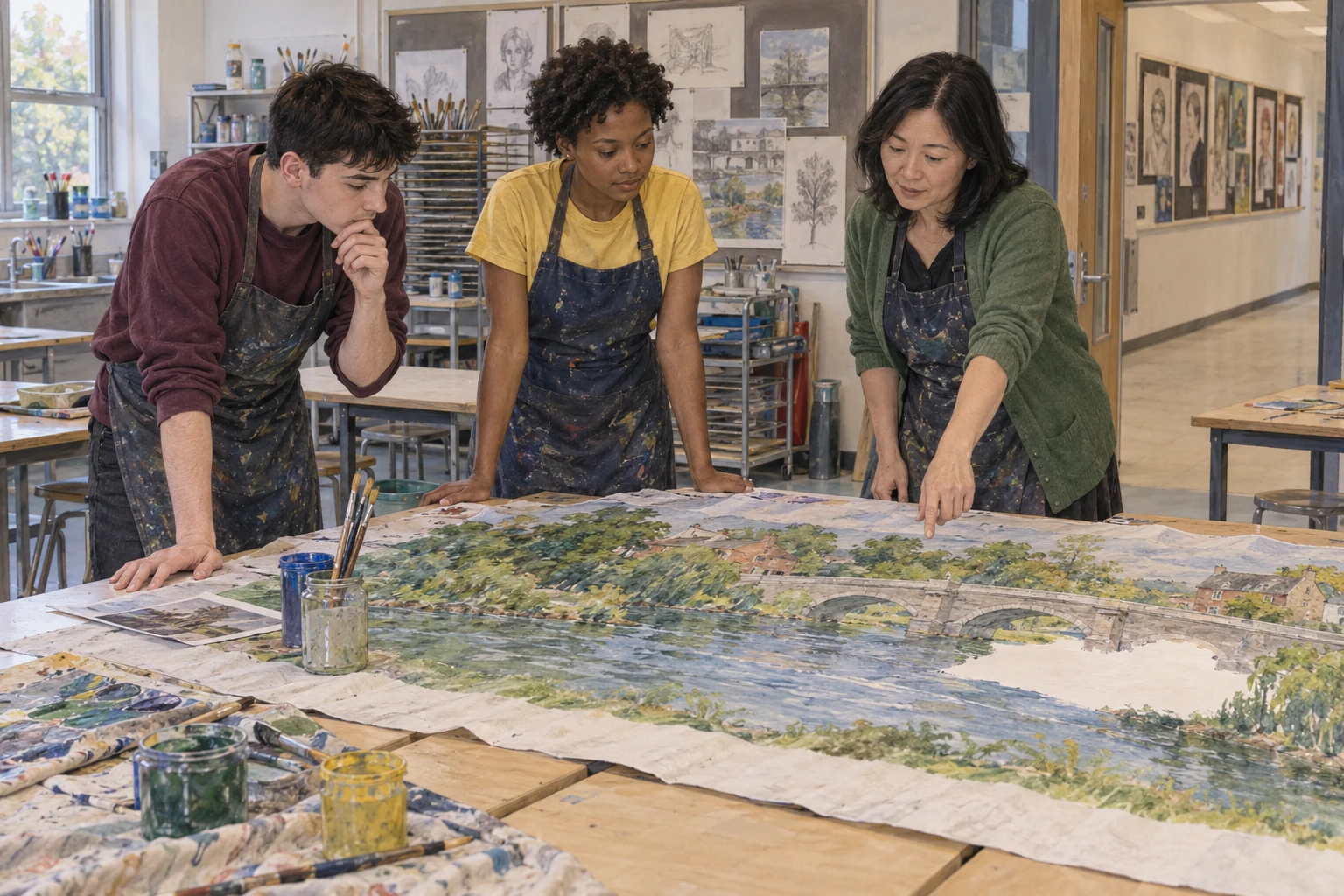
School Readers · Level 20Douglas stands back from the paper mural spread across the art-room tables. The painted river curves past a bridge, trees and a row of houses. Natalie has added people walking along the bank. Only one white gap remains beside the bridge. Their teacher, Ms Hart, asks whether the mural is ready for the school corridor. Douglas reaches for a brush. To him, an empty space means there is still work to do.
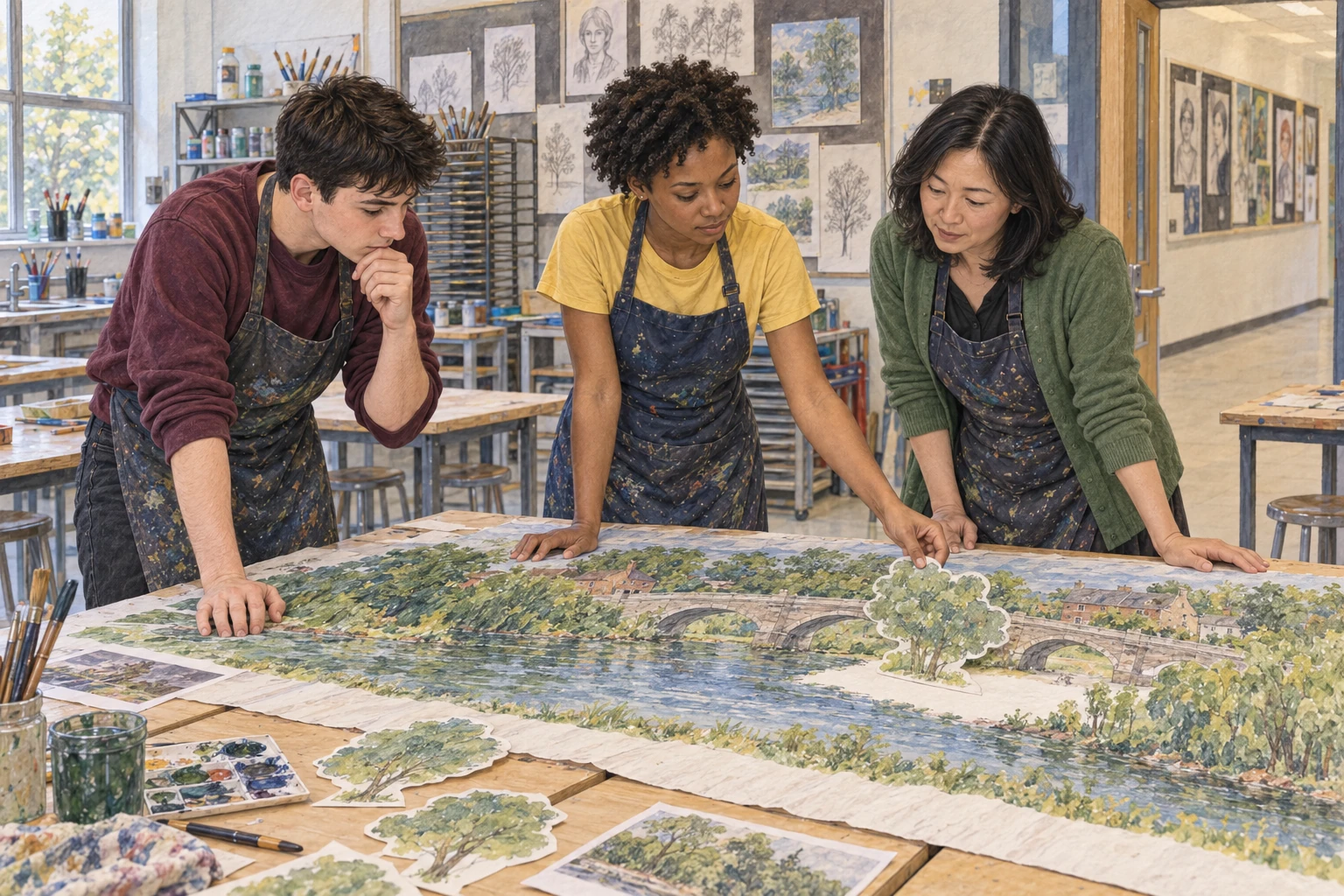
He suggests painting another tree in the gap. Natalie places a paper tree shape there to try the idea without changing the picture. It hides the small path leading down to the river. They move it to the left, then to the right. Each position covers something they want people to notice. Filling the space is easy; finding something that belongs in it is harder.
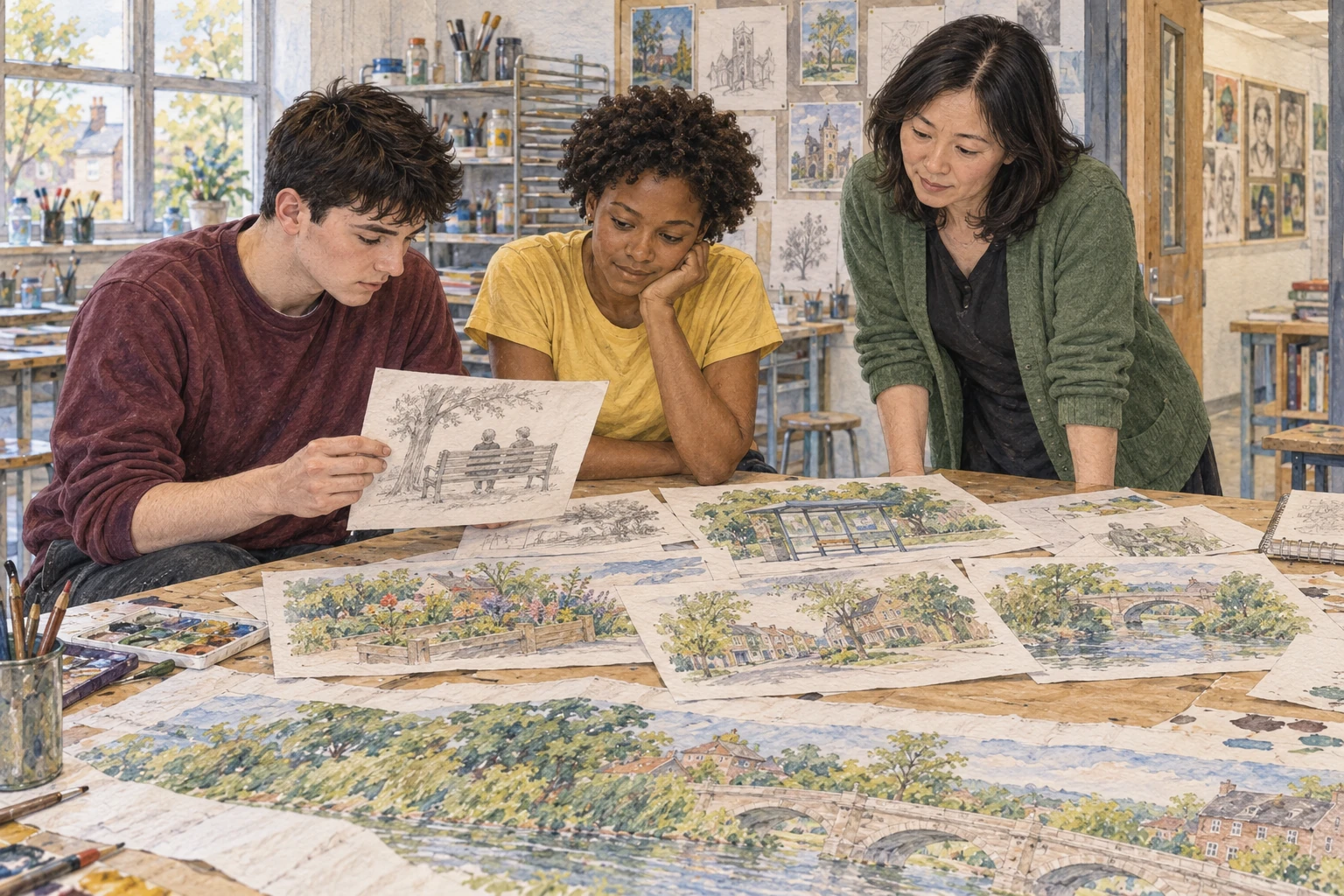
Ms Hart asks them to look at the sketches collected before the mural began. Students had drawn places they valued in the neighbourhood. There are gardens, a bus stop, the library and the bridge. Douglas finds one sheet showing only a bench with two people talking. The artist has written that it is where she waits with her brother after school. It is an ordinary place with a particular meaning.
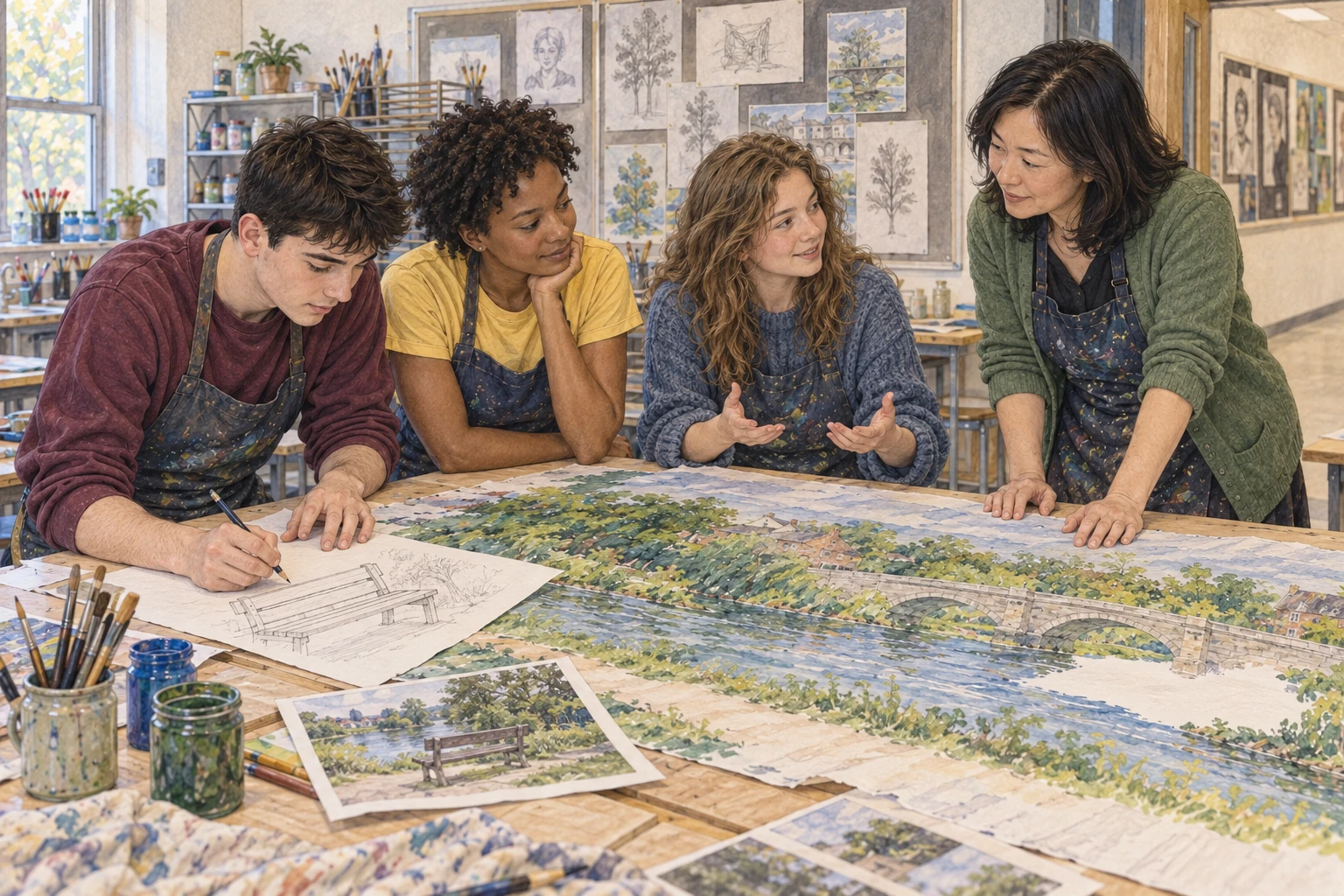
Douglas proposes adding the bench. Natalie agrees that it could fit beside the path, but neither wants to copy someone’s personal drawing without asking. Ms Hart helps them discuss the idea with its artist, who is happy for them to use the bench as a starting point. She suggests showing it empty, leaving viewers to imagine who might sit there. Douglas tries an outline on separate paper.
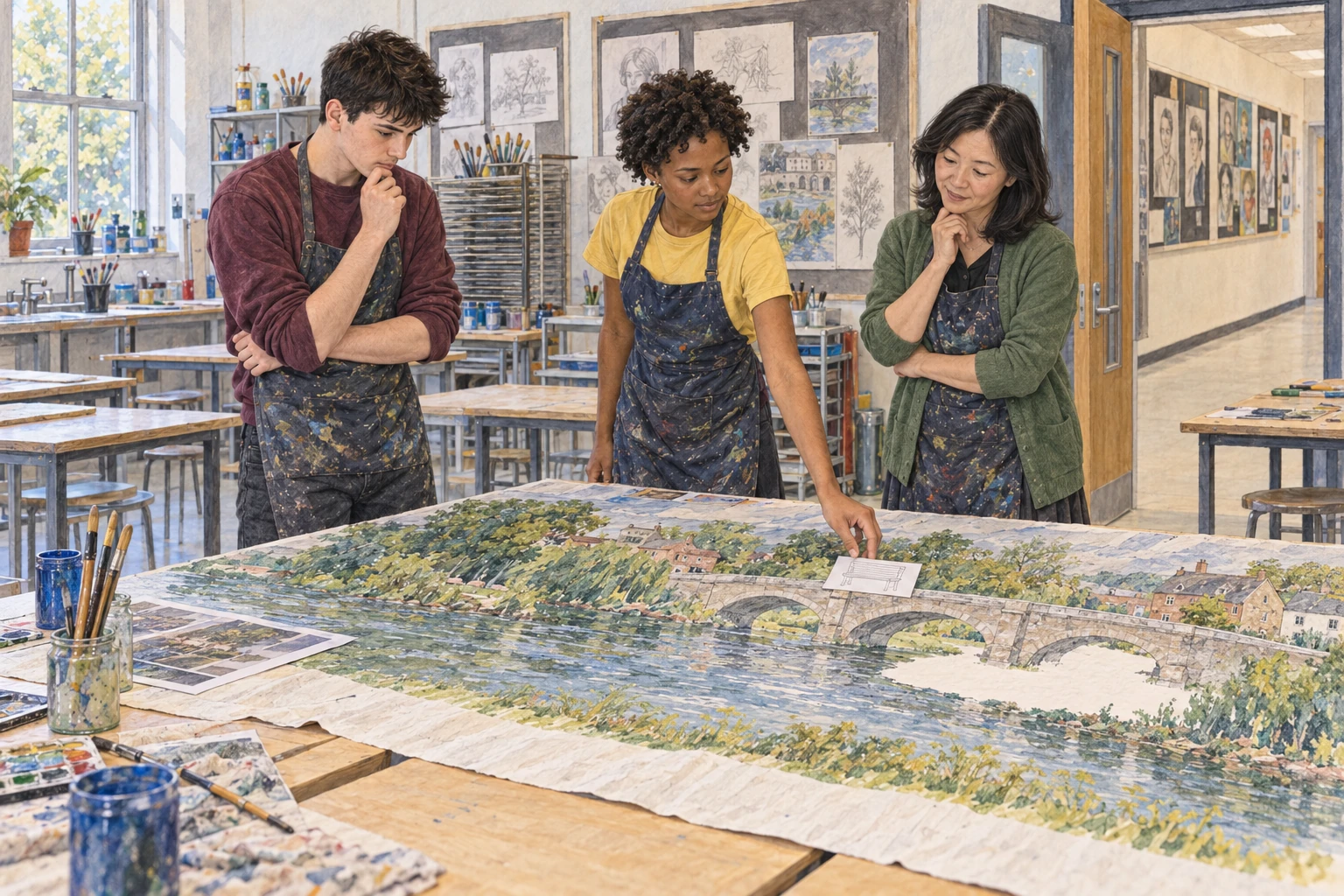
The bench fits, yet the white gap around it still bothers him. Natalie places their paper outline on the mural and asks him to look from the corridor distance. From there, the open area makes the bench easy to see. The river and houses already hold plenty of detail. Douglas notices that his eye can rest near the bridge before following the path back through the rest of the picture.
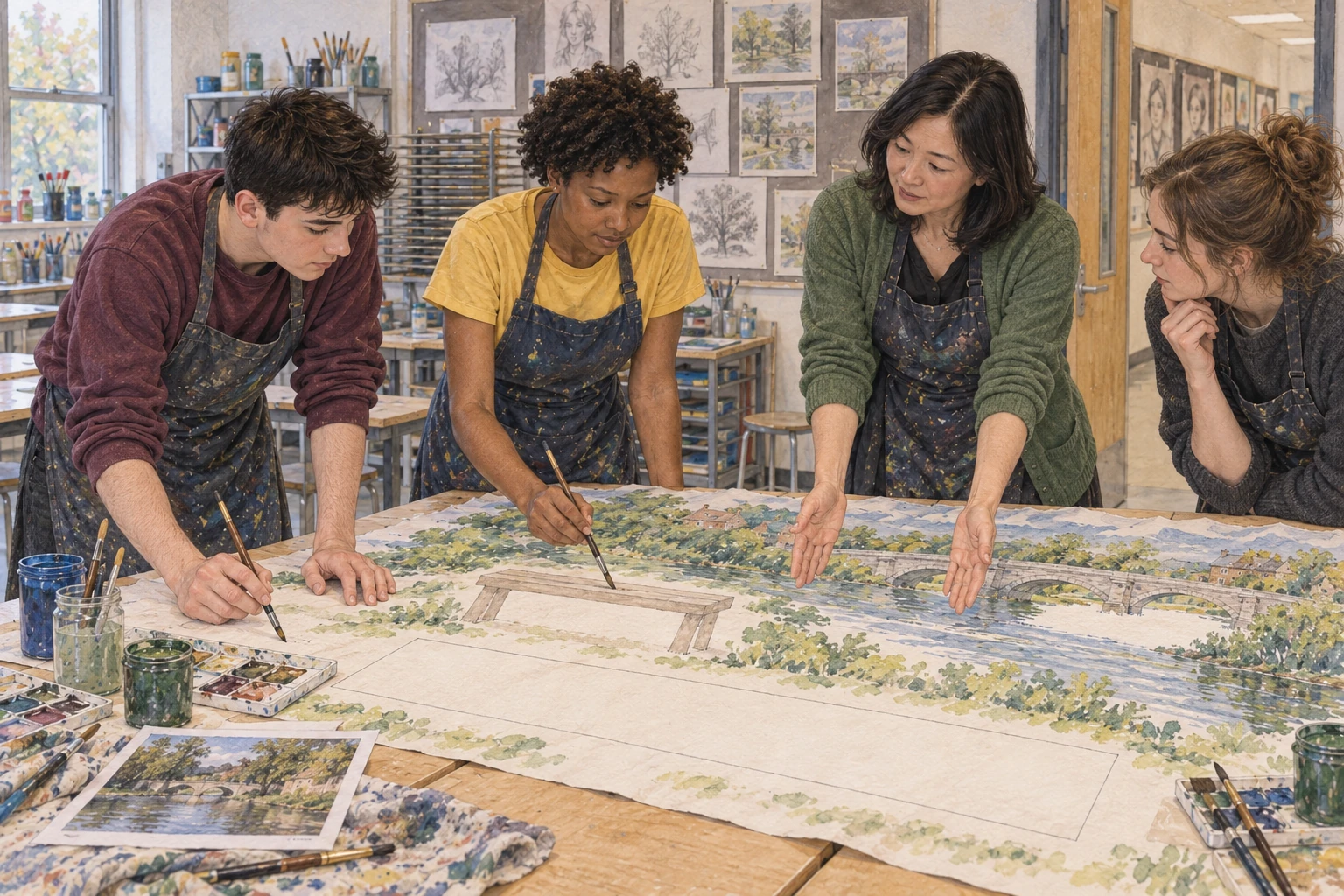
They paint the bench lightly and keep the space around it simple. Another student stops to watch and asks whether someone could add a thought beside the picture. Ms Hart suggests a separate response panel below the mural, where viewers can leave drawings or short comments. The paper artwork can remain clear while the display grows through other people’s ideas. Douglas puts down his brush instead of reaching for more paint.
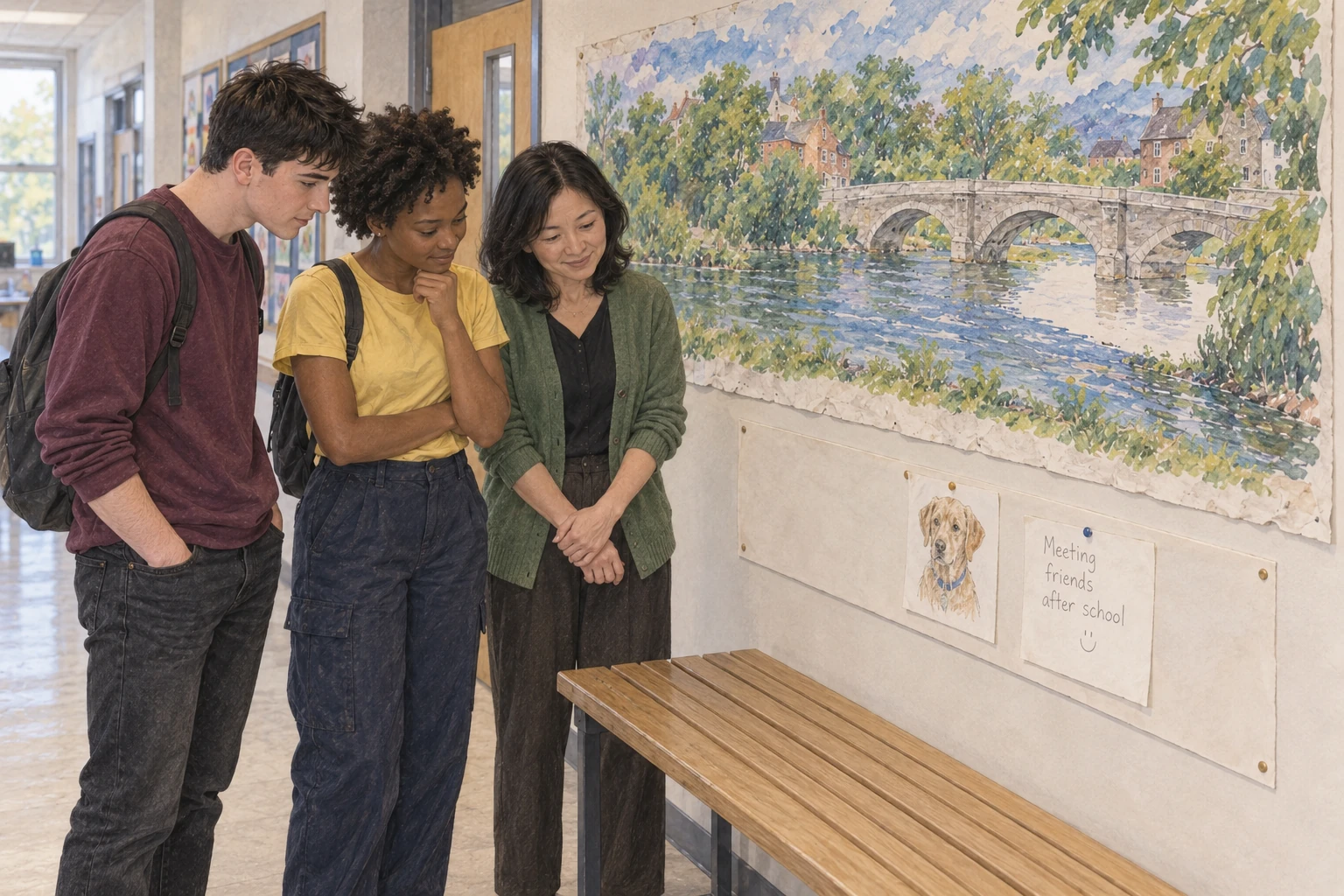
When they hang the dry mural at an accessible height in the corridor, the bench sits near the centre. The response panel starts blank. By the afternoon, it holds a drawing of a dog and a note about meeting friends after school. Natalie reads them with Douglas. Neither response is exactly what they expected, but both connect the painted place with someone’s real experience of being outside.
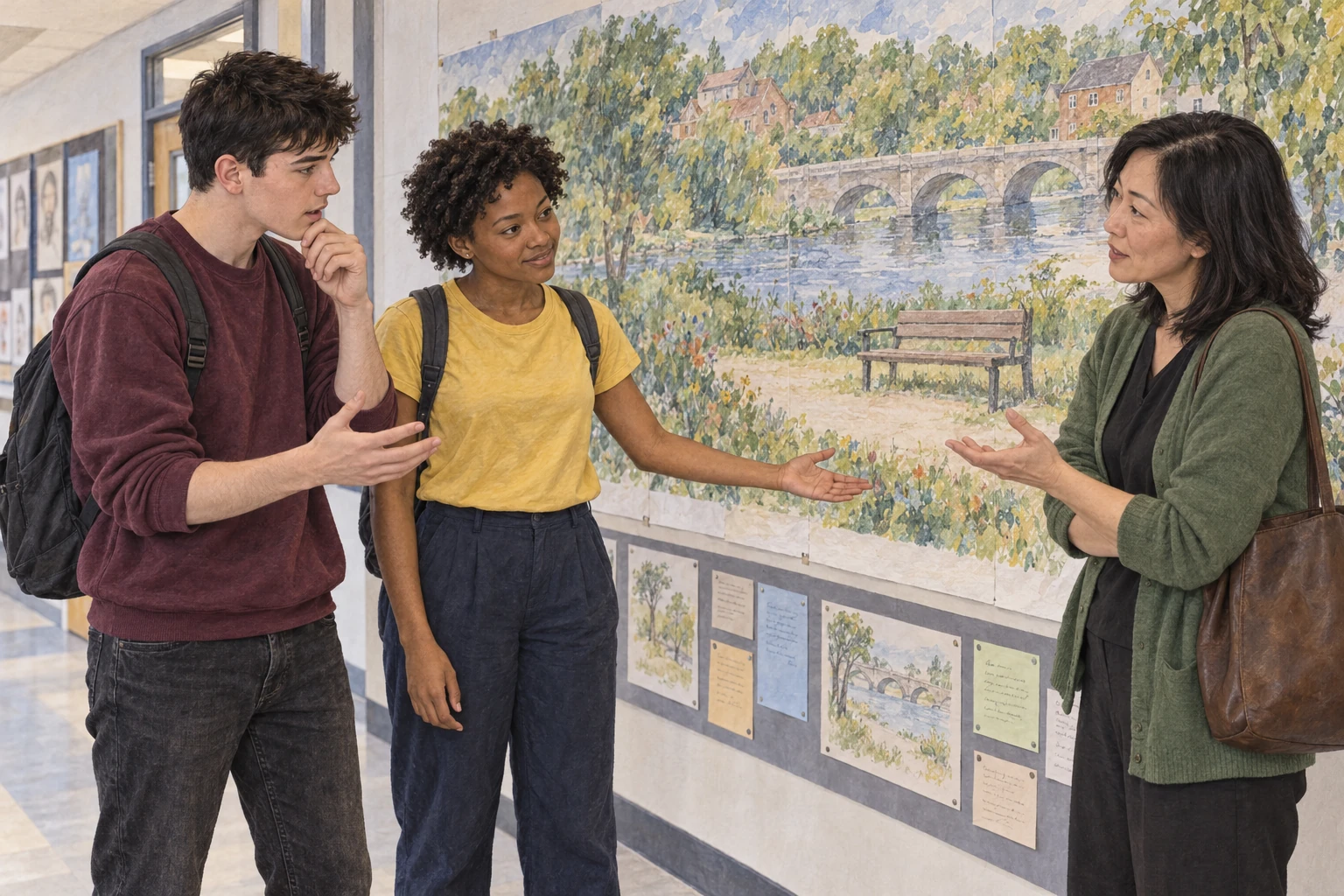
A visitor calls the mural unfinished because of the quiet area beside the bridge. Douglas begins to explain every choice, then pauses. He asks what the visitor would imagine there. She describes a place to sit after a long walk. Natalie points to the bench and smiles. The space has not failed to tell the whole story; it has invited another person to bring part of a story to it.
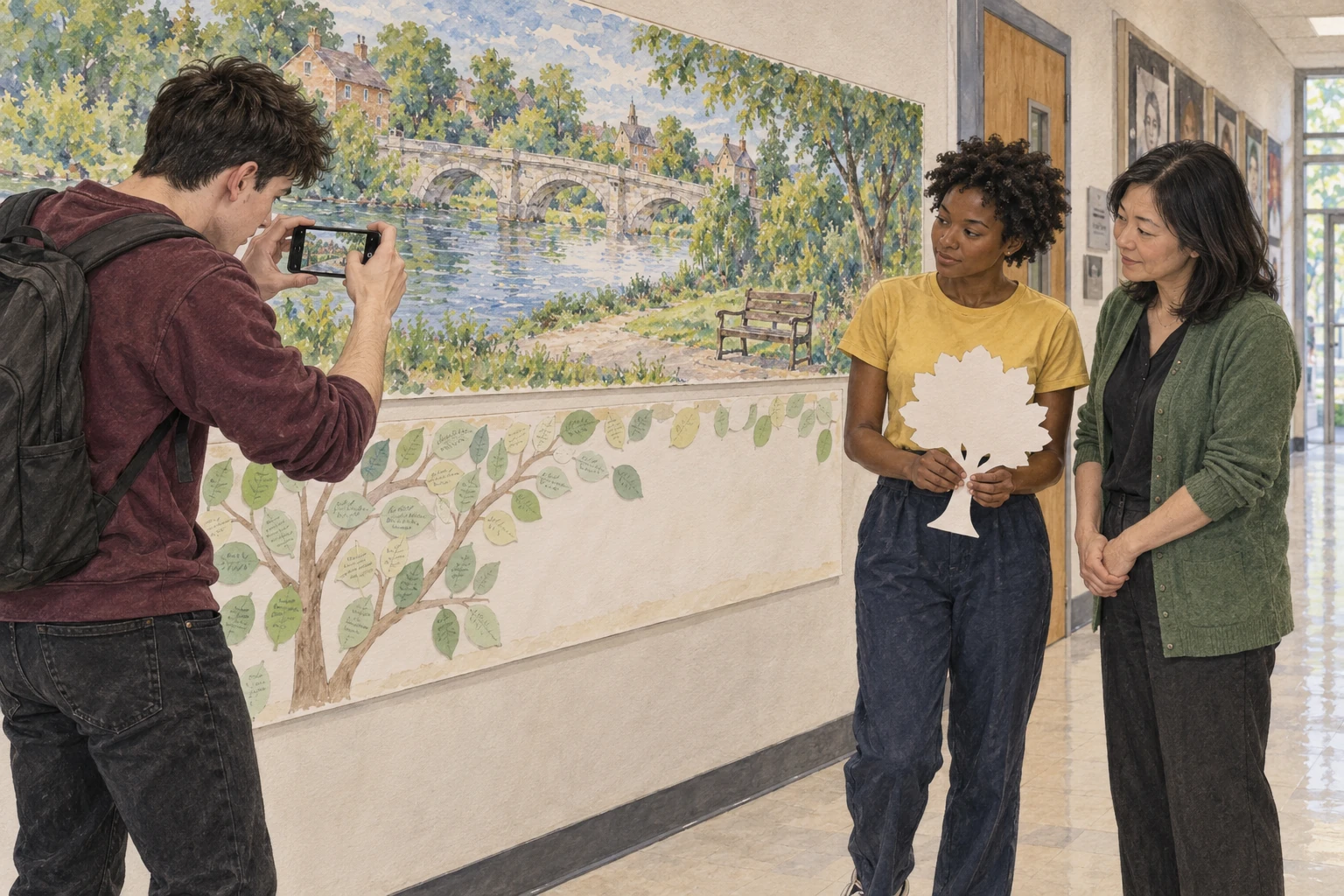
At the end of the week, they photograph the mural with its growing response panel. Douglas keeps the unused paper tree in his folder. It reminds him that adding more is only one kind of improvement. He still checks the empty area whenever he passes, but he no longer sees a missed job. Beside the painted river, there is room for a bench, a pause and somebody else’s idea.