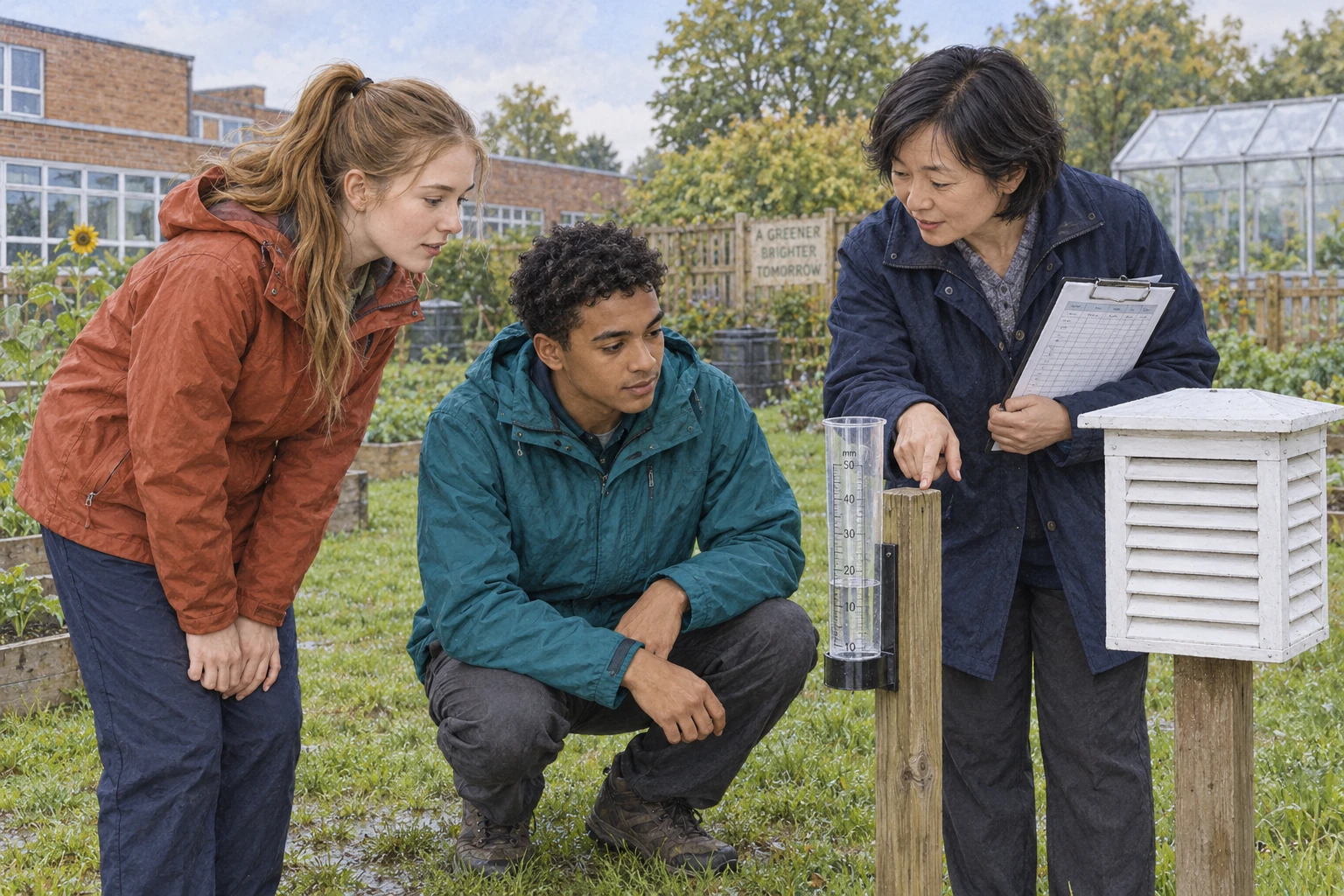
The Weather Station
School Readers · Level 17Laura and Miles check the school weather station each morning with Ms Hill. Their rainfall chart is beginning to fill with a pattern of wet days and dry days. After a rainy night, Laura expects a large reading. She carries the clipboard across the garden while Miles brings the ruler they use to check the gauge.
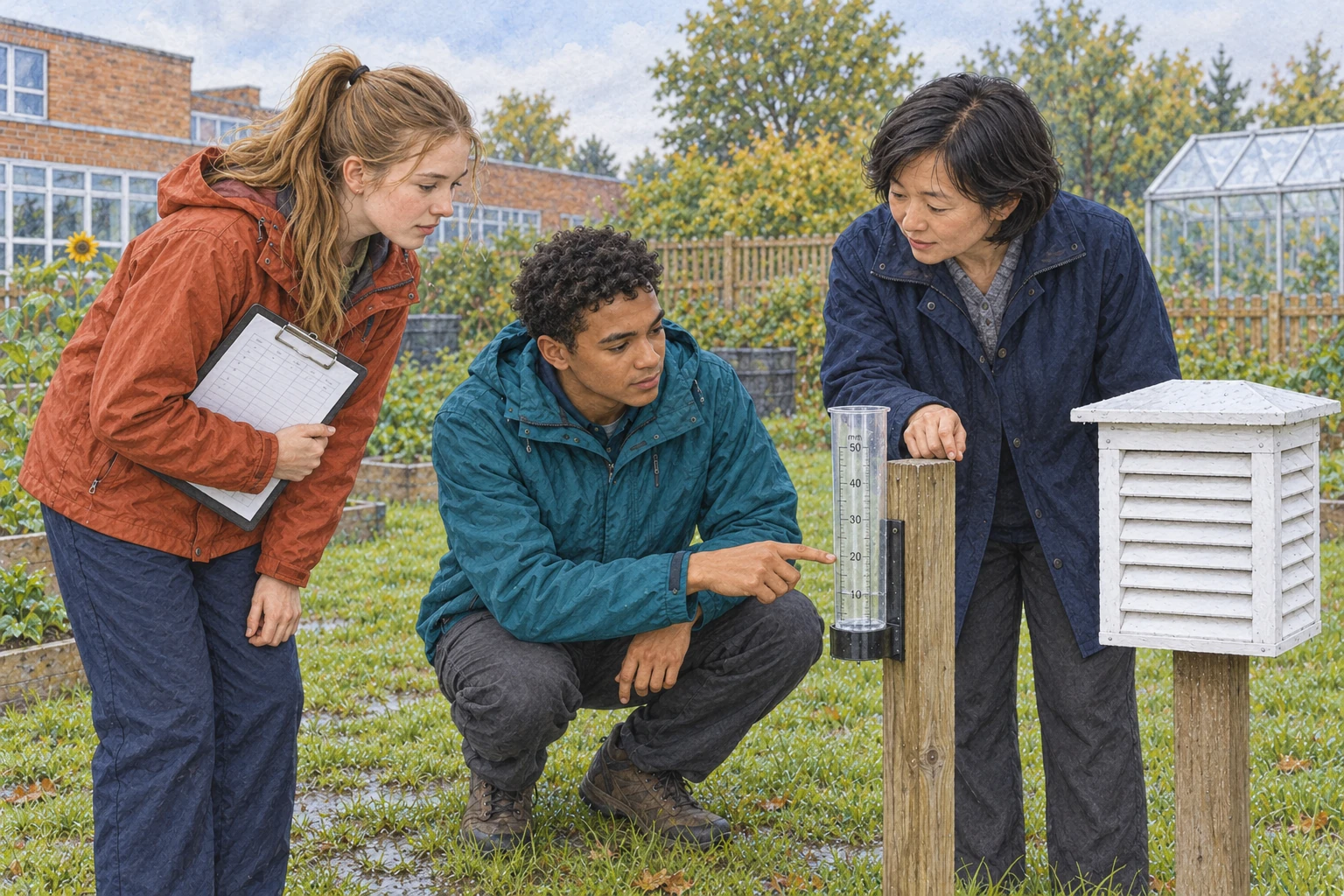
The gauge contains hardly any water. Laura looks at the wet lawn and then at the empty space in the cylinder. “That cannot be right,” she says. Miles points to the mark on the chart where yesterday’s reading should go. They could write zero and move on, but neither feels sure that would describe what actually happened overnight.
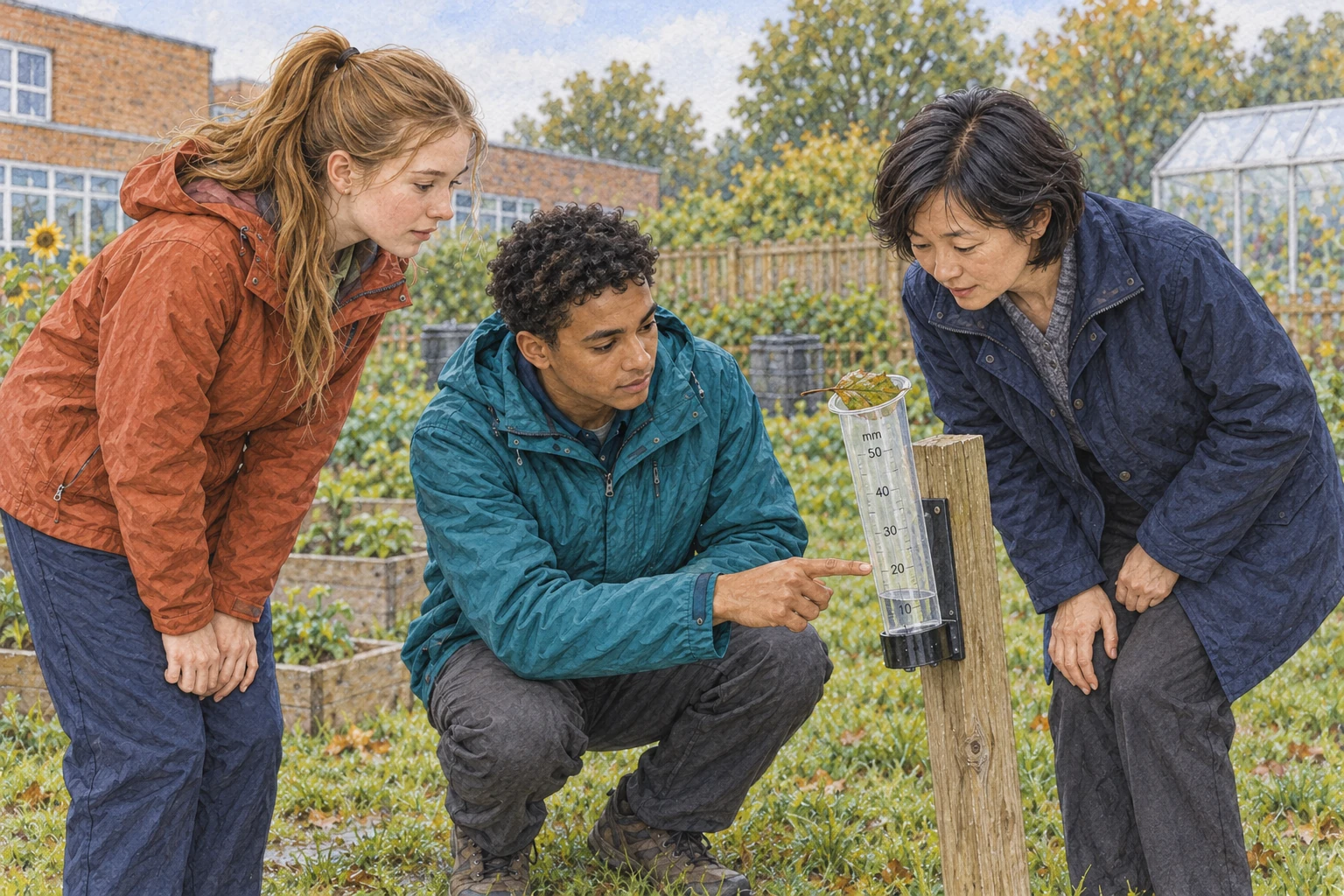
Ms Hill asks them to examine the equipment before deciding. The cylinder is leaning against its post, and a small leaf is caught over the opening. Laura remembers a windy gust during yesterday’s afternoon break. The gauge may have moved before the rain began. Its small amount of water cannot give them a trustworthy measure of the whole night.
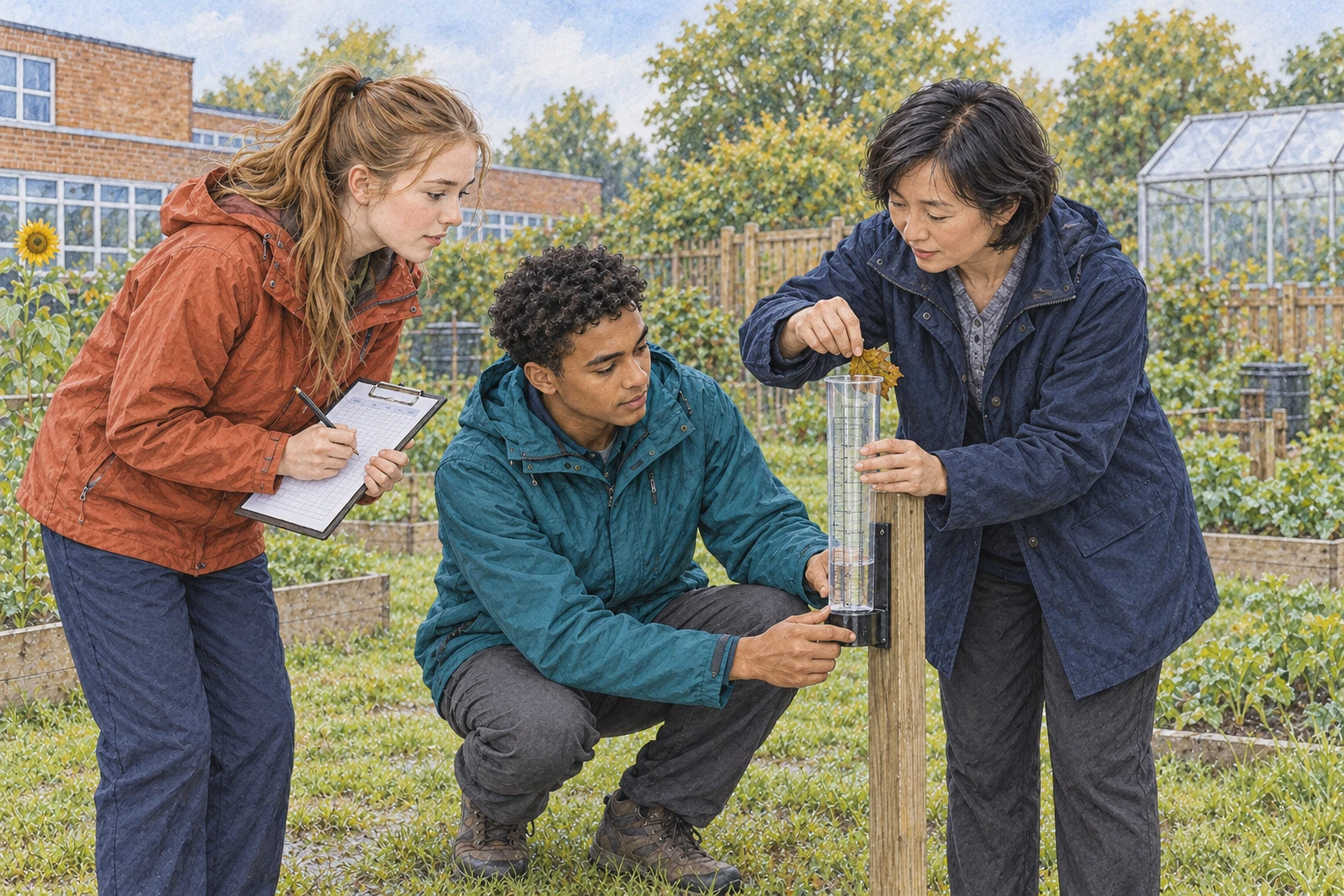
With Ms Hill’s help, they clear the leaf and return the gauge to its proper upright position. Miles checks that its holder is secure. Laura is about to fill the chart with her best guess, but Ms Hill asks how anyone could check that number later. A guess would look just like a measurement once it was written in the same column.
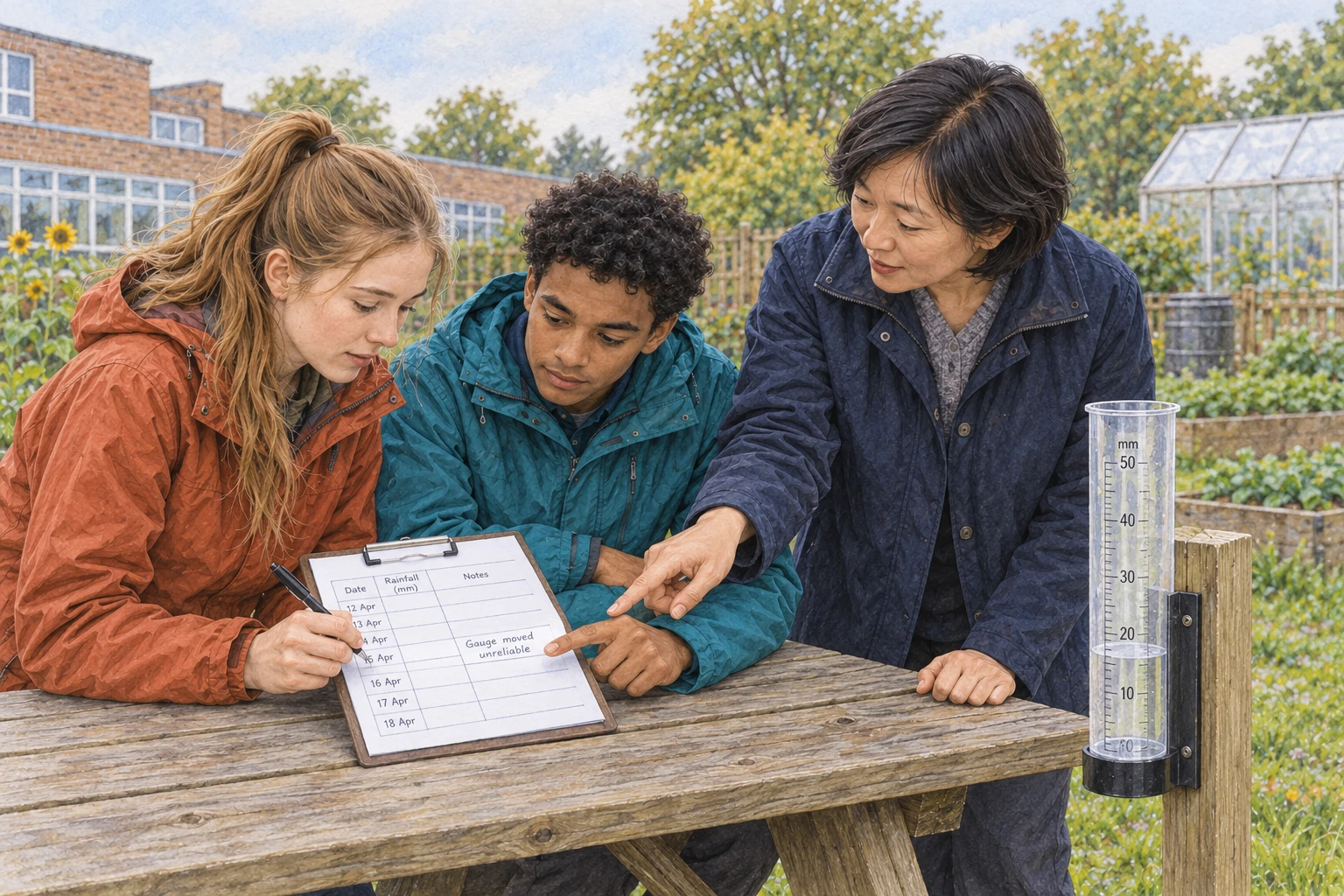
They write a short note instead: the gauge had moved, so that reading is unreliable. They leave the rainfall amount blank for that date. Laura does not like the gap in their neat chart. Miles points out that the note tells the next person why it is there. An honest gap gives more information than a number chosen to make the page look complete.
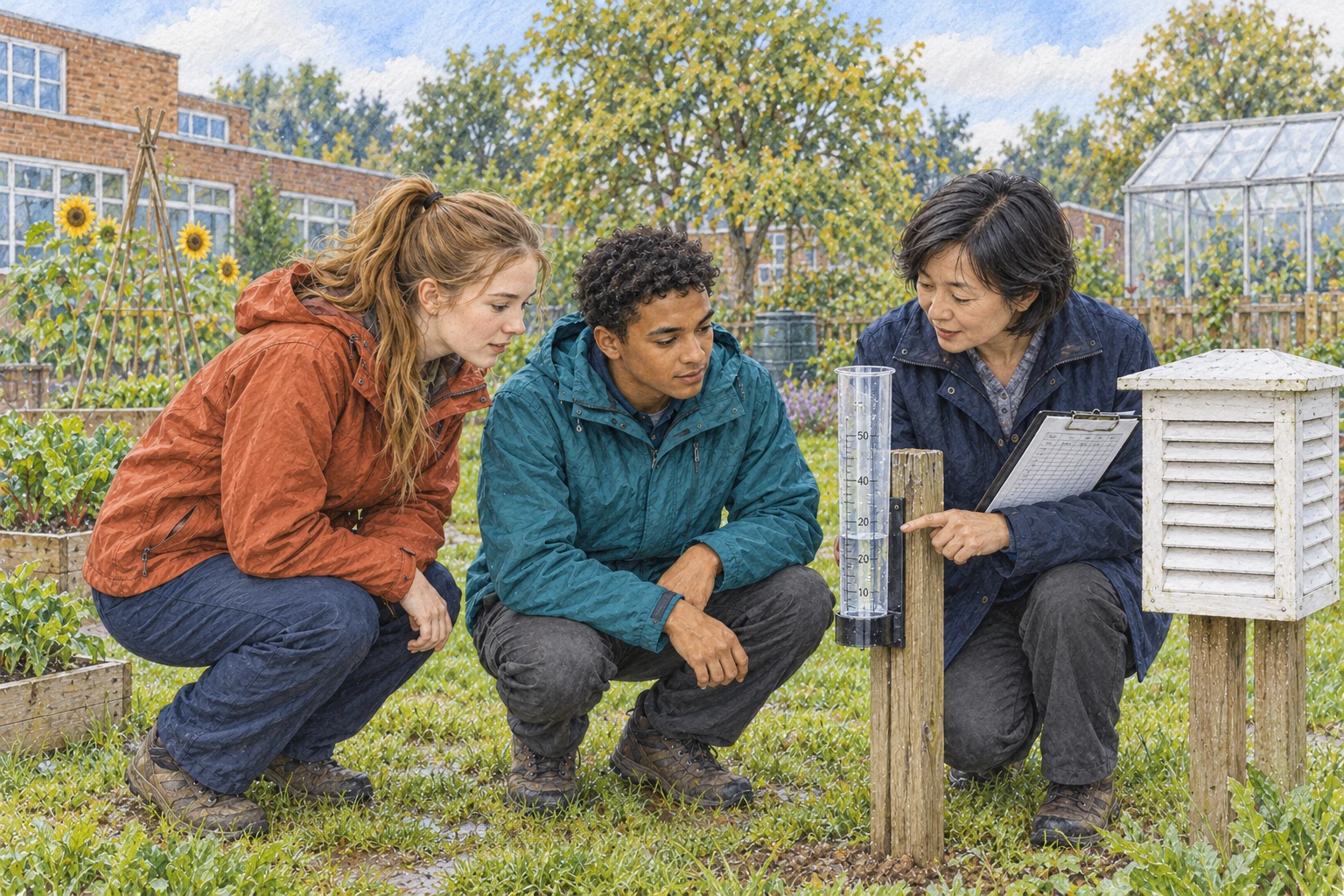
The next morning, they find water in the upright cylinder. Both read it at the marked level before Ms Hill checks their measurement. They record the amount and empty the gauge as their usual routine requires. This time, Laura adds a quick equipment check to the top of their daily list so they will notice any problem early.
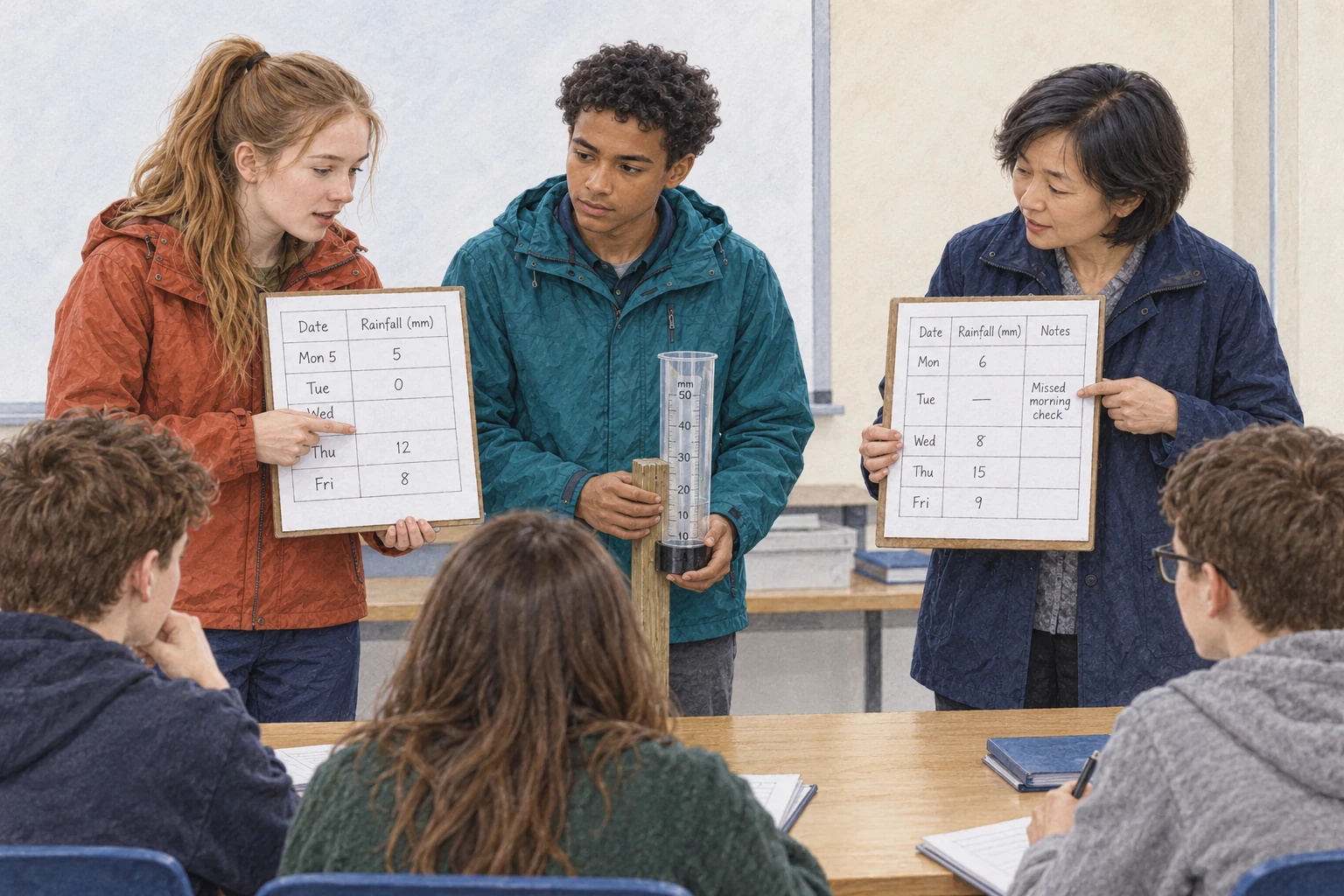
At the end of the week, the class compares rainfall records from different places. Laura explains the blank space on their chart before anyone asks about it. Another group has a note about a missed morning check. Together, they discuss what their records can show and what they cannot claim from the information they actually collected.
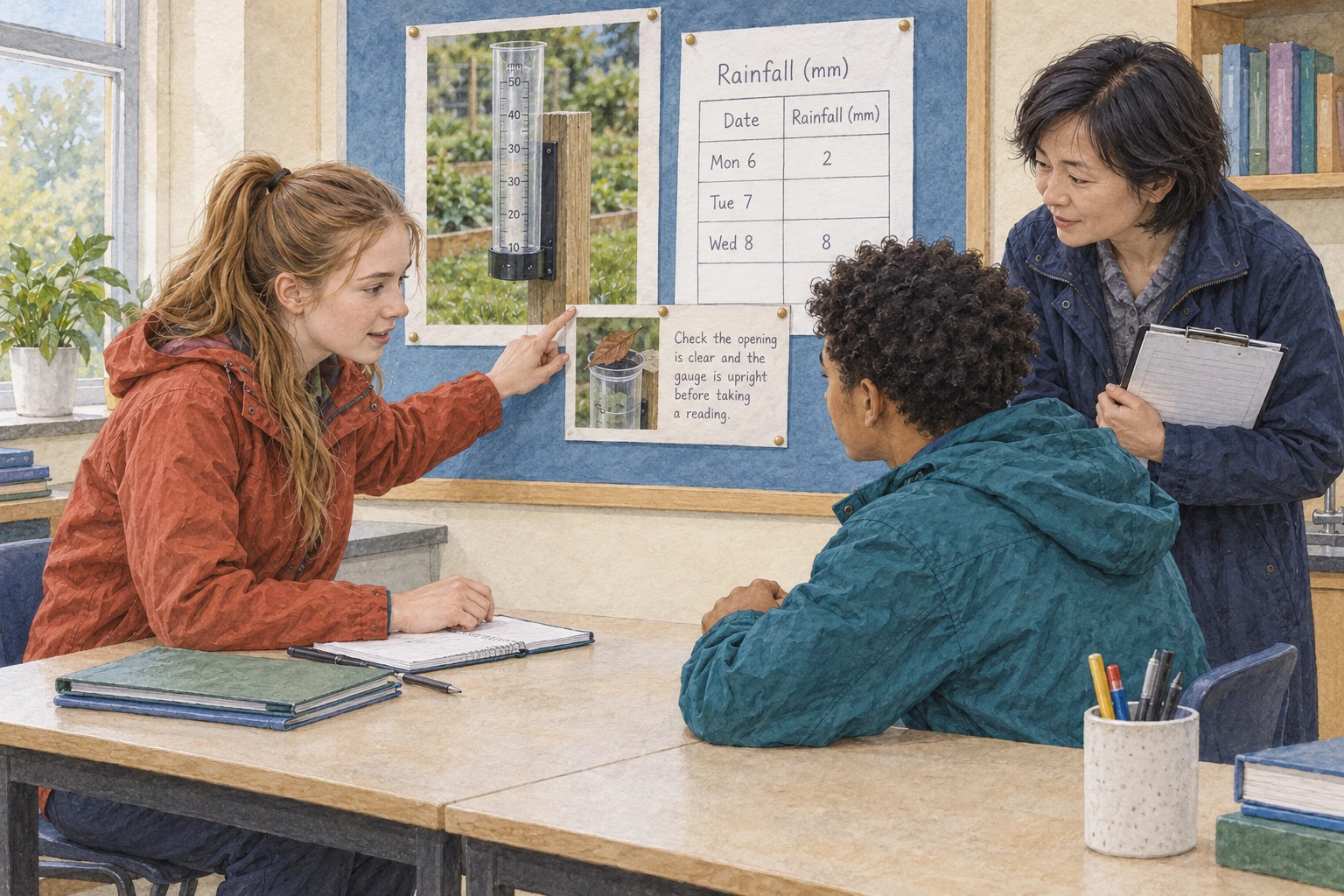
Laura pins the chart beside a photograph of the repaired holder. The gap is still there, with its small explanation. She no longer wants to fill it. When a new student joins the weather team, she shows him how to check the opening and the position first. Reading the water is only one part of keeping a useful weather record.