The Wrong Forecast
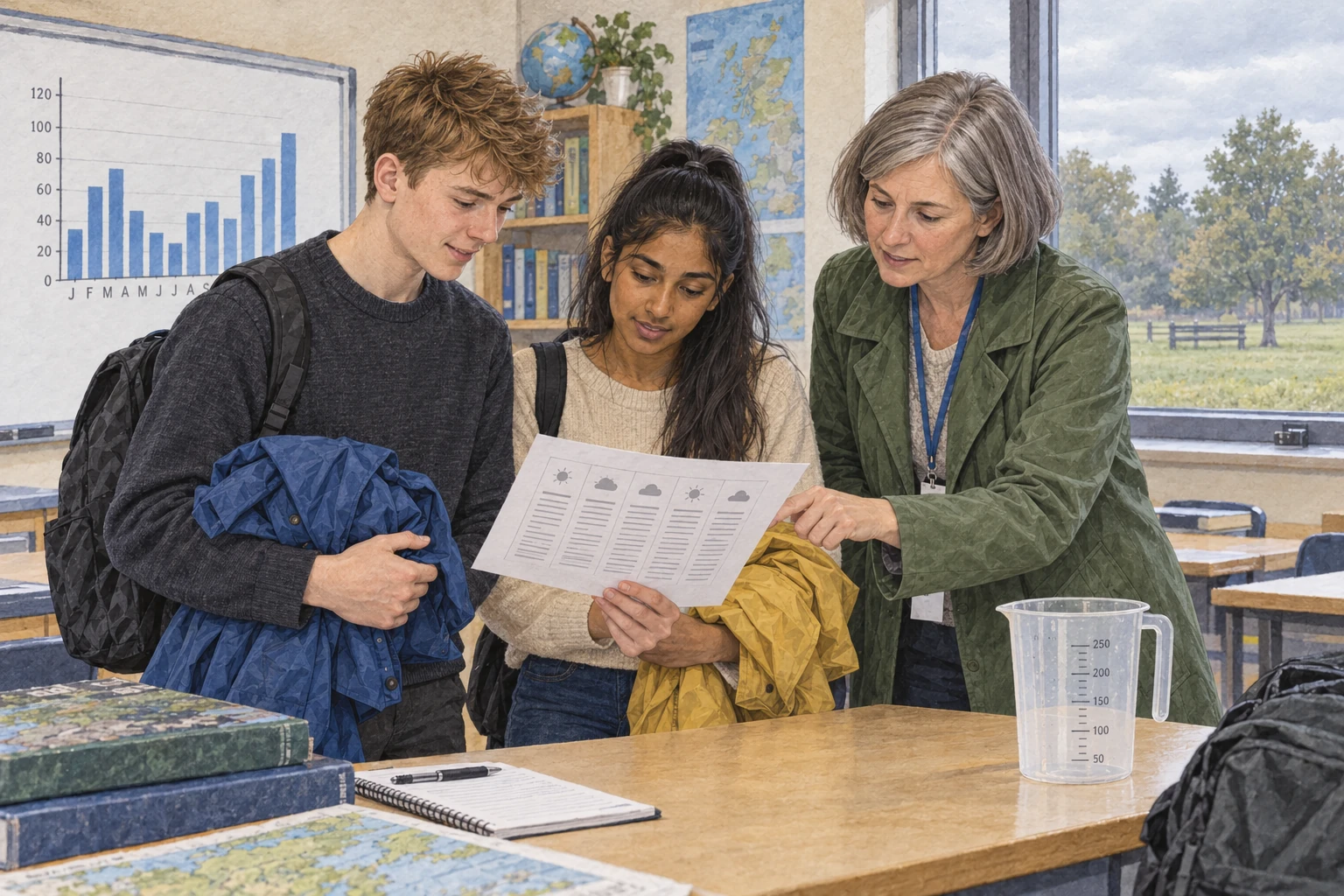
School Readers · Level 20Stephen brings a printed forecast to the classroom table. It shows a dry afternoon, just right for their short weather walk in the nearby park. Charlotte places the rainfall chart beside it. Their teacher, Mrs Reed, asks the group to pack coats even though the forecast looks promising. Stephen folds his coat over his arm. He thinks carrying it will turn out to be the least useful part of the trip.
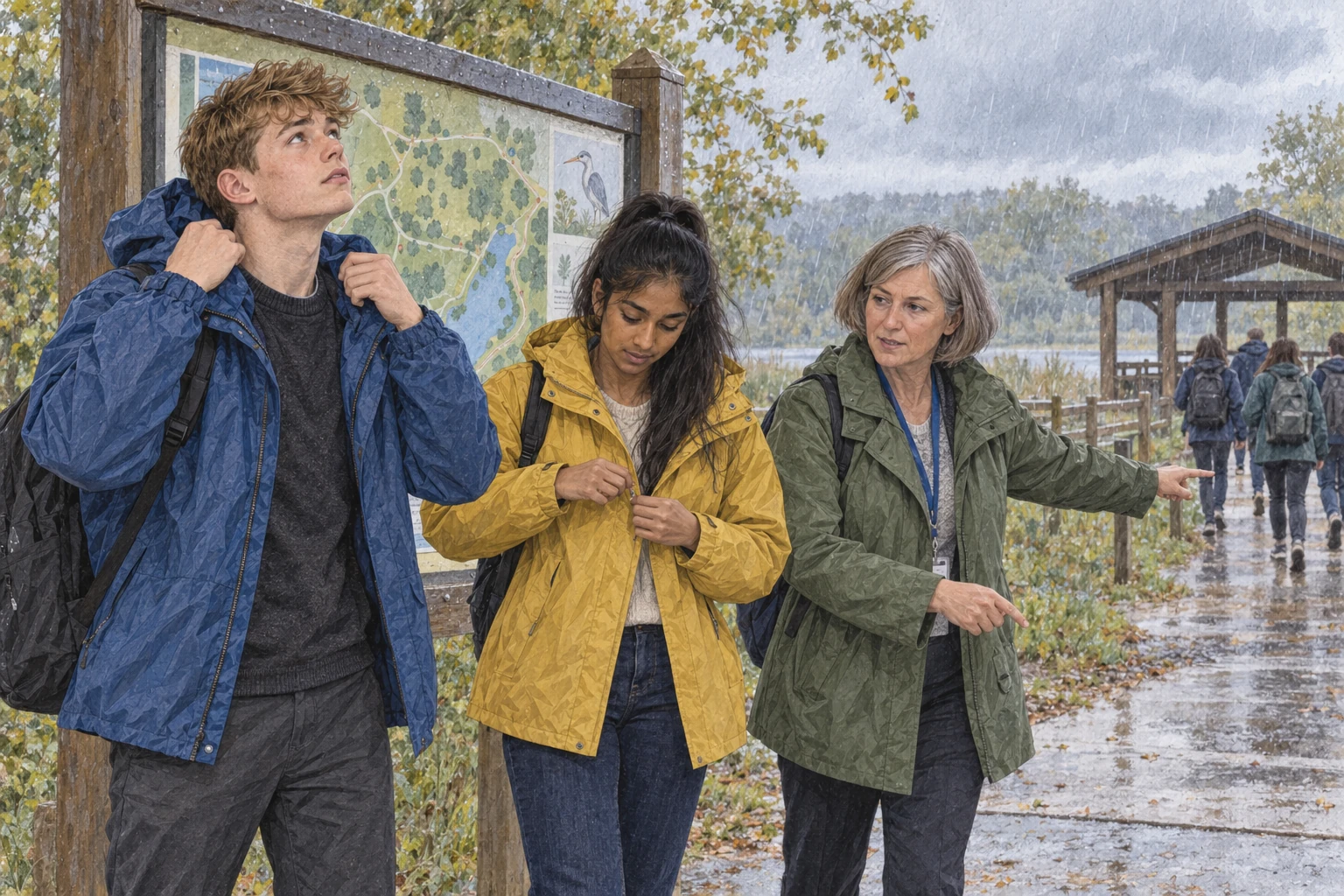
At the park entrance, a few drops land on the map board. Stephen looks up at the pale grey sky. The printout said dry, and he has repeated that to everyone since lunch. Charlotte puts on her coat without saying anything. Mrs Reed leads the group along the broad path to the covered viewing area, where they can look at the weather without getting their notebooks wet.
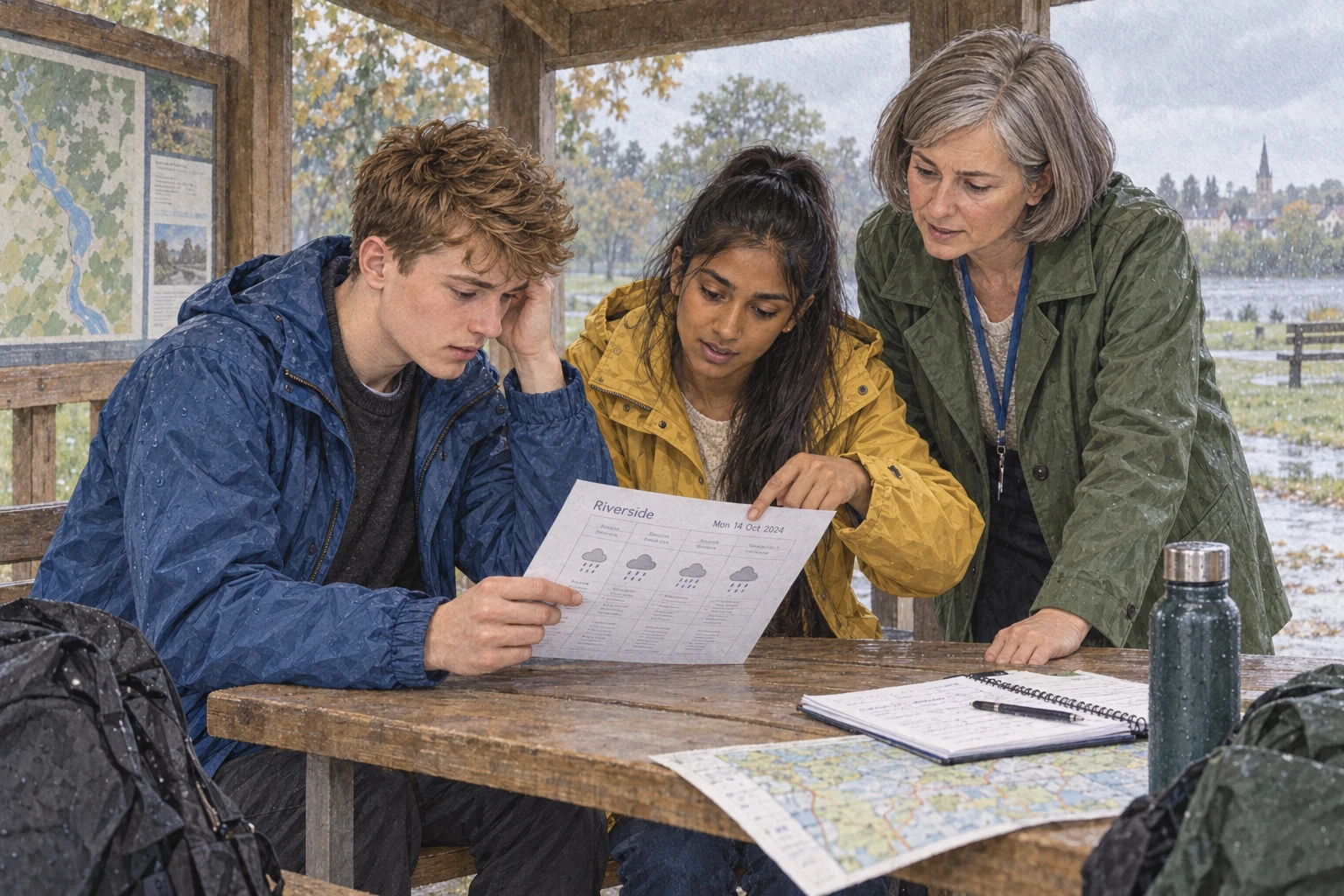
Stephen calls the forecast wrong. He wants to cross it out before making the day’s record. Charlotte asks which forecast he printed. The town name is right, but the small date at the top belongs to yesterday. He must have picked up an old page from the classroom tray. The printout does not describe today’s weather at all. His confident explanation has rested on a detail he did not check.
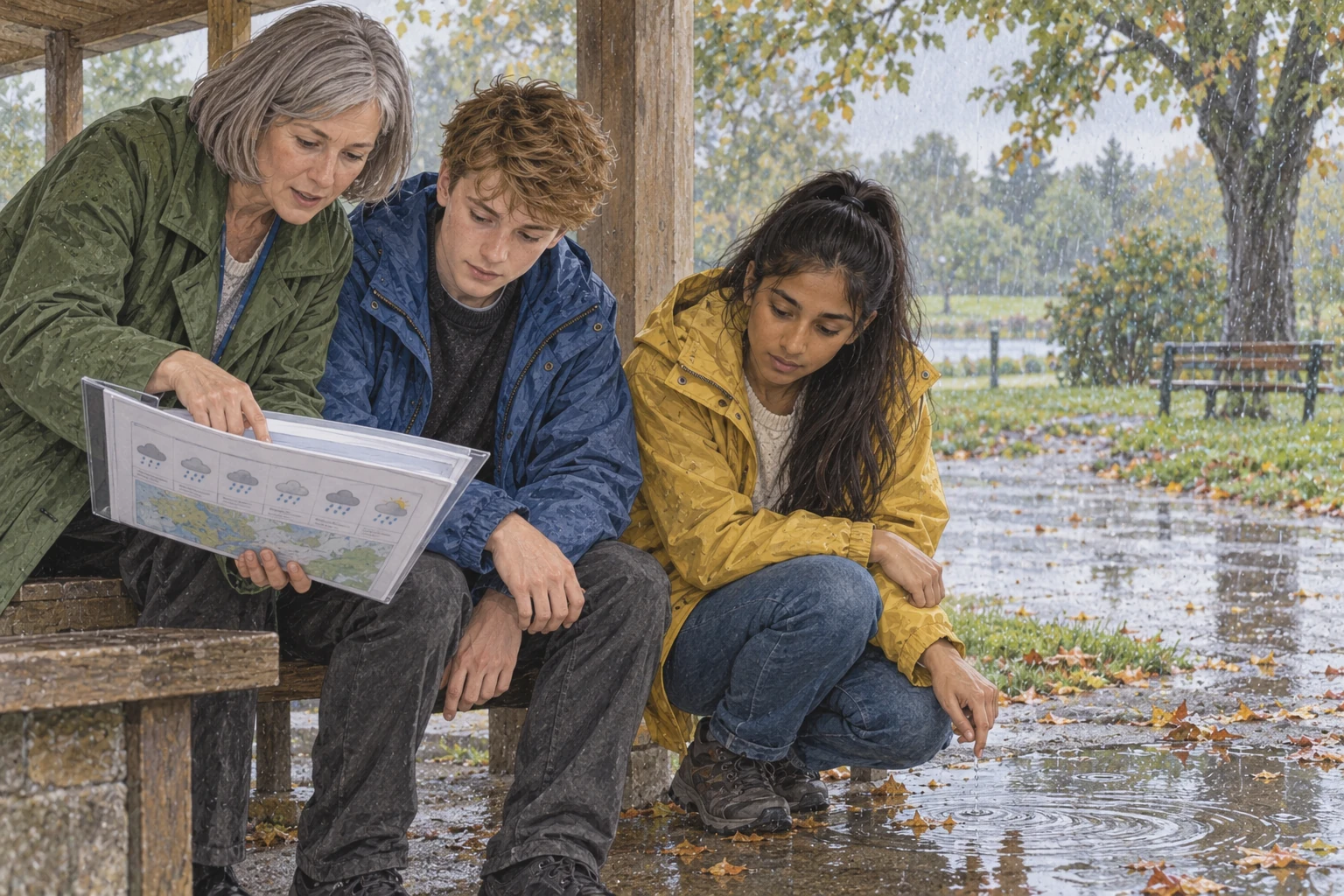
Mrs Reed has today’s forecast in the outing folder. It mentions a chance of light showers across the area. Stephen notices that it does not give an exact minute for rain at their corner of the park. Charlotte watches drops making small circles in a puddle. Their own observation can describe what is happening here, while the forecast offers a wider picture of what may happen.
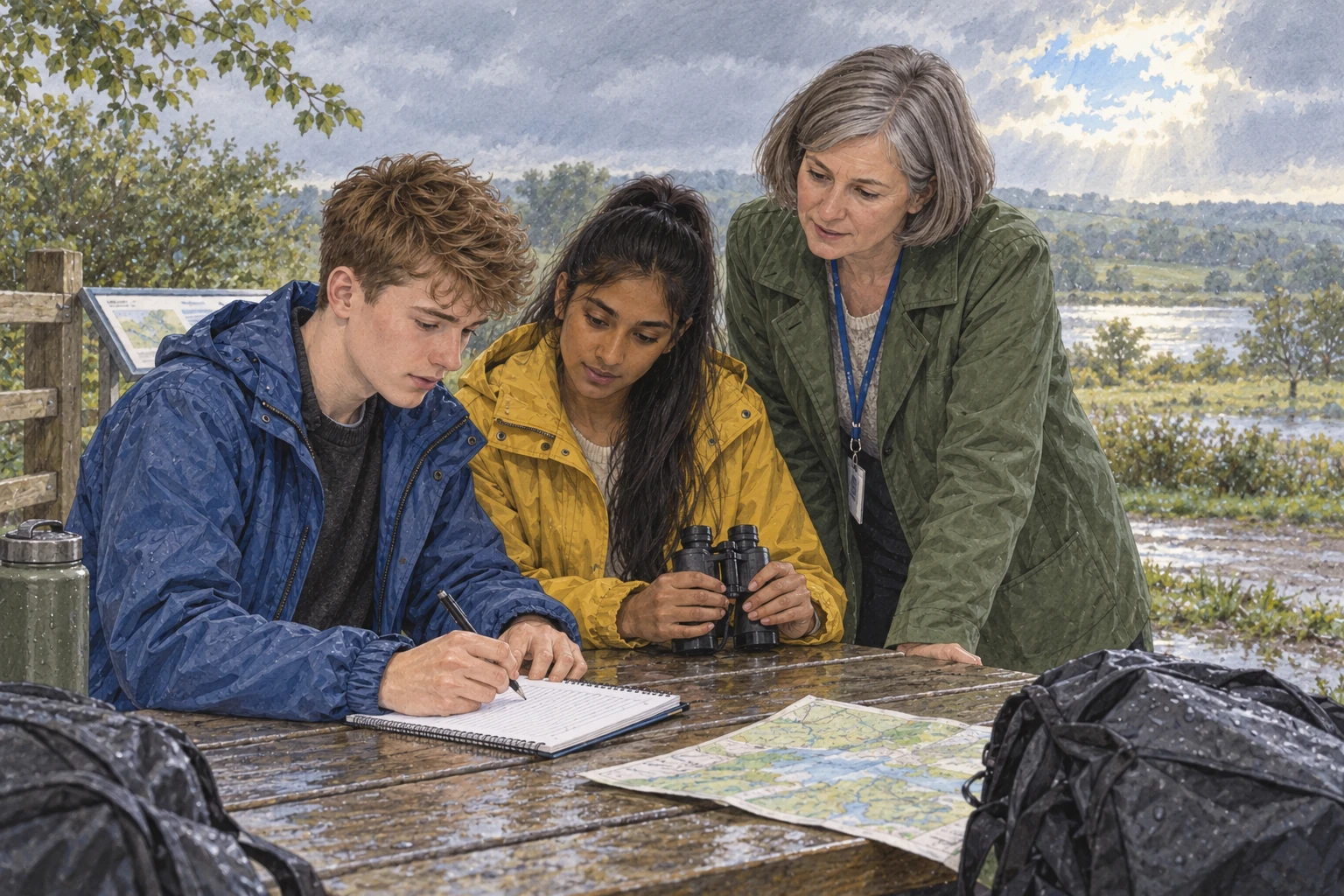
The shower passes before the group finishes its notes. A bright patch opens between the clouds, and Stephen nearly writes that the rain is over for the day. Then he stops. He can say that the rain has stopped now; he cannot know what the whole afternoon will bring from one gap in the cloud. He writes the time beside the observation and leaves space for another entry.
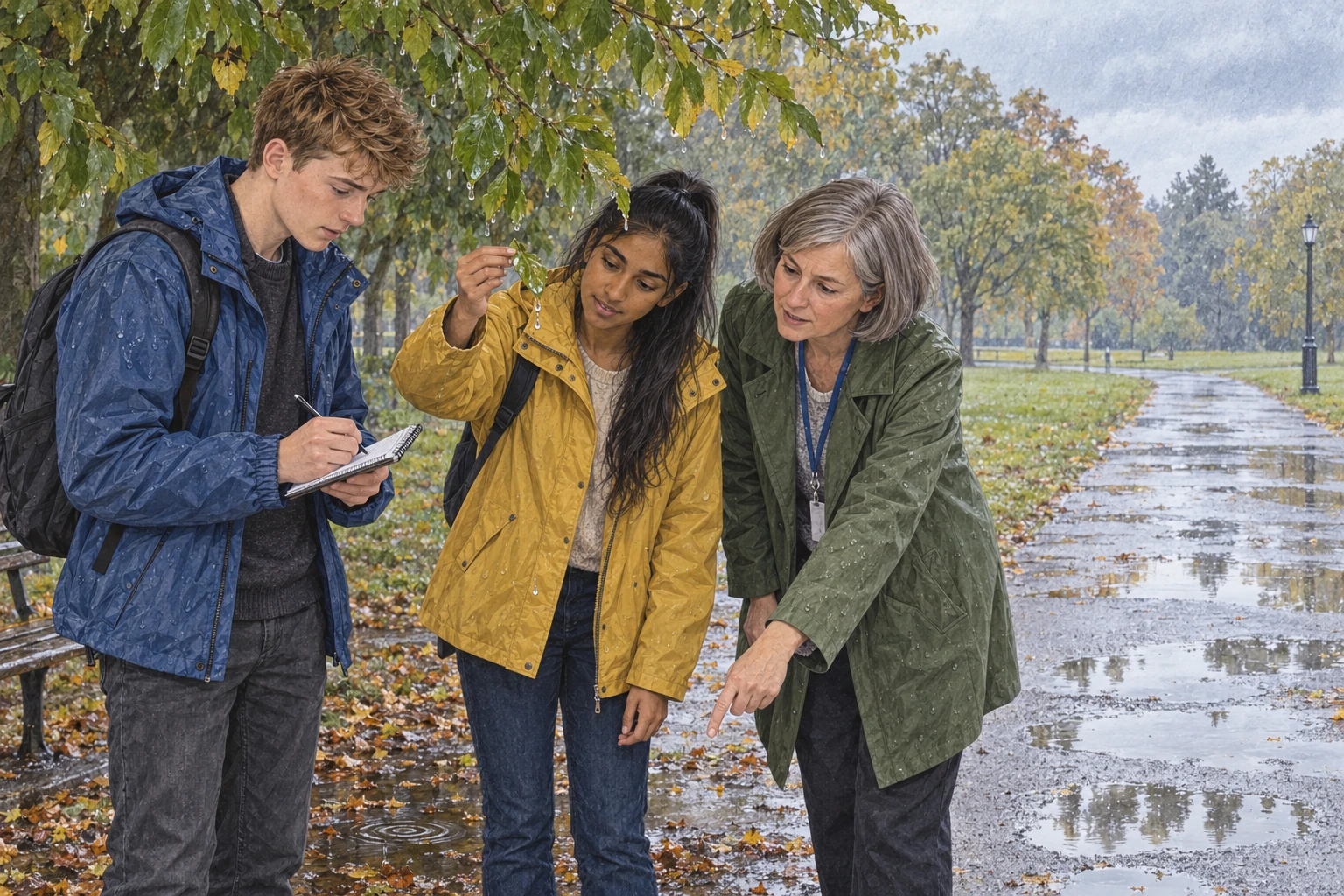
On the return walk, they compare puddles beneath trees with those on the open path. Some places are still dripping long after the shower. Charlotte suggests that anyone standing beneath the leaves might think rain was continuing. Stephen adds the location to their notes. Small details about where and when they looked can change how another person understands the same description of a wet afternoon.
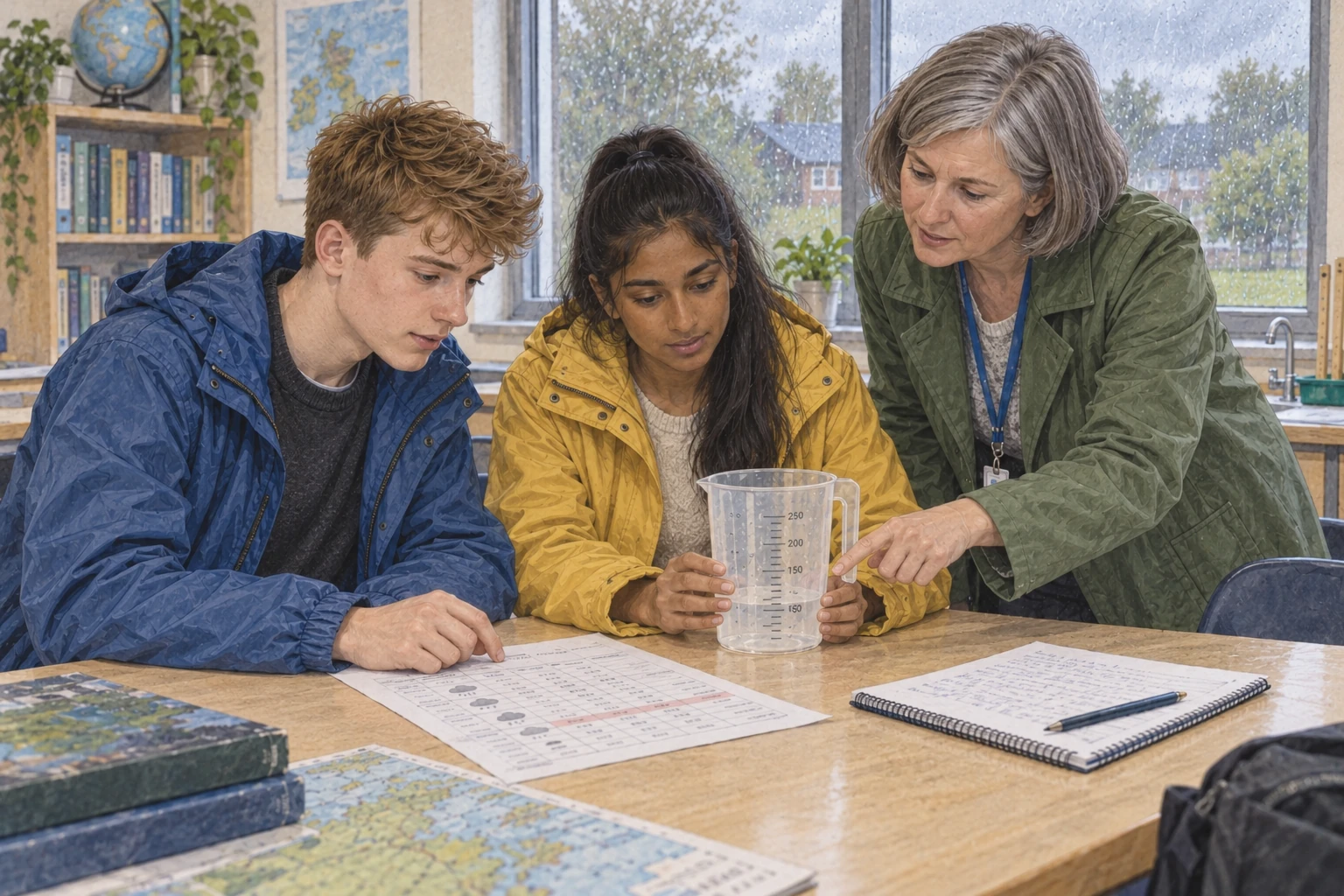
Back at school, they check the measuring pot from the class weather station with Mrs Reed. It holds a small amount of rain. That supports their record of a shower, although it cannot tell them every moment when drops fell. Stephen places the old printout beside today’s notes. The wrong date is easy to see now that he knows to look for it.
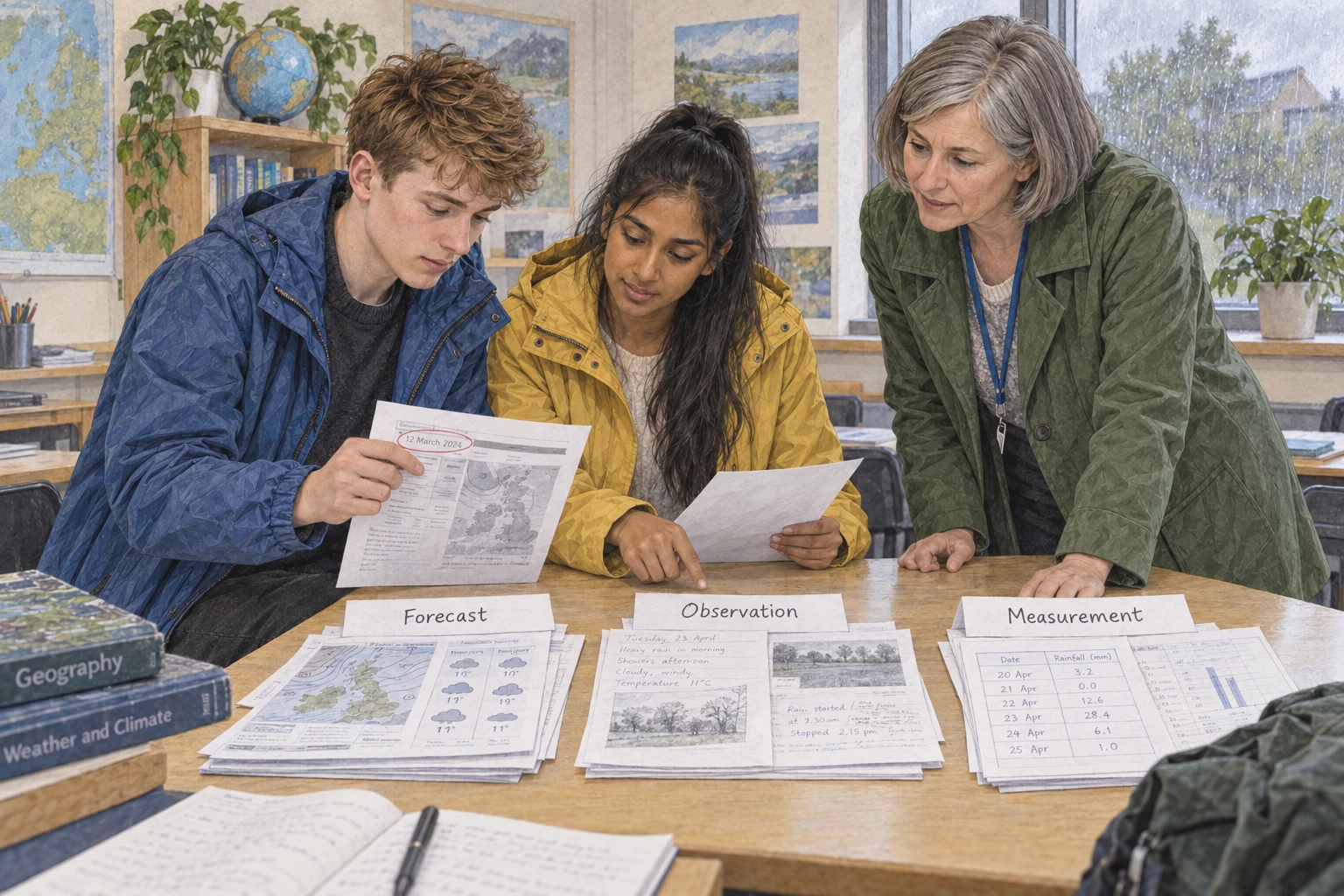
For the class display, Charlotte proposes three headings: forecast, observation and measurement. Stephen sorts their pages beneath them. At first, he wants to leave out his old printout, but it makes a useful example of checking a source. He circles its date and explains why they did not use it as evidence for today’s weather. The mistake has become part of a clearer explanation.
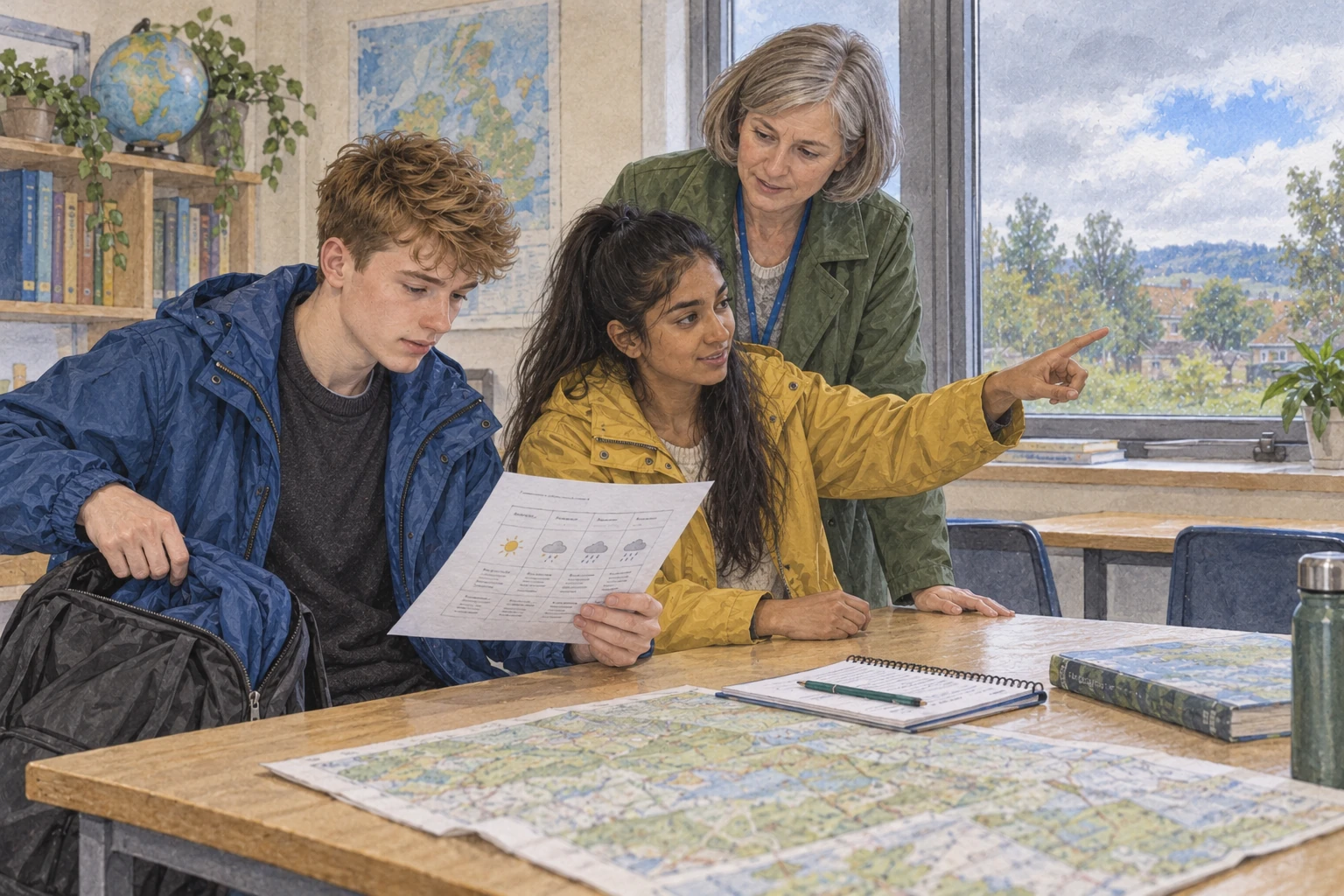
When the next walk is planned, Stephen checks the place, date and time before reading out the forecast. His coat goes into his bag. He still hopes for sunshine, but he no longer treats a forecast as a promise made to their group. Charlotte points to a patch of blue beyond the classroom window. “A good sign,” he says, “and something worth checking again when we go outside.”