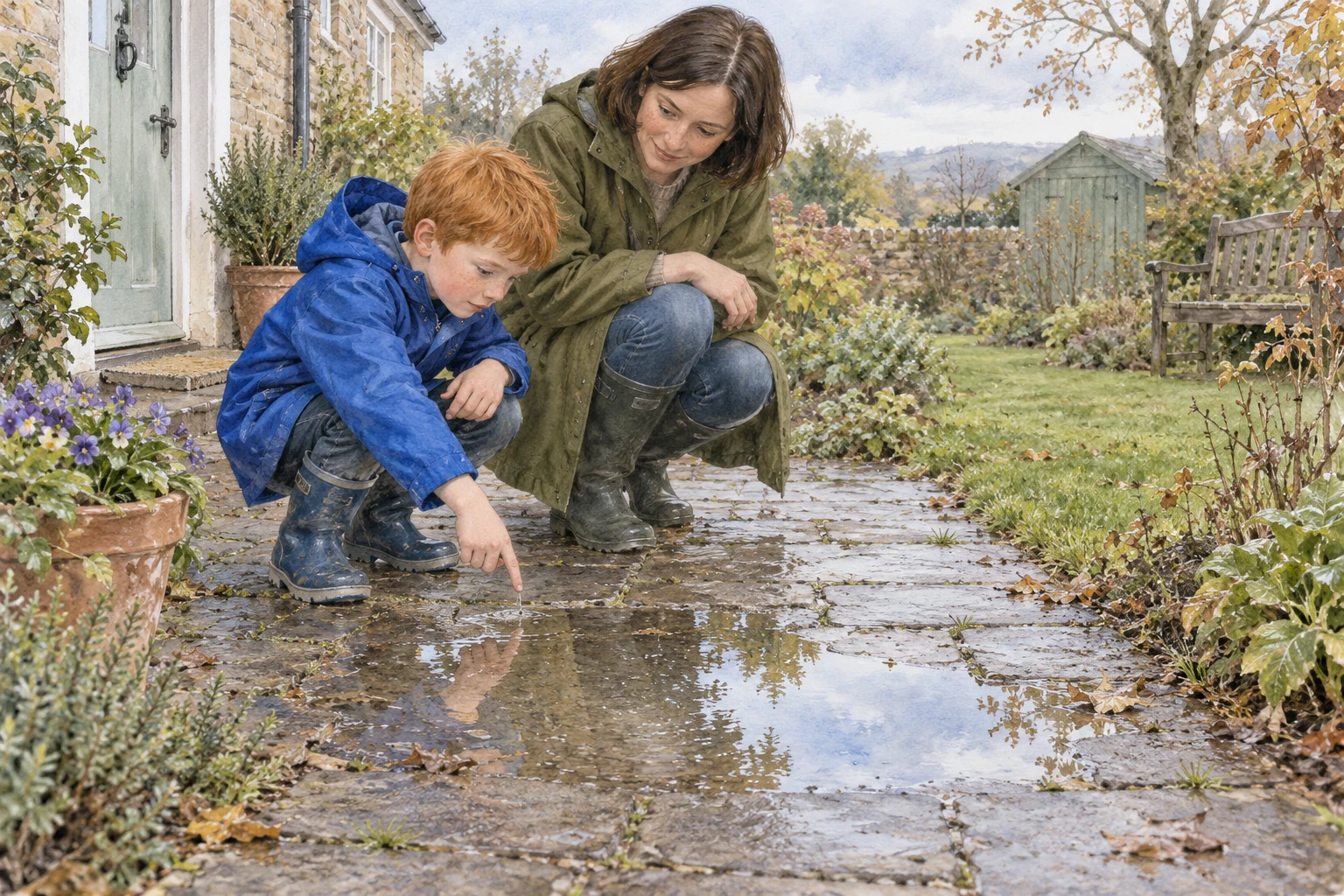
William’s Puddle
Shared Reading Books · Science · Year 2After rain, William finds a puddle on the garden path. It reflects a piece of sky. Later, the shiny patch looks smaller. “Where did the water go?” he asks Mum. There is no stream running away from this little dip in the paving.
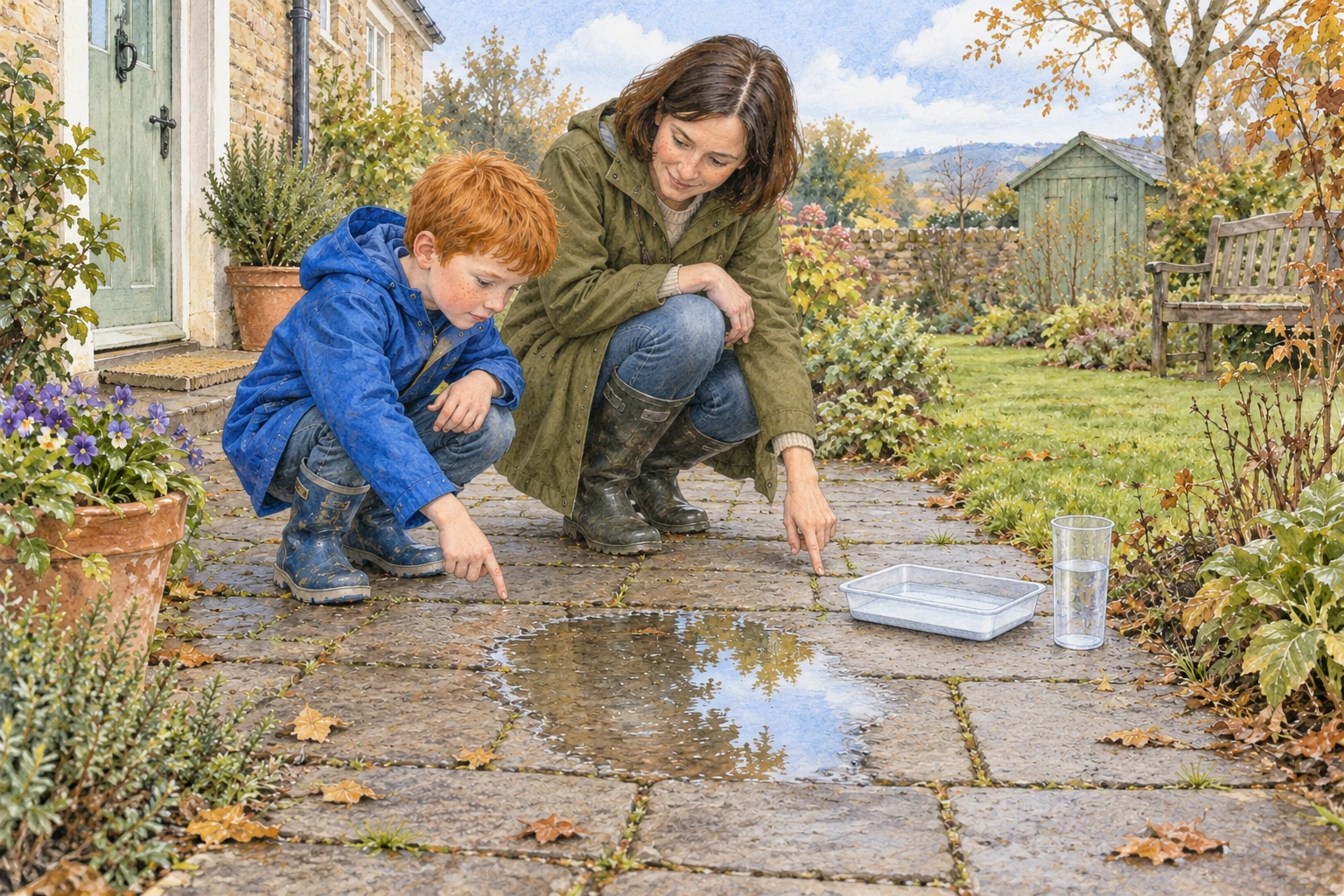
They inspect the edges from the dry path. Water can soak into some surfaces or run downhill. This puddle rests on a hard, level patch with no visible outlet. Mum says that looking carefully helps them decide which explanations might fit this particular place.
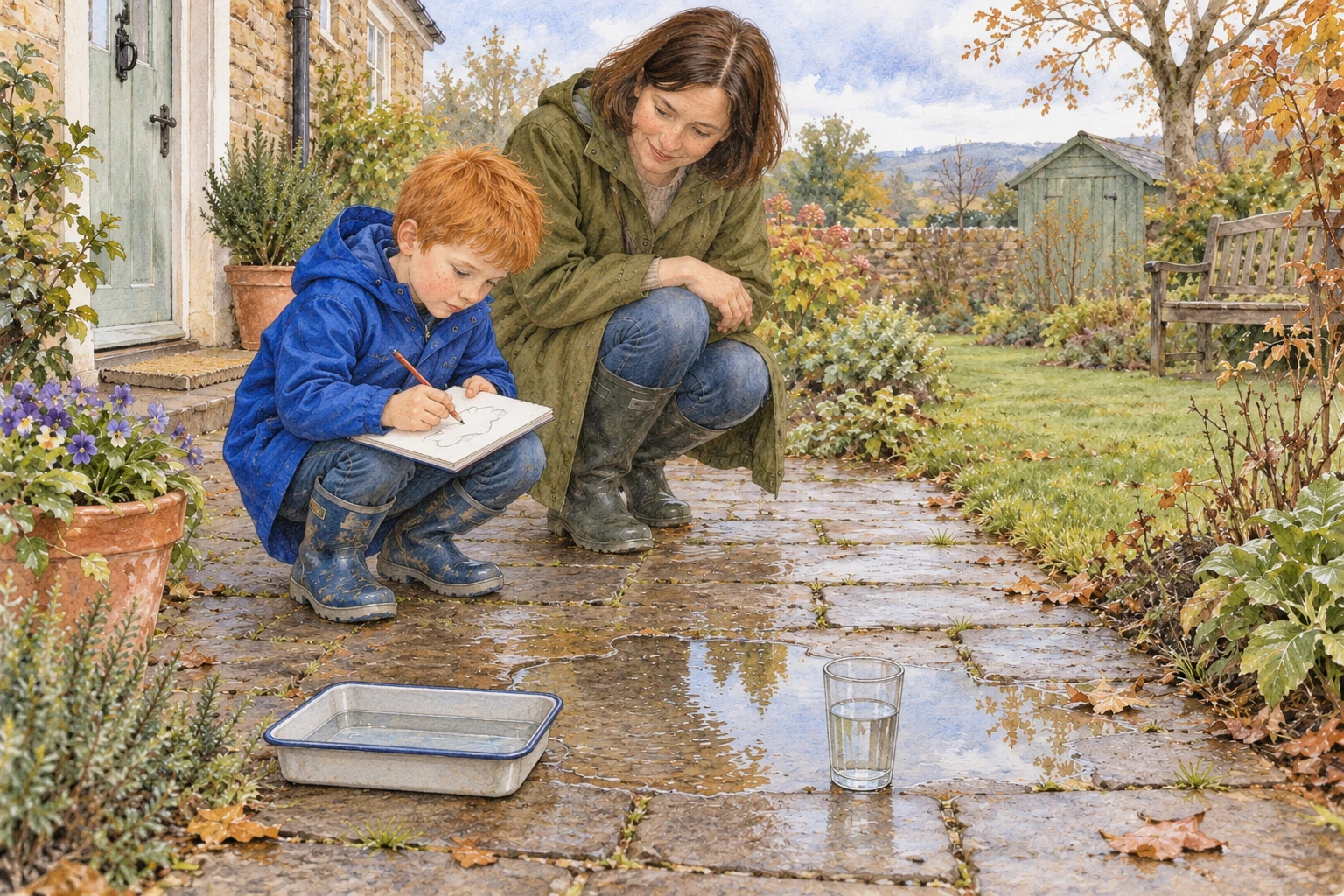
William draws the outline and returns after a while. The edge has moved inward. Mum explains that some liquid water changes into water vapour and mixes with the air. The process is called evaporation. Water vapour is invisible, so they cannot watch it float away.
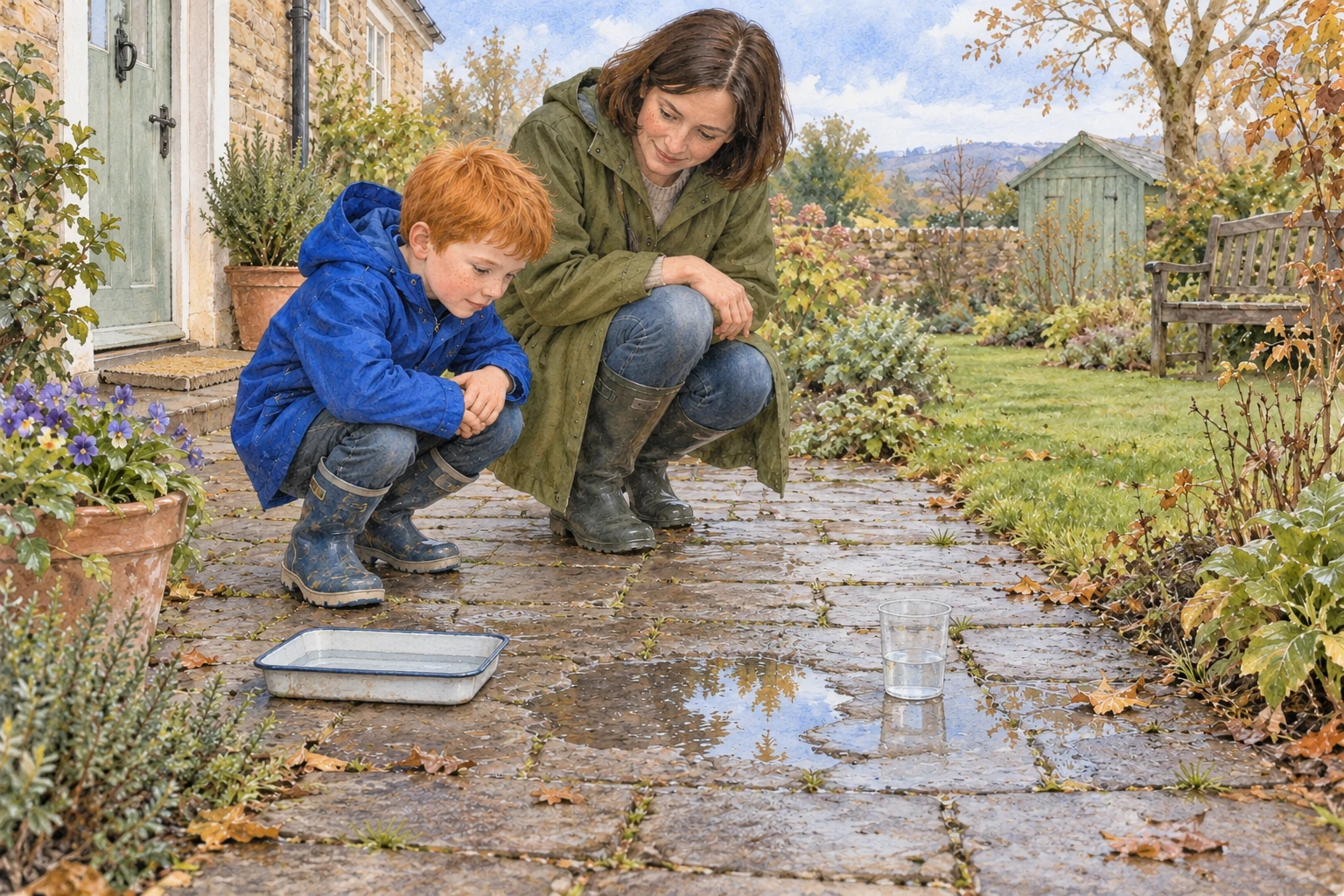
The puddle becomes smaller without boiling. “Does evaporation need a hot kettle?” asks William. Mum shakes her head. Water can evaporate at ordinary outdoor temperatures. Warmth, moving air and how much water is exposed can affect how quickly it happens.
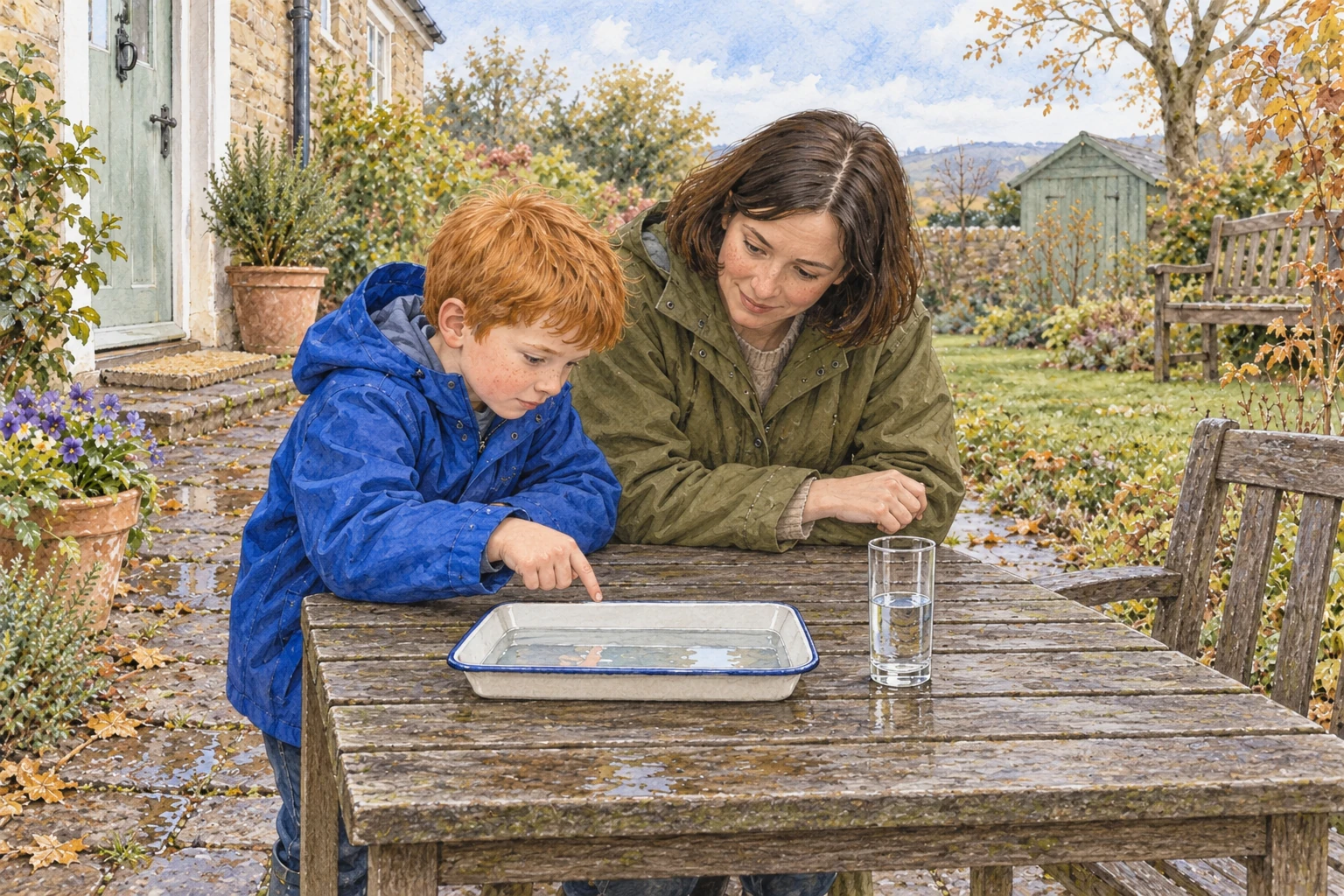
They try a small comparison in the shade. They measure equal amounts of water into a wide tray and a narrow cup. Both stay together. William predicts that the exposed surface will matter. They leave the containers where nobody will trip over them.
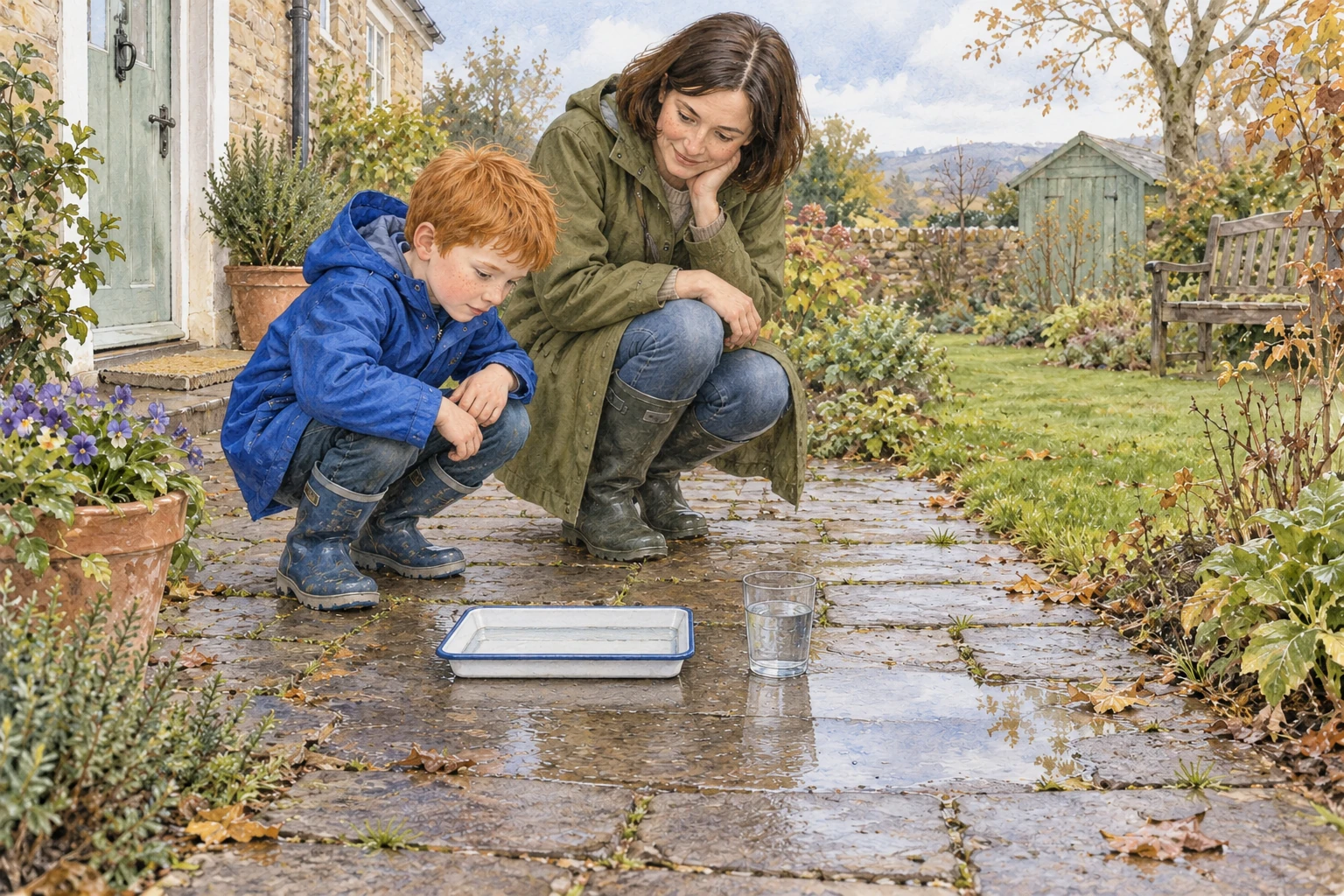
After the same waiting time, more water has gone from the wide tray. William records what they notice. Their two containers differ in shape, so this is a simple investigation rather than proof about every puddle. They could repeat it with more careful measurements.
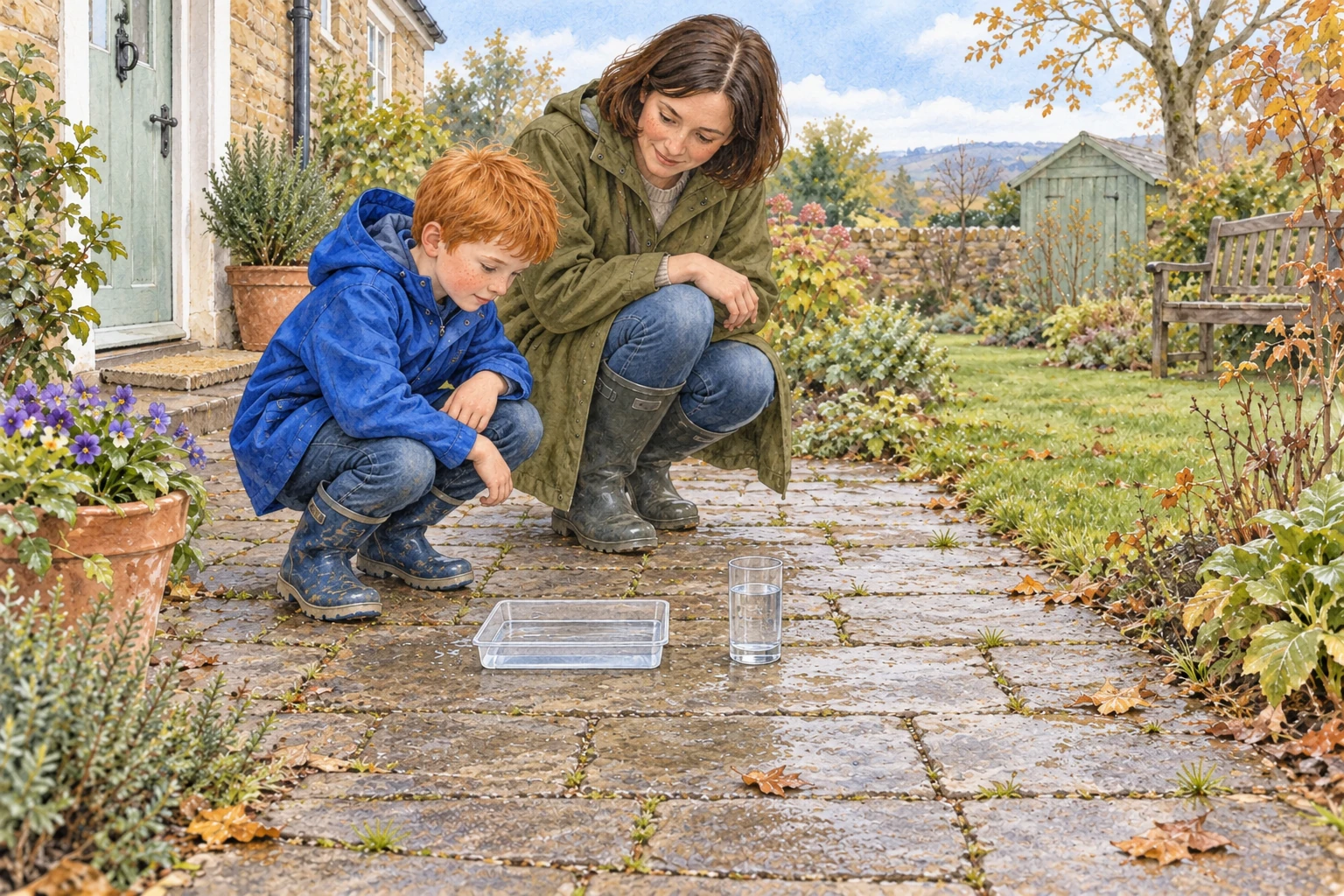
By the next visit, the paved dip looks dry. William remembers that invisible does not mean nothing happened. Some water has moved into the air as vapour. Elsewhere, water may also soak into ground or flow away. Different places need their own observations.
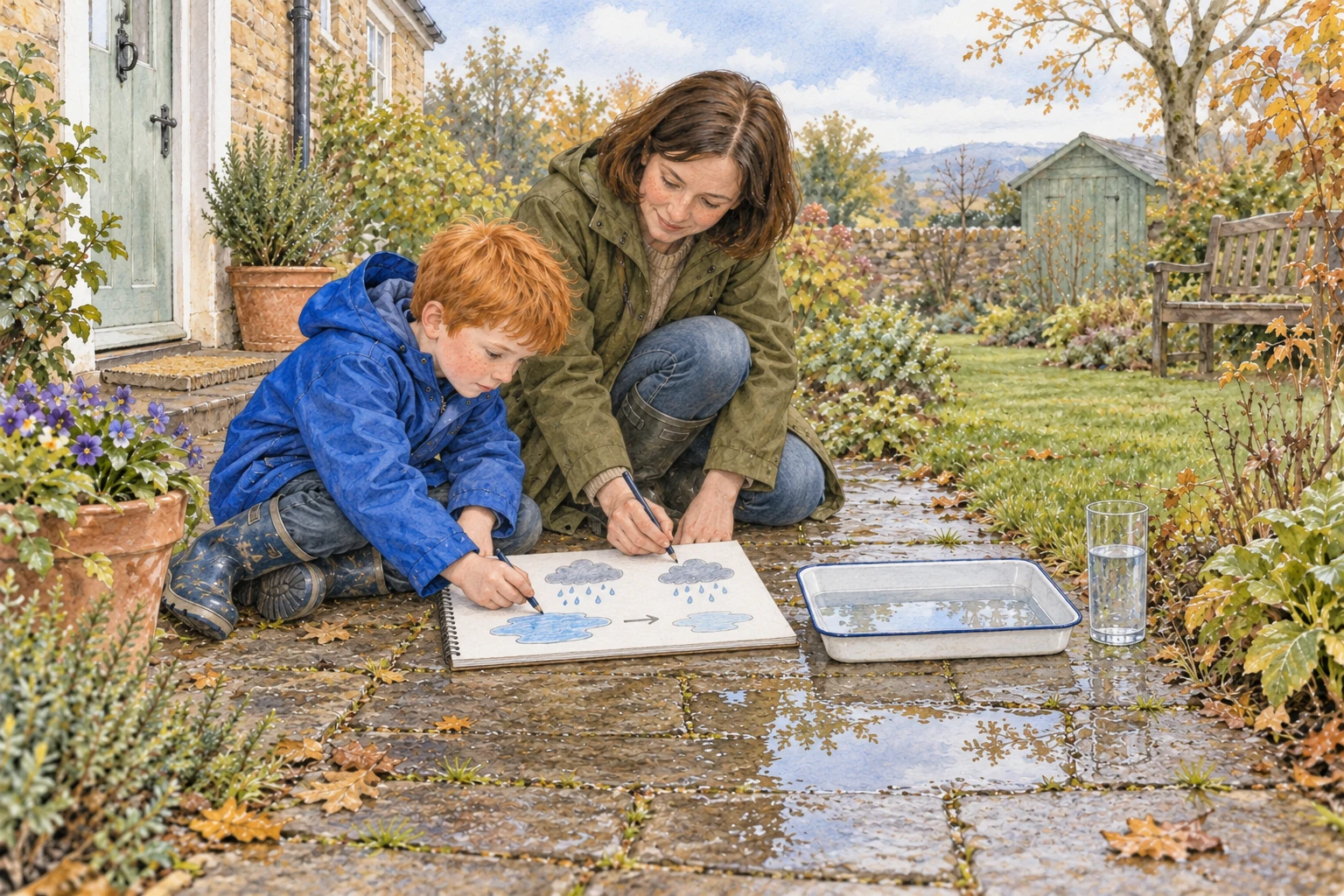
At home, he draws rain filling the dip and the puddle shrinking later. He uses arrows in his notebook to explain his idea. “The water did not need to disappear by magic,” he says. His mystery has become a change he can describe.