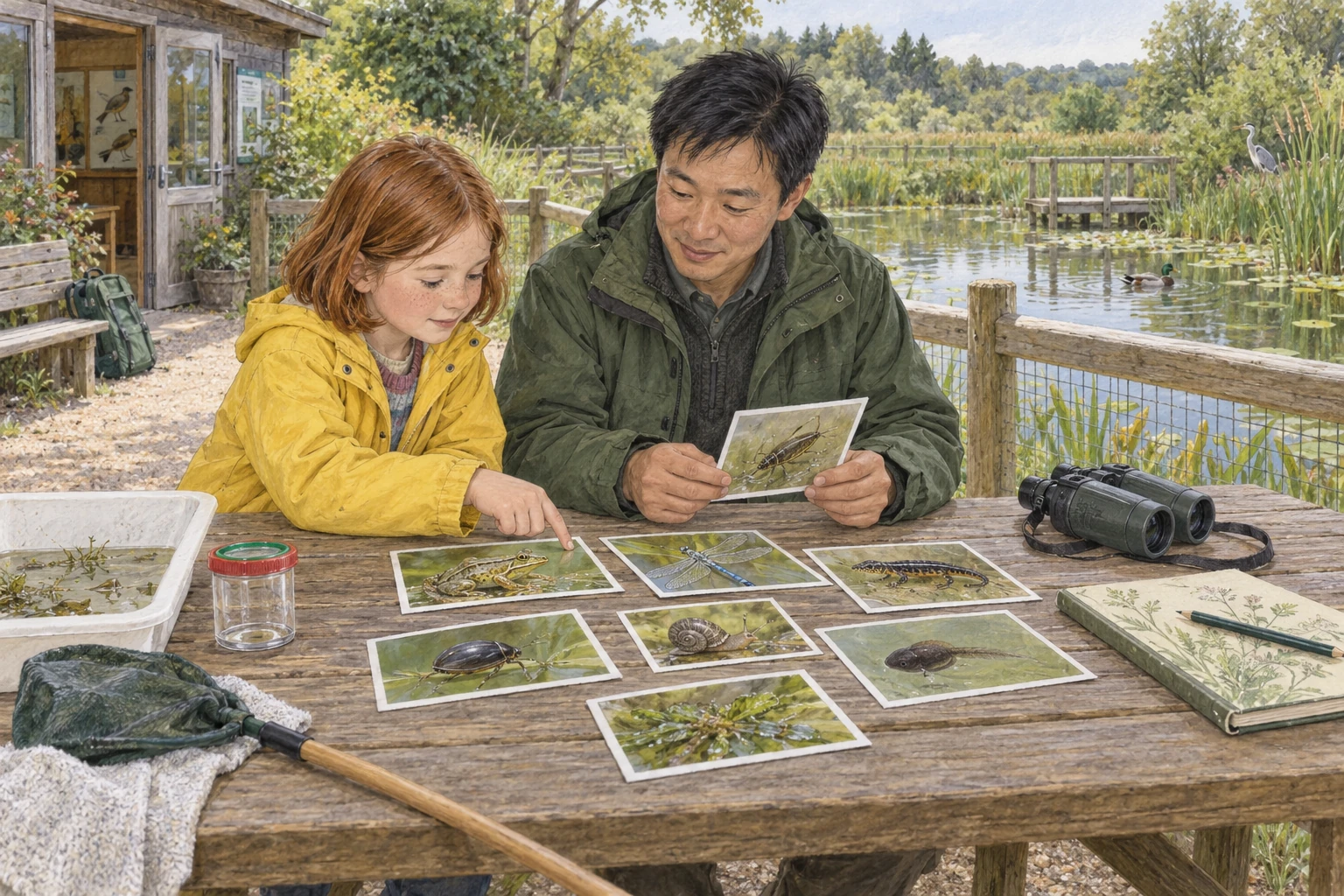
Florence’s Pond Key
Shared Reading Books · Science · Year 4Florence has taken photographs near the nature-centre pond. She wants to make a guide, but her first group is simply “small things”. A dragonfly, spider, snail and worm all fit. “That will not help someone tell them apart,” she tells Ranger Moss. They need more useful questions.
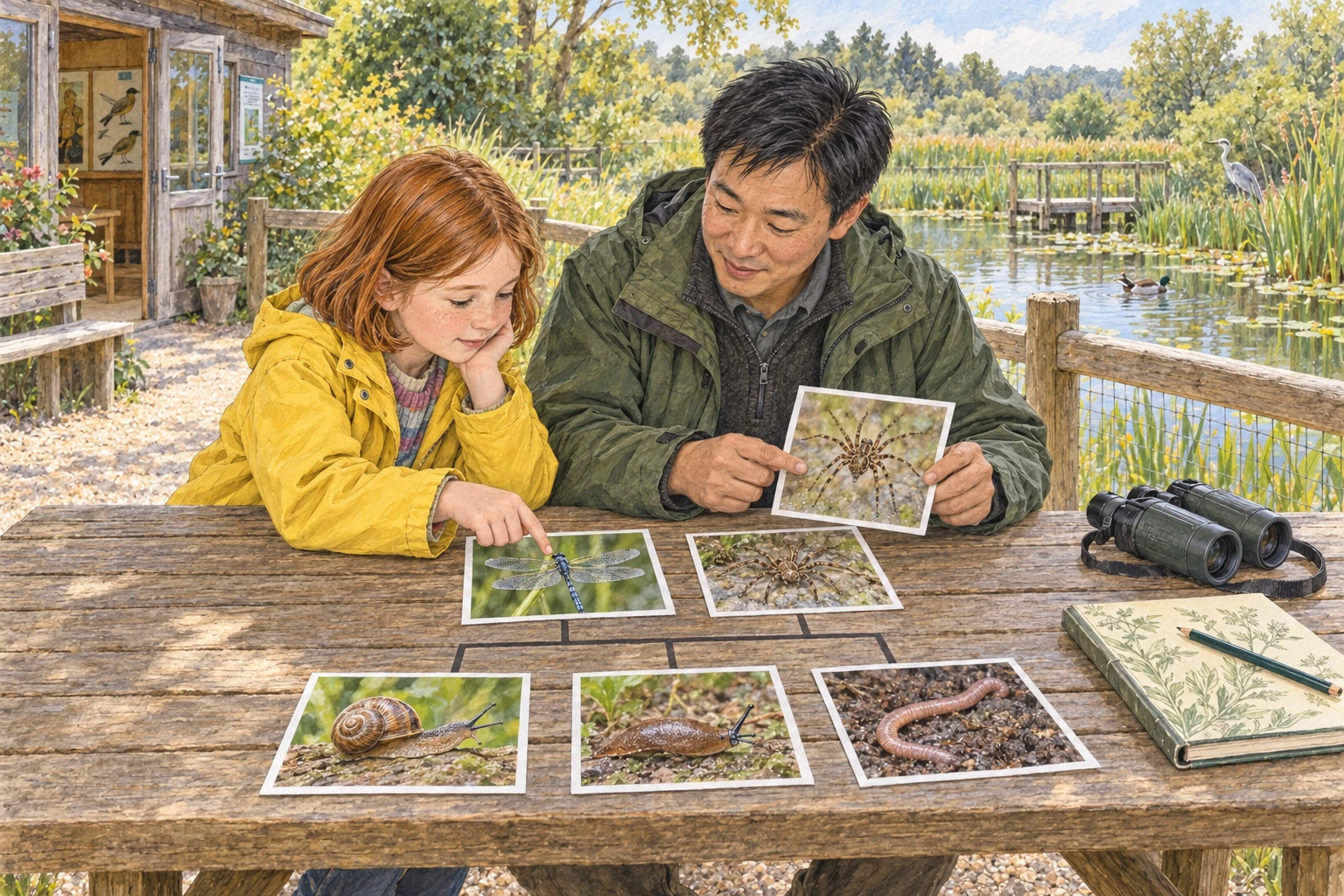
They spread clear creature photographs on a table, staying behind the pond fence. Florence notices that a spider and dragonfly both have legs. Their shapes and colours differ, but colours can change between species. Mr Moss suggests beginning with a feature they can count carefully.
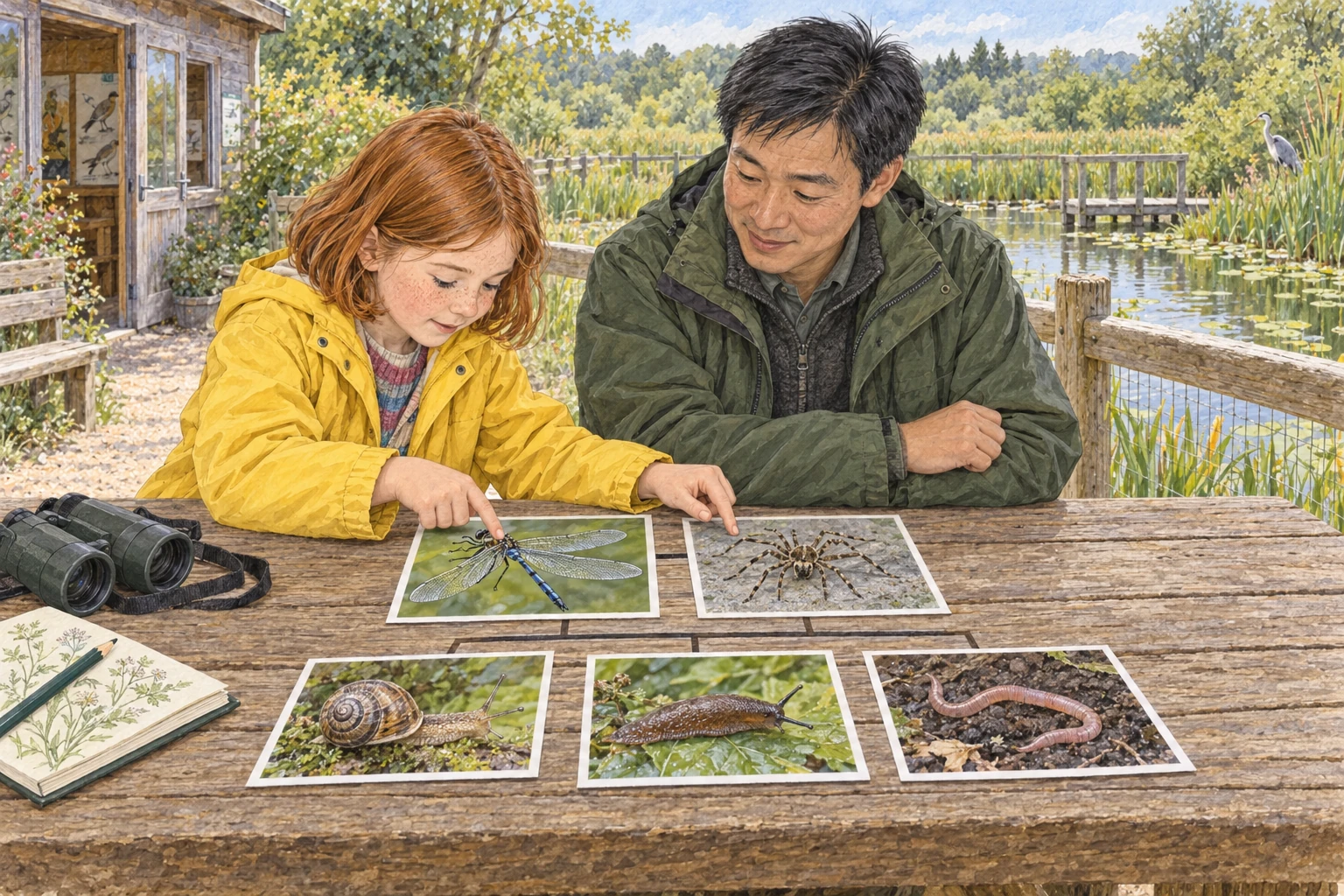
Florence counts six legs in the adult dragonfly photograph and eight in the spider photograph. Adult insects have six legs. Spiders belong to a different group. A photograph can hide a leg, so she checks a second clear picture before deciding what her first image shows.
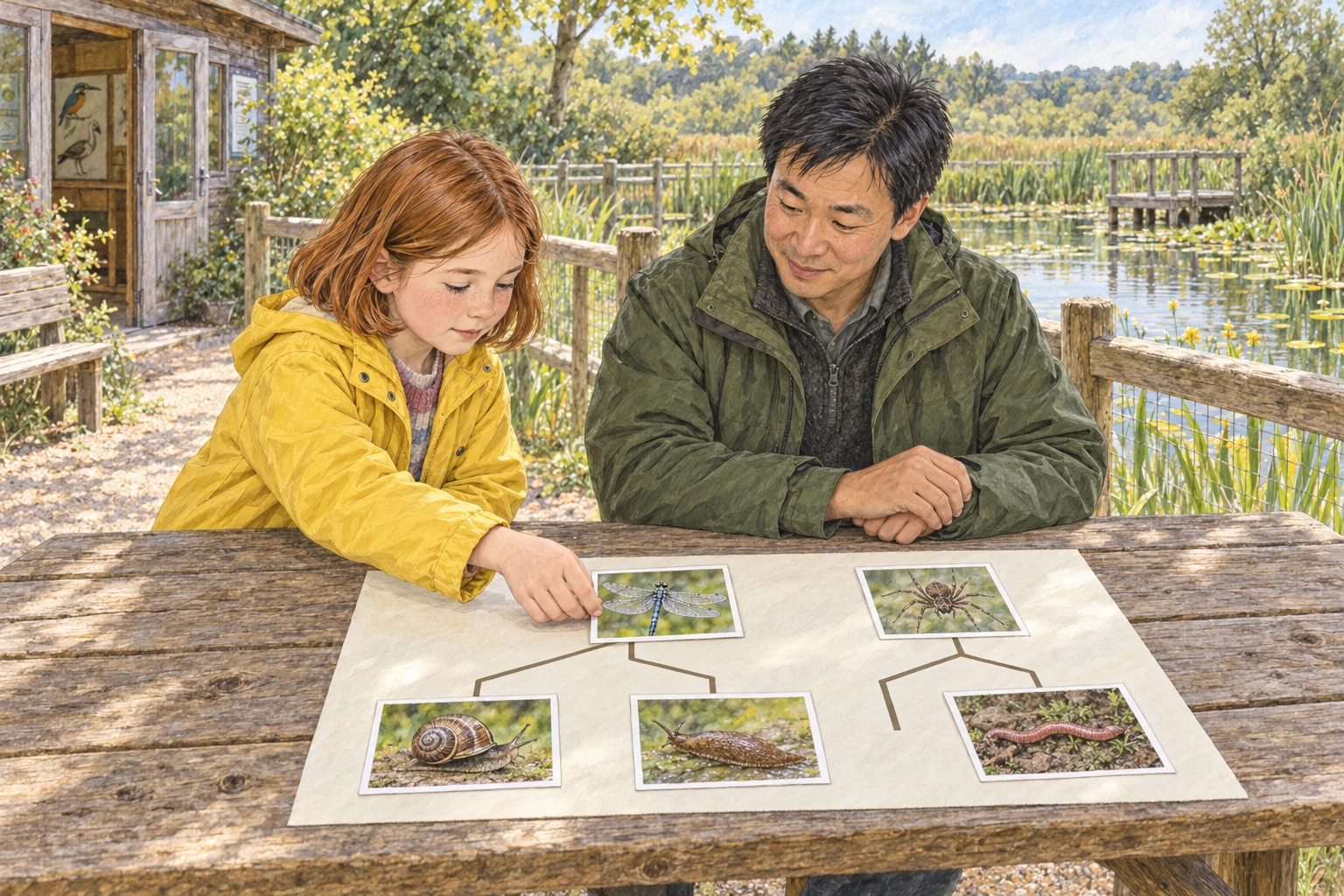
They make a branching key with choices that divide the pictures into smaller groups. “Does it have legs?” comes first. Another question asks whether there are six or eight. Each answer leads to a next choice. A useful key needs questions that someone can actually answer.
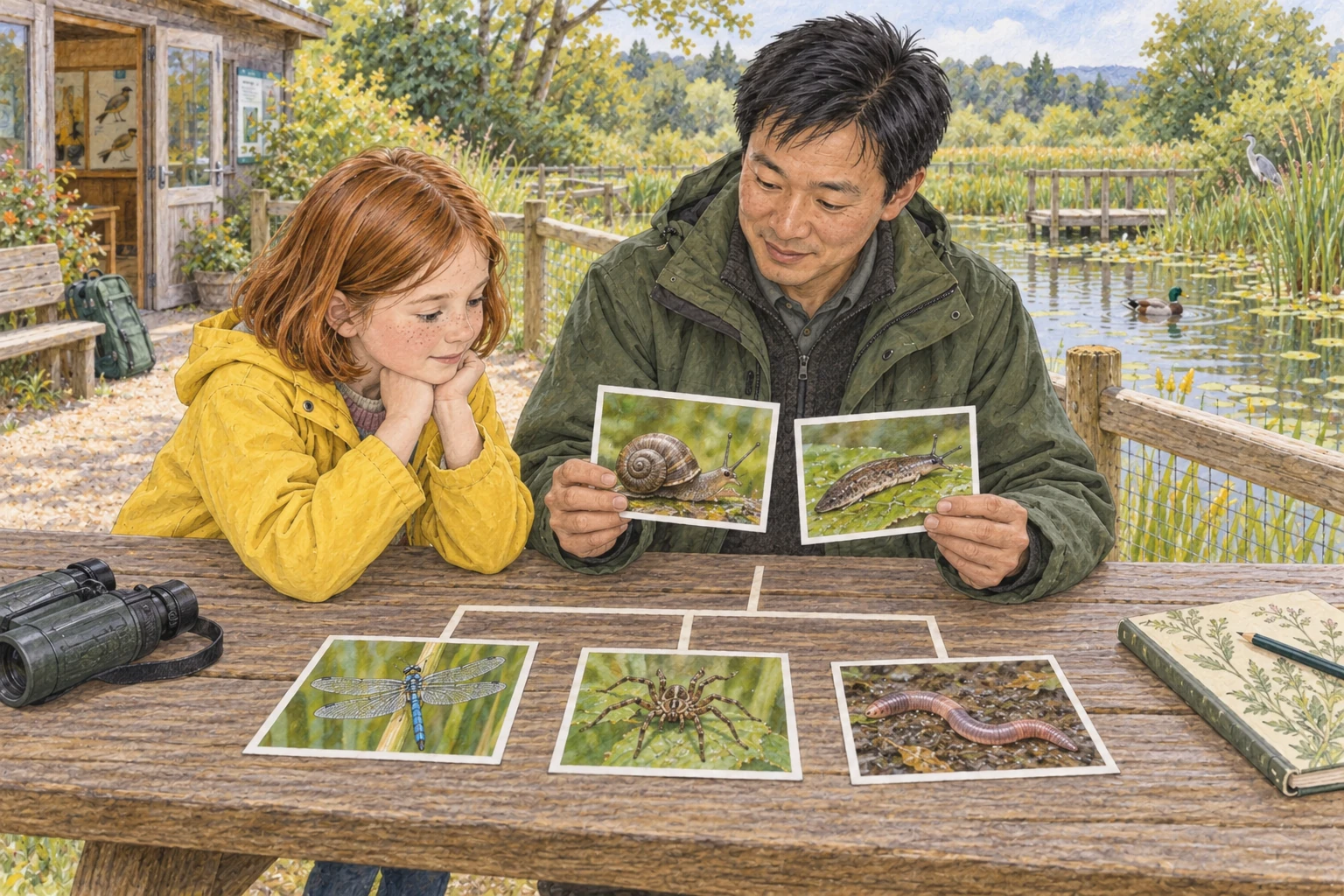
Then Mr Moss adds a slug photograph. Florence’s old question says, “No legs means worm.” The slug has no legs, but it is not a worm. A snail also has a muscular foot rather than legs. Their new example shows where her first version fails.
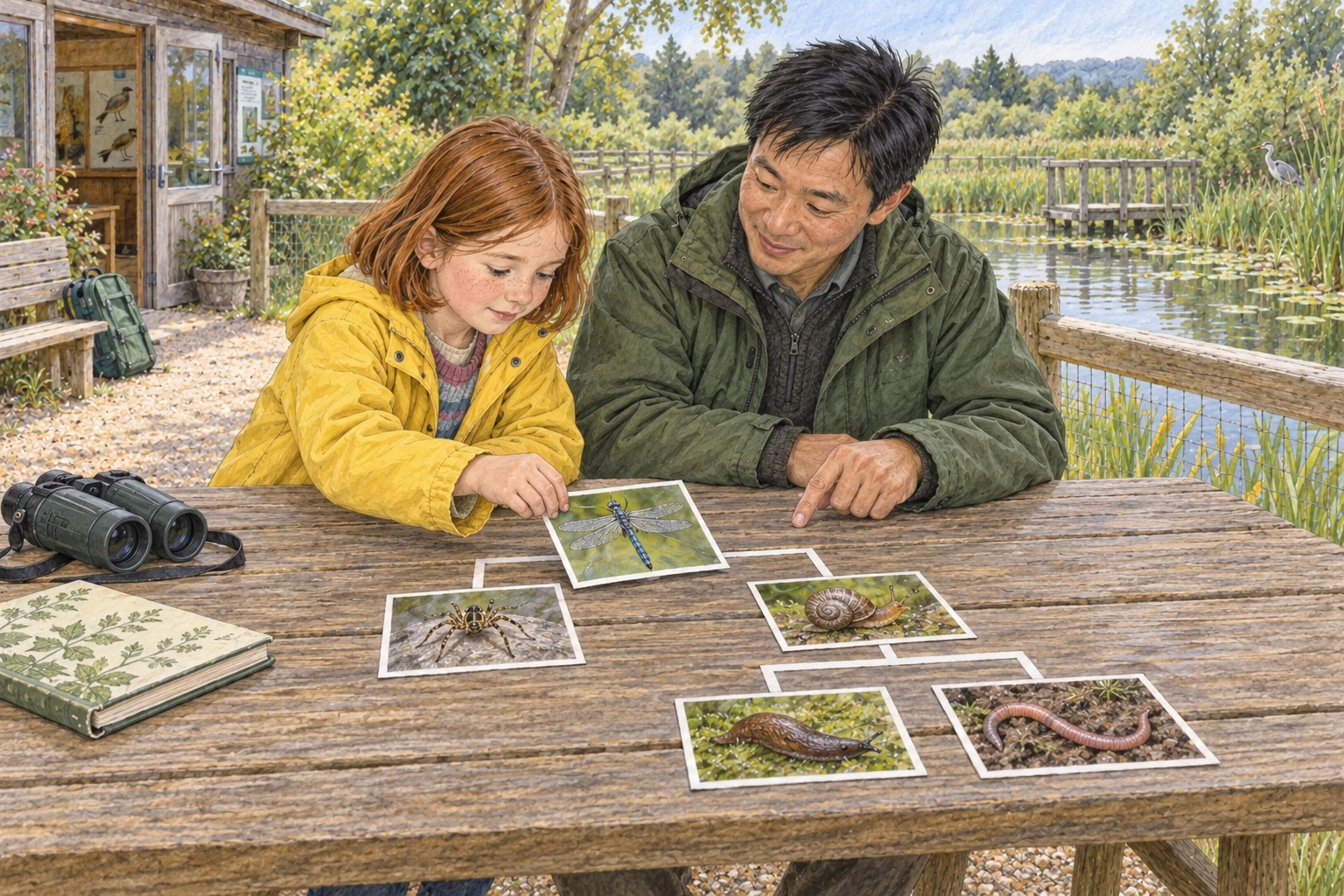
Florence revises that branch using visible features, including whether a shell is present and the body’s shape. The key only covers their selected photographs. It cannot identify every pond or garden creature in the world. If a feature is unclear, they seek a better picture or reliable guide.

A friend tests the revised key with a worm photograph. She follows the choices and reaches the matching group. Florence watches without giving away the answer. A key that works only when its maker supplies extra clues still needs improvement. They note one question that could be clearer.
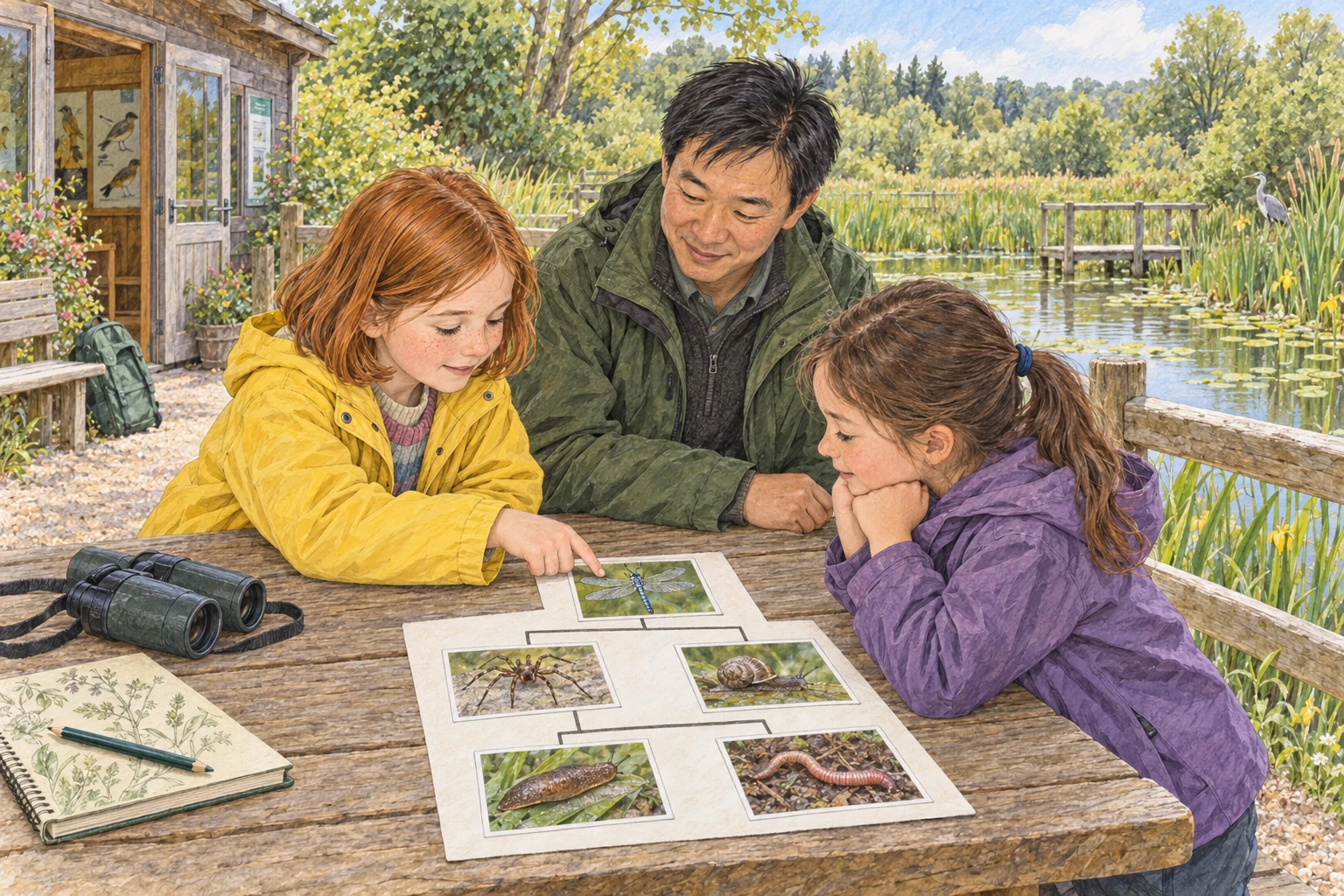
At the nature centre, Florence shares her finished photo guide. “Small things was a beginning,” she says, “but careful questions made it useful.” She leaves the pond creatures undisturbed. Their differences have helped her build a guide that another person can follow for themselves.