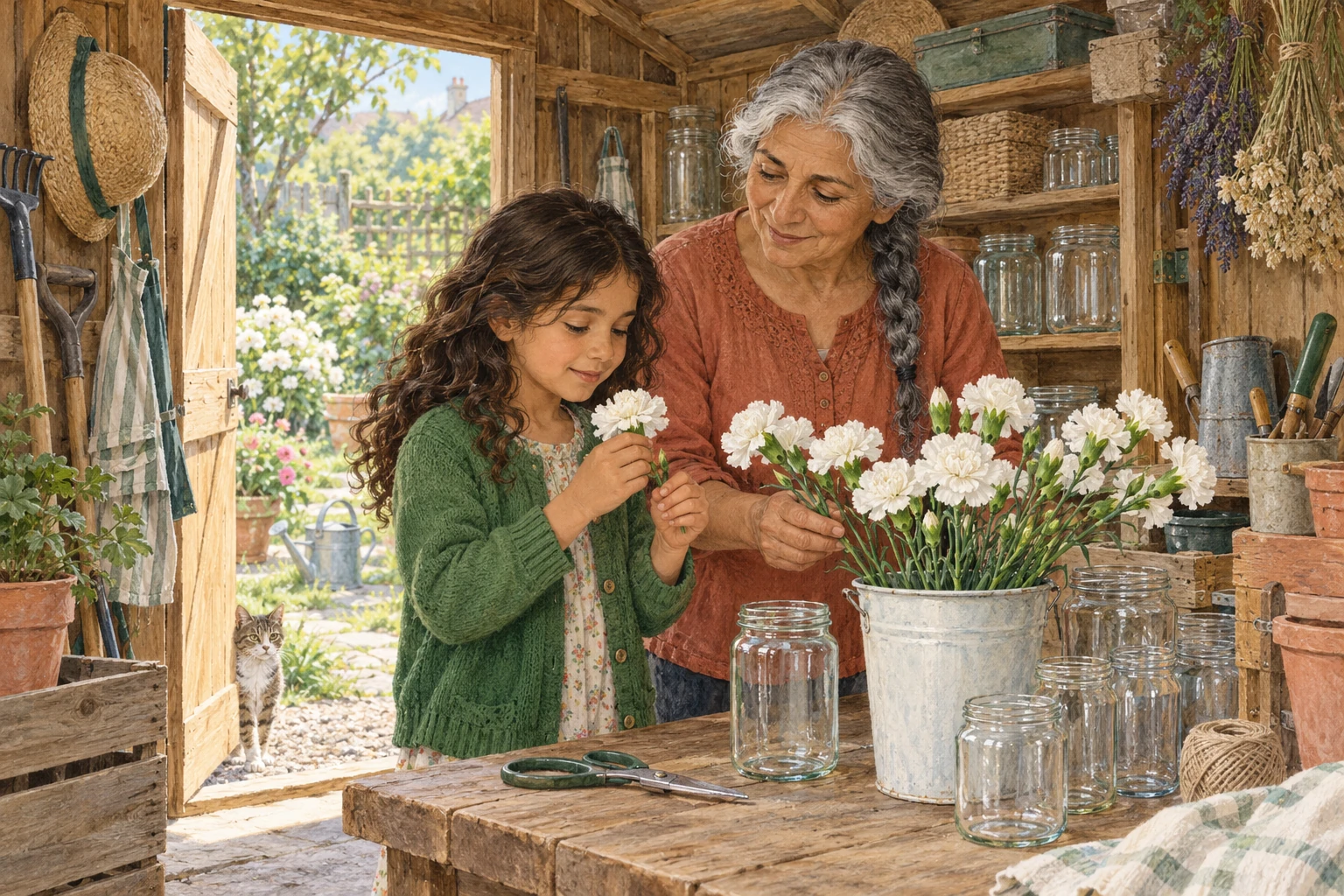
Lily’s Blue Flower
Shared Reading Books · Science · Year 3Lily wants a blue flower for the garden display, but Grandma has only white carnations. “Could we paint one?” Lily asks. Grandma has another idea. She brings out food colouring and two clear jars. They can investigate where water travels inside a cut flower.
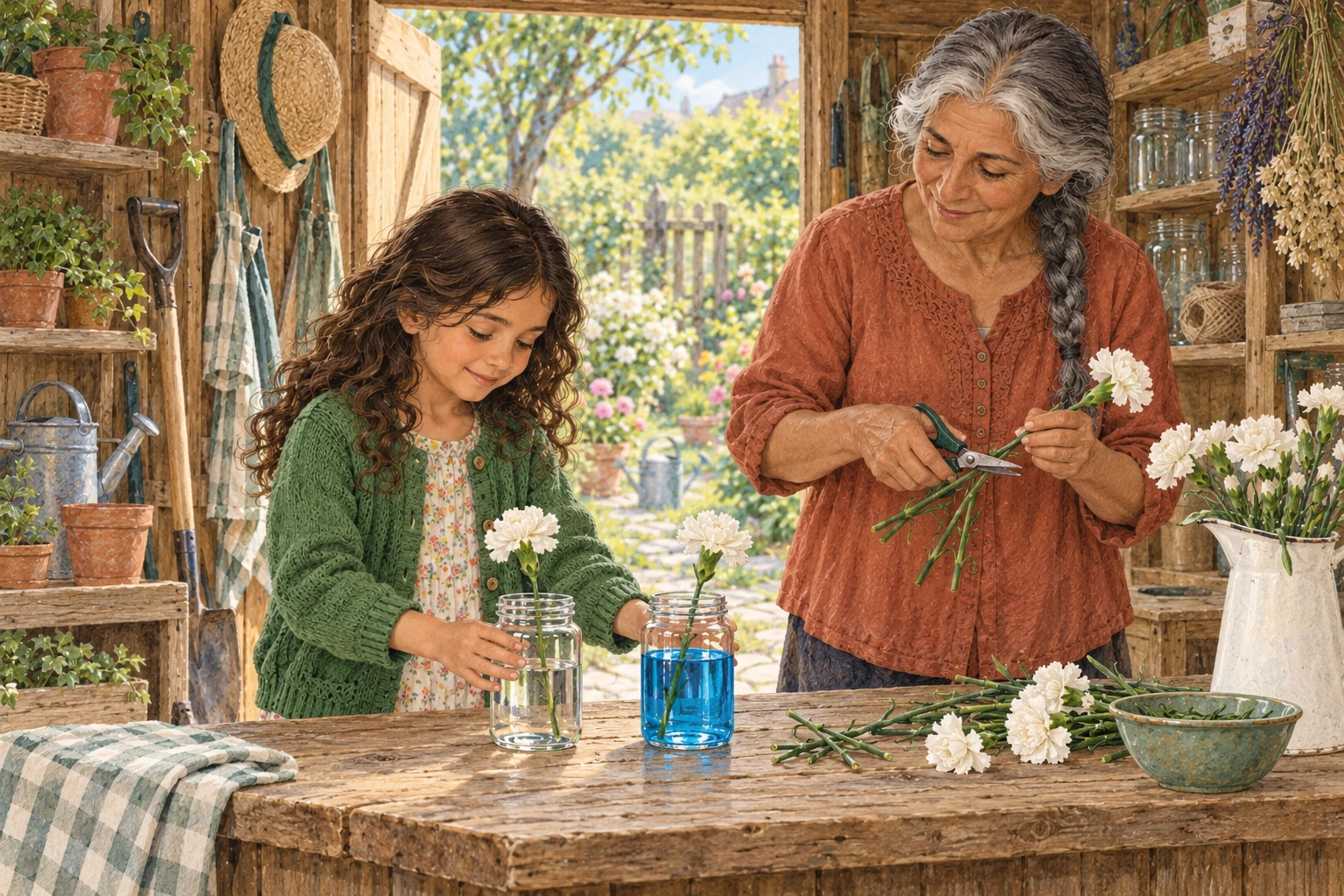
Grandma trims two similar stems herself. Lily fills the jars with equal amounts of water. One will hold plain water, while the other will hold coloured water. They put both jars in the same bright place, away from direct hot sunshine.
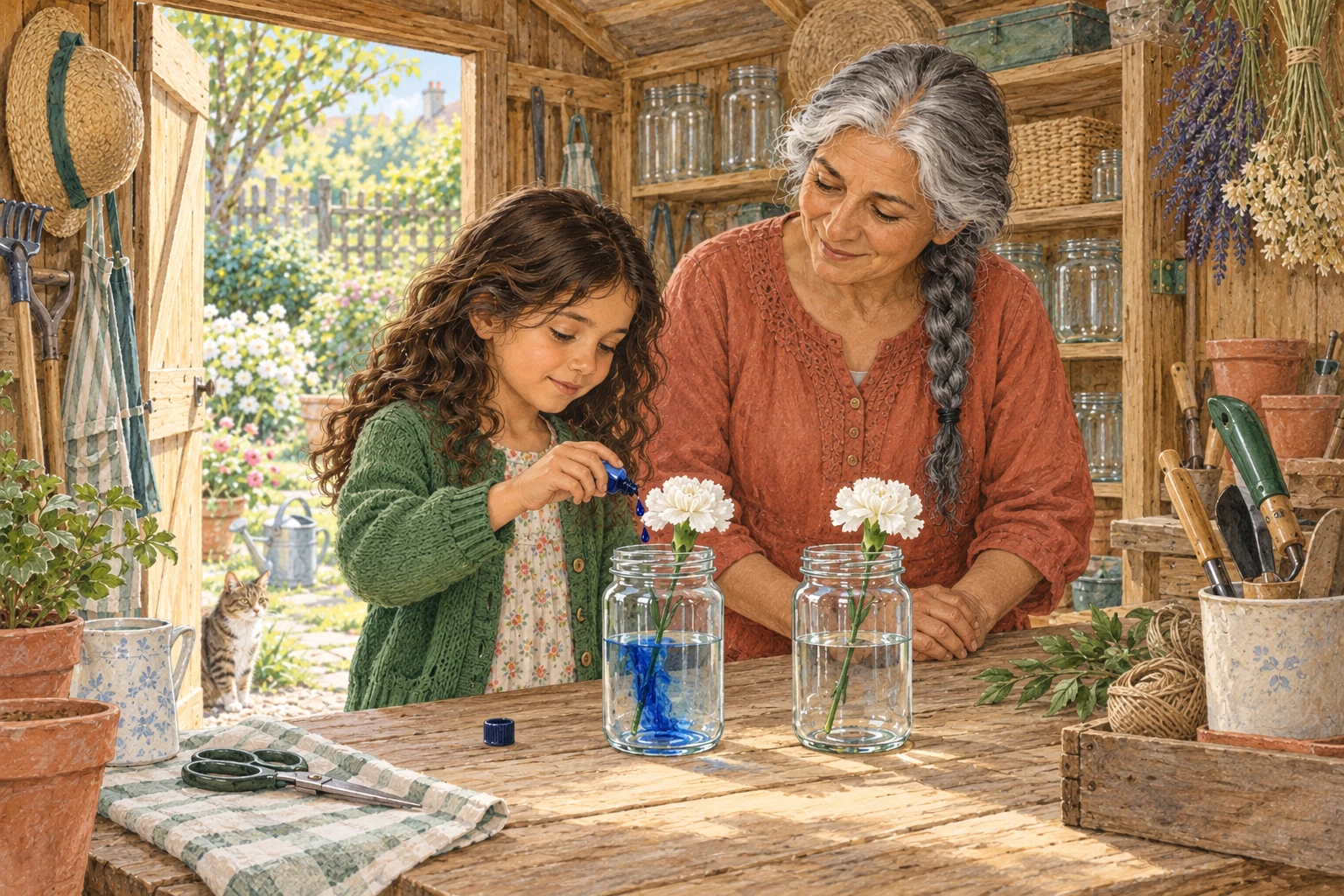
Lily adds a few drops of blue food colouring to one jar and gently stirs. She does not drink or taste it. “Will the flower turn blue straight away?” she asks. Grandma suggests recording what they see now, then giving the stems time.
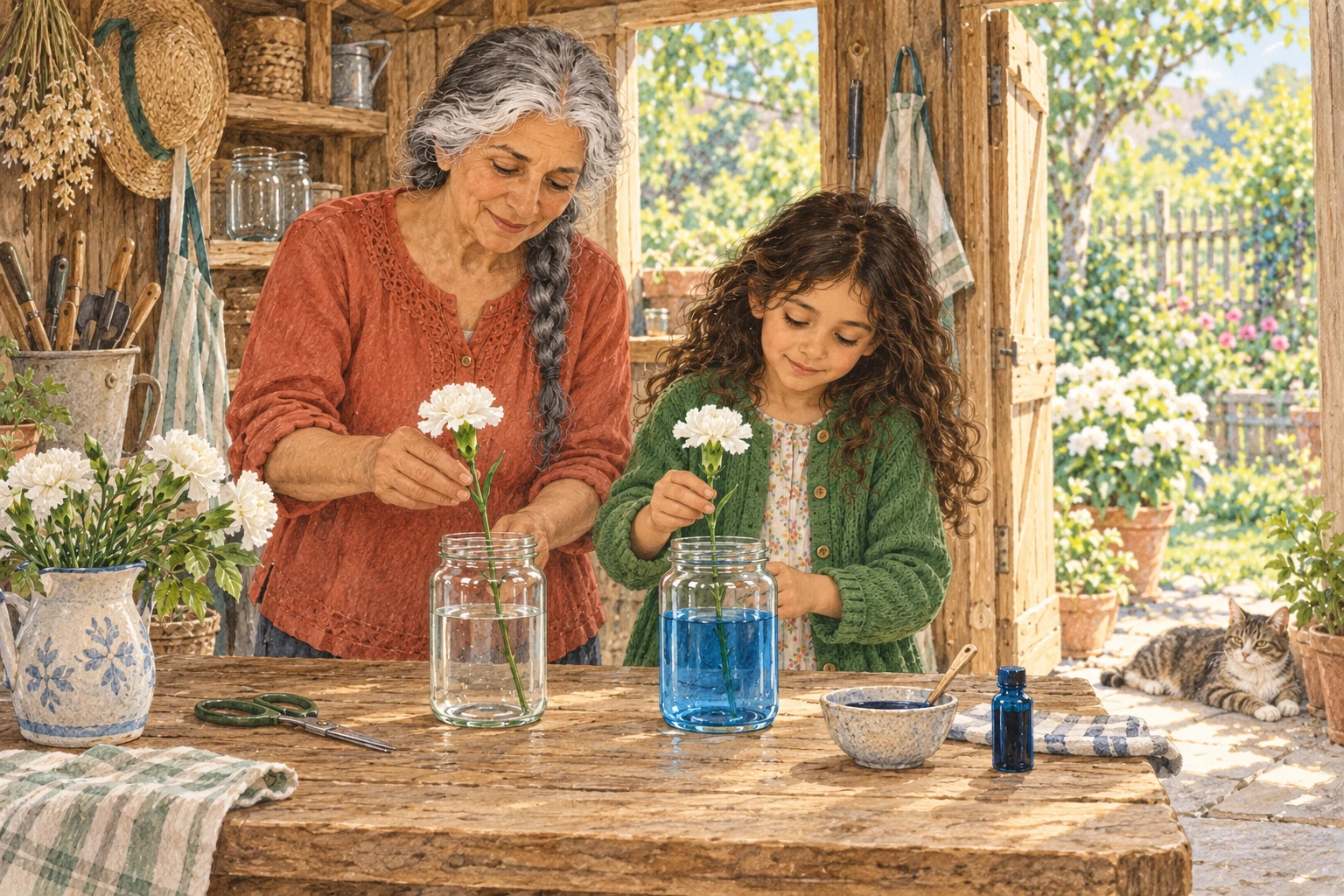
They place one carnation in each jar. Both flowers still look white. Grandma explains that plants have tiny tubes that carry water through their stems. In a growing plant, roots take up water from the soil. These cut stems have no roots attached.
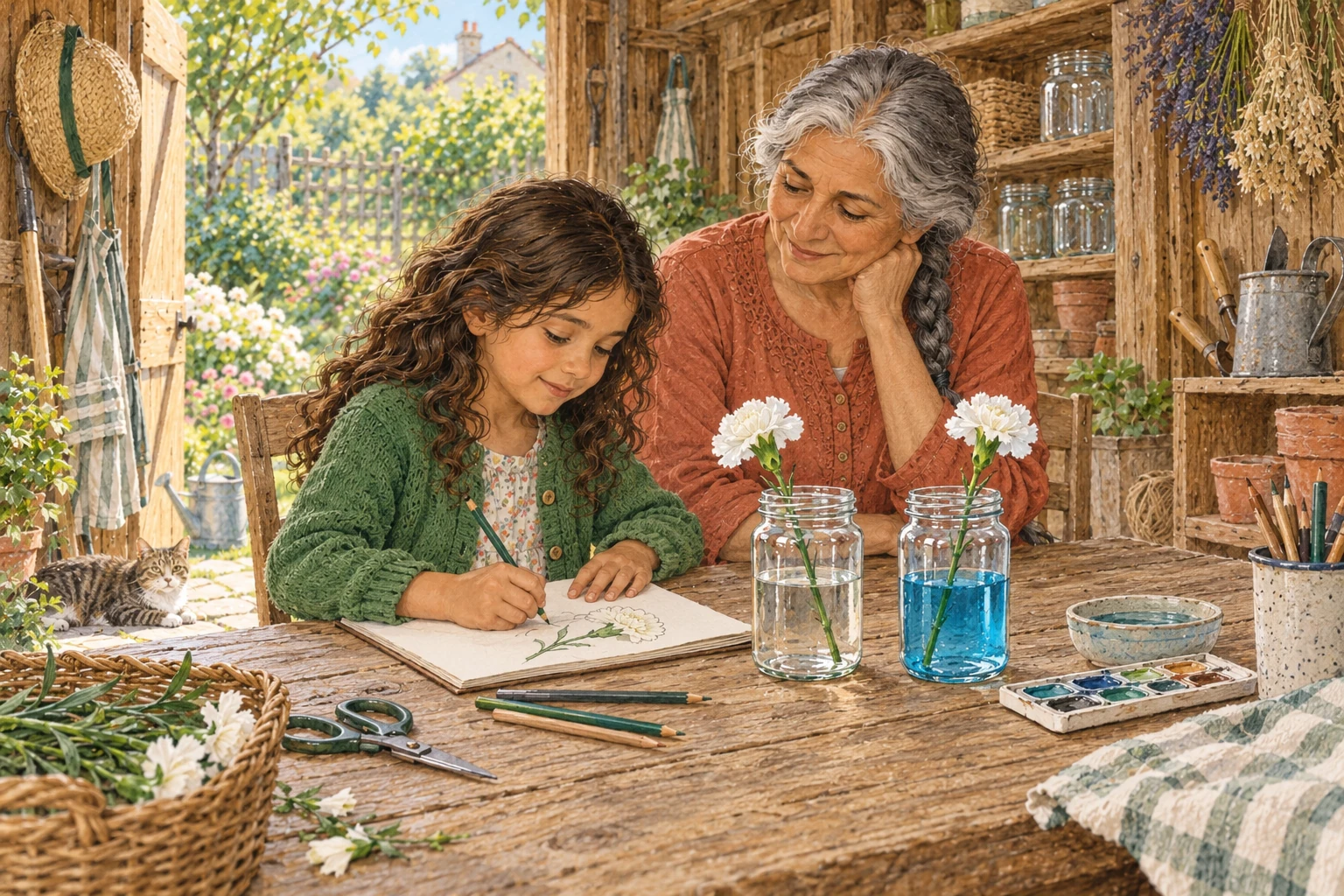
Lily draws the jars and white petals. She marks the starting water levels without moving the flowers. They check later and again the next day. “Waiting is part of investigating,” Grandma says. Lily finds another job instead of shaking the stems to hurry them.
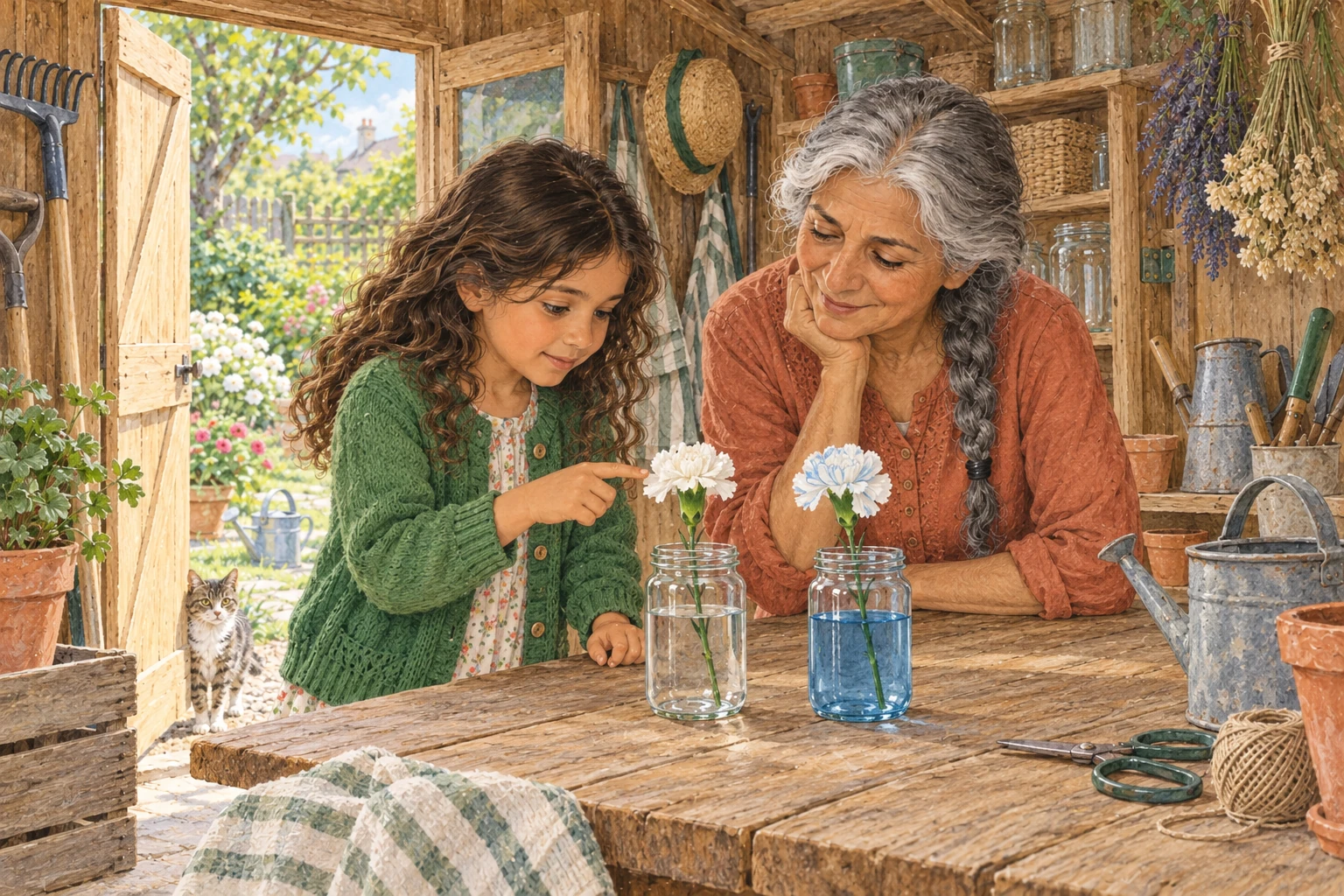
The next morning, faint blue streaks show in one flower’s petals. The other remains white. The colouring has travelled with water through the stem. “The blue gives us a clue,” Lily says. Water itself is clear, so its journey would usually be harder to notice.

Grandma cuts a small piece from the coloured stem and shows Lily the end with a hand lens. They can see stained parts inside. The flower has not made blue paint. Their comparison gives evidence that water has moved upwards through the cut stem.
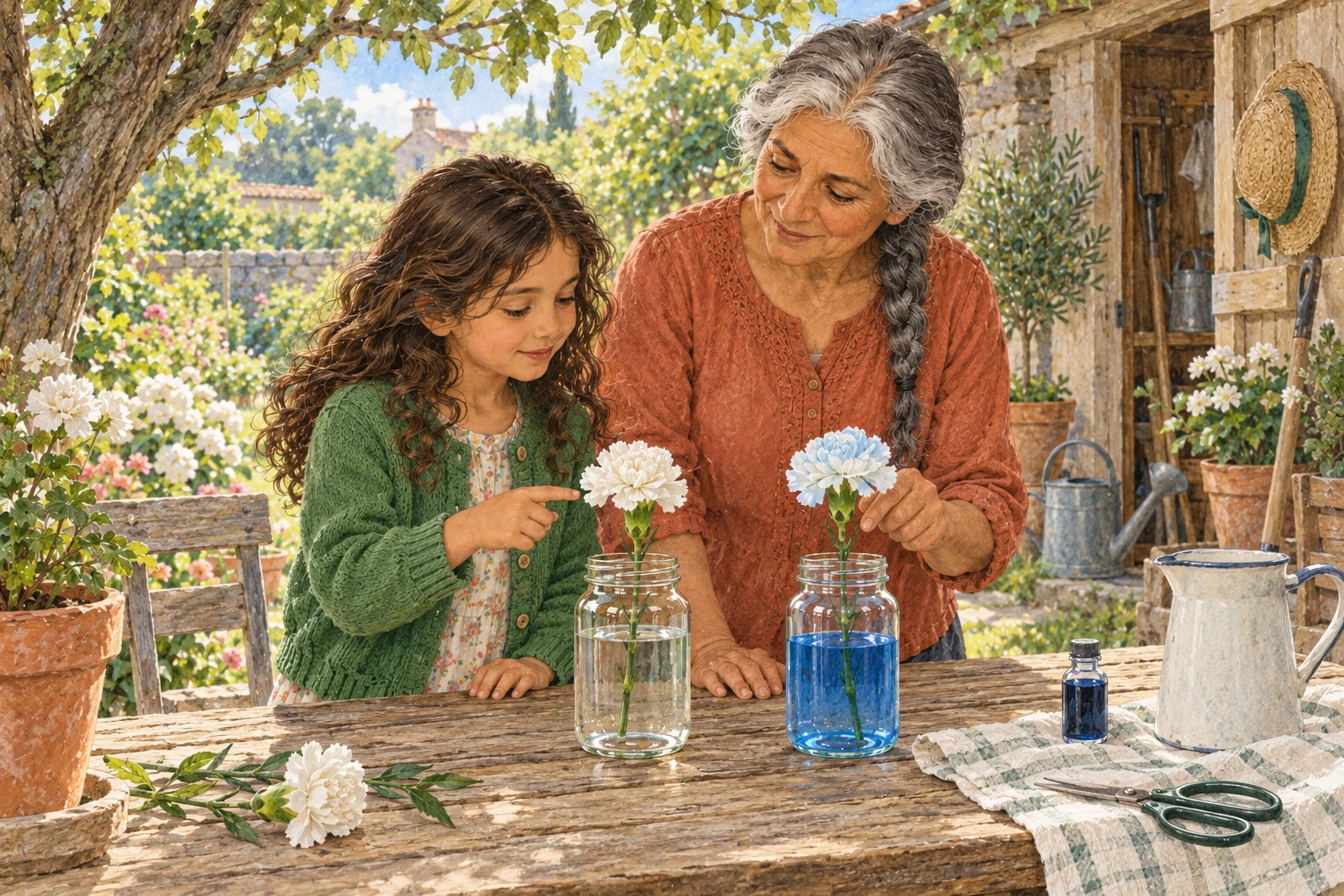
Lily puts both jars in the display, with her drawings beside them. One flower is blue tinted and one is white. “We did not just change a colour,” she tells Grandma. “We followed a journey.” Next time, she wants to try another kind of white flower.