Noah’s Water Plan
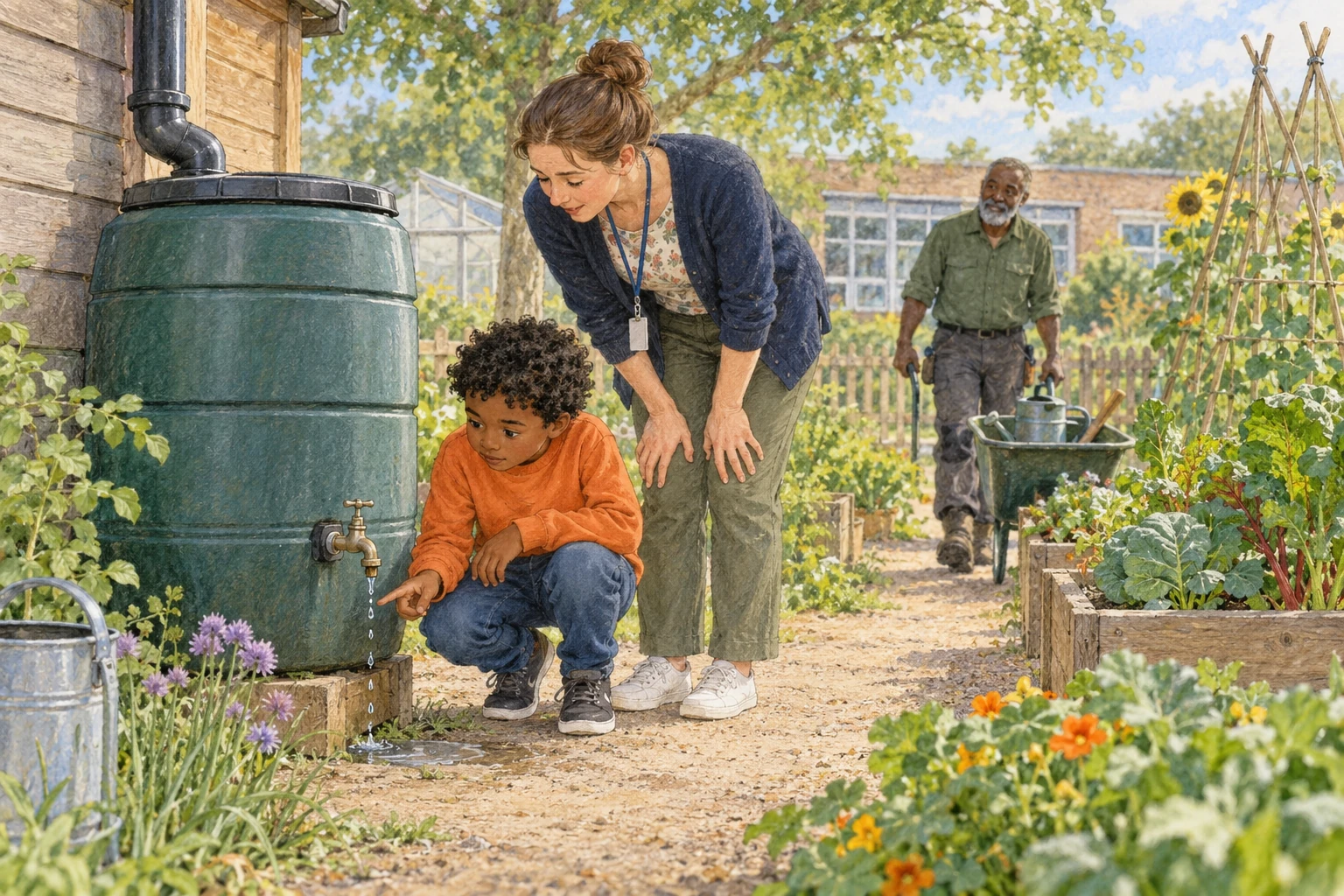
Shared Reading Books · Social Science · Year 3The school garden looked thirsty after several warm days. Noah’s class carried watering cans from the outside tap. On their third trip, Noah noticed water dripping beside the wall. “That water is not reaching a plant,” he told Ms Green.
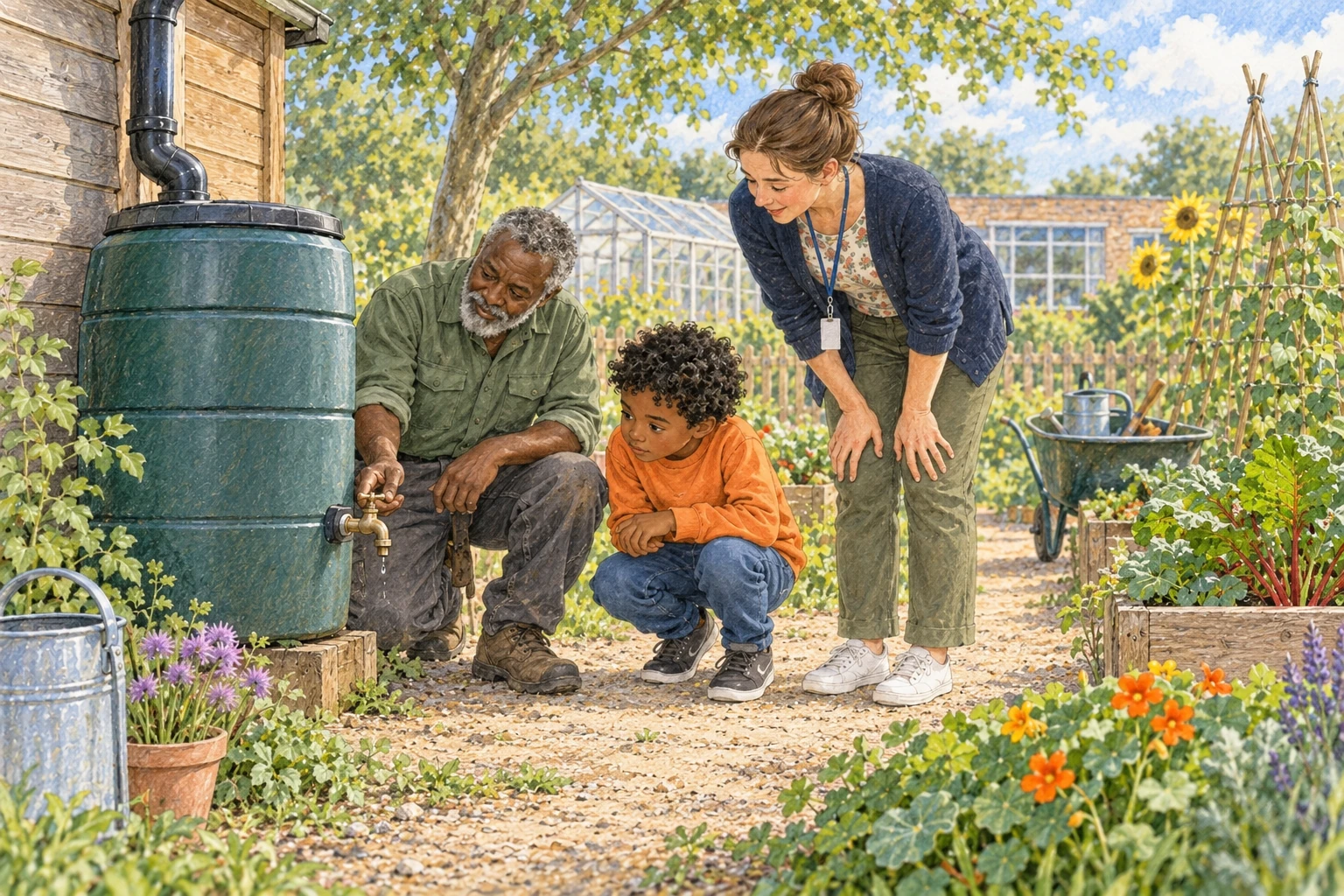
Ms Green asked the caretaker to check the tap. Mr Webb found a worn washer and arranged a repair. Noah had thought the class needed more water. Now he wondered whether they could use the water they already had more carefully.
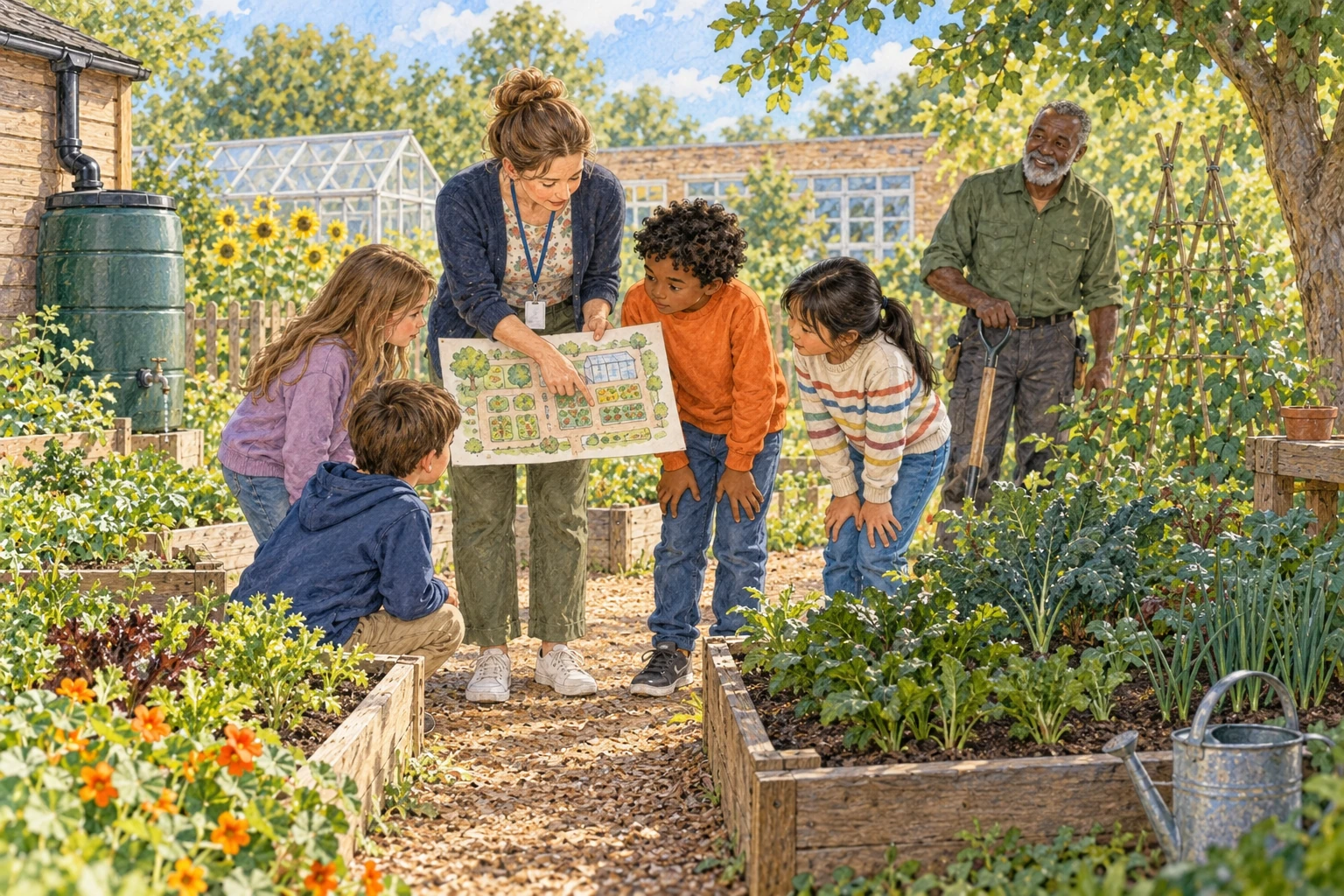
The children observed the garden with their teacher. Shady soil stayed damp longer than sunny soil. Water ran quickly off one hard patch. They drew a plan of the beds, shady corners and places where plants needed extra attention.
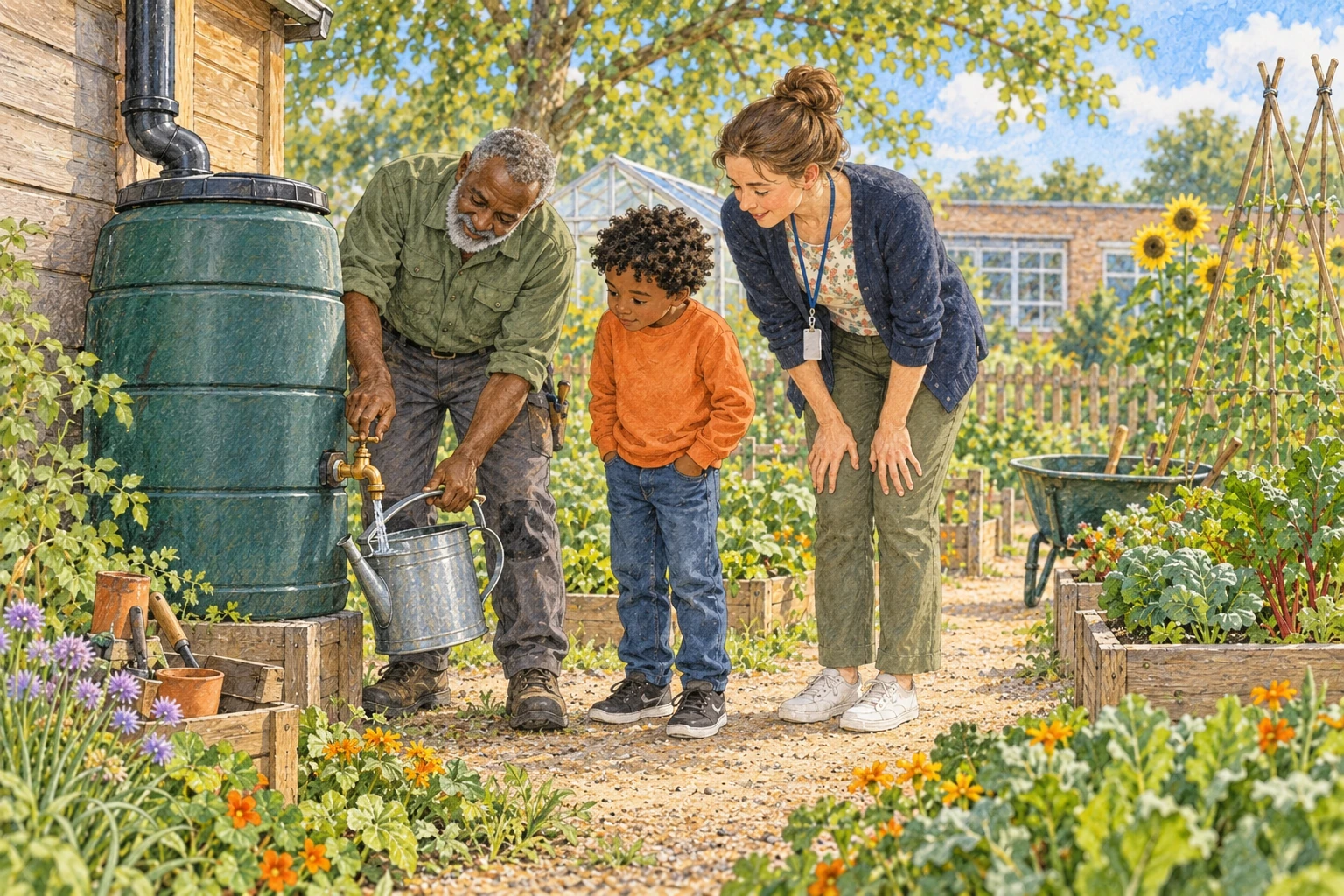
Mr Webb showed them a rainwater barrel with a secure lid. An adult could open its tap to fill small cans. “This water is useful for the garden,” he explained. “It is not drinking water.” Noah added that difference to their plan.
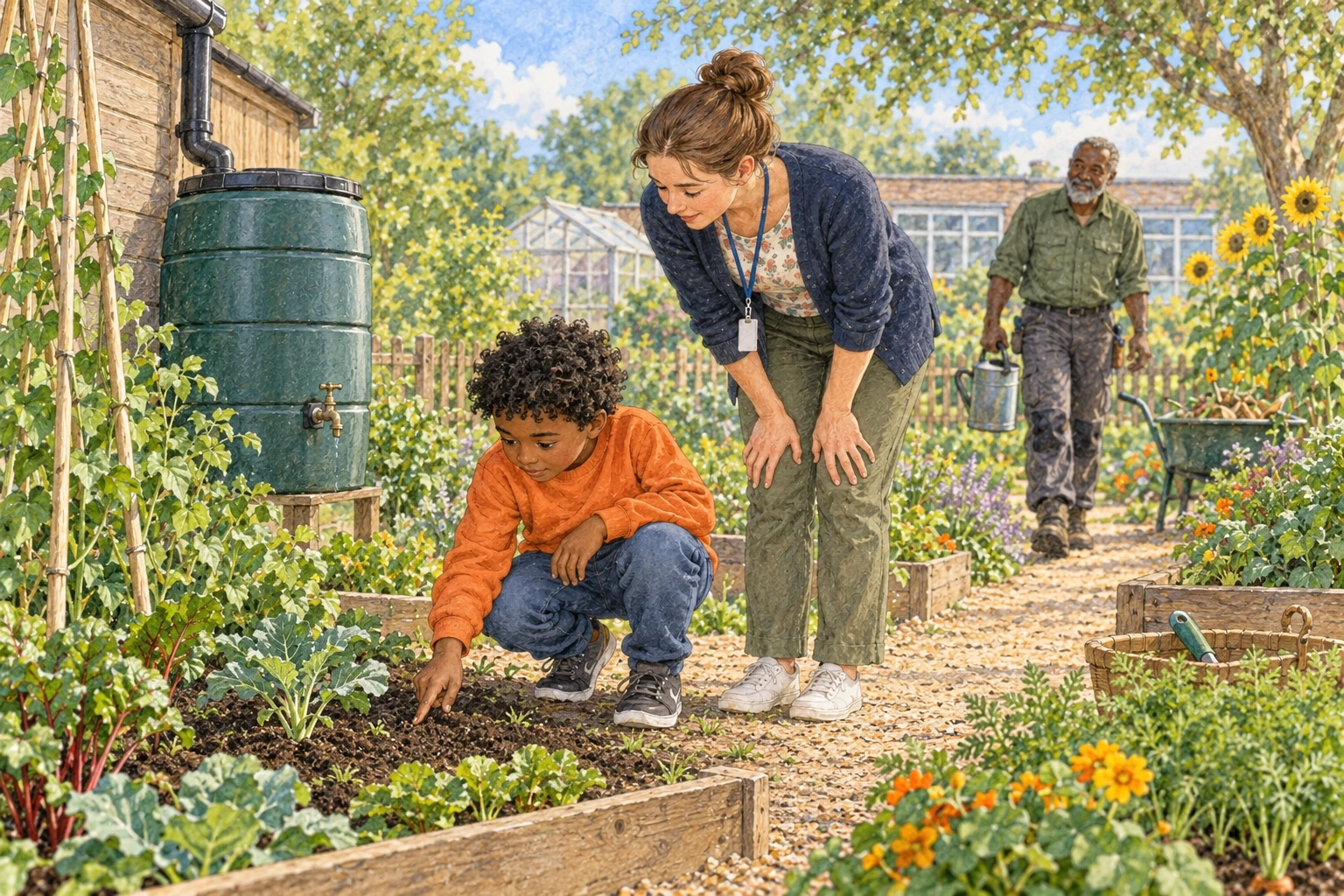
One group wanted to water every bed equally. Another suggested checking first. Noah pressed a finger into the soil beside a plant while Ms Green watched. “This bed is still damp,” he said. “We can leave it for now and check another.”
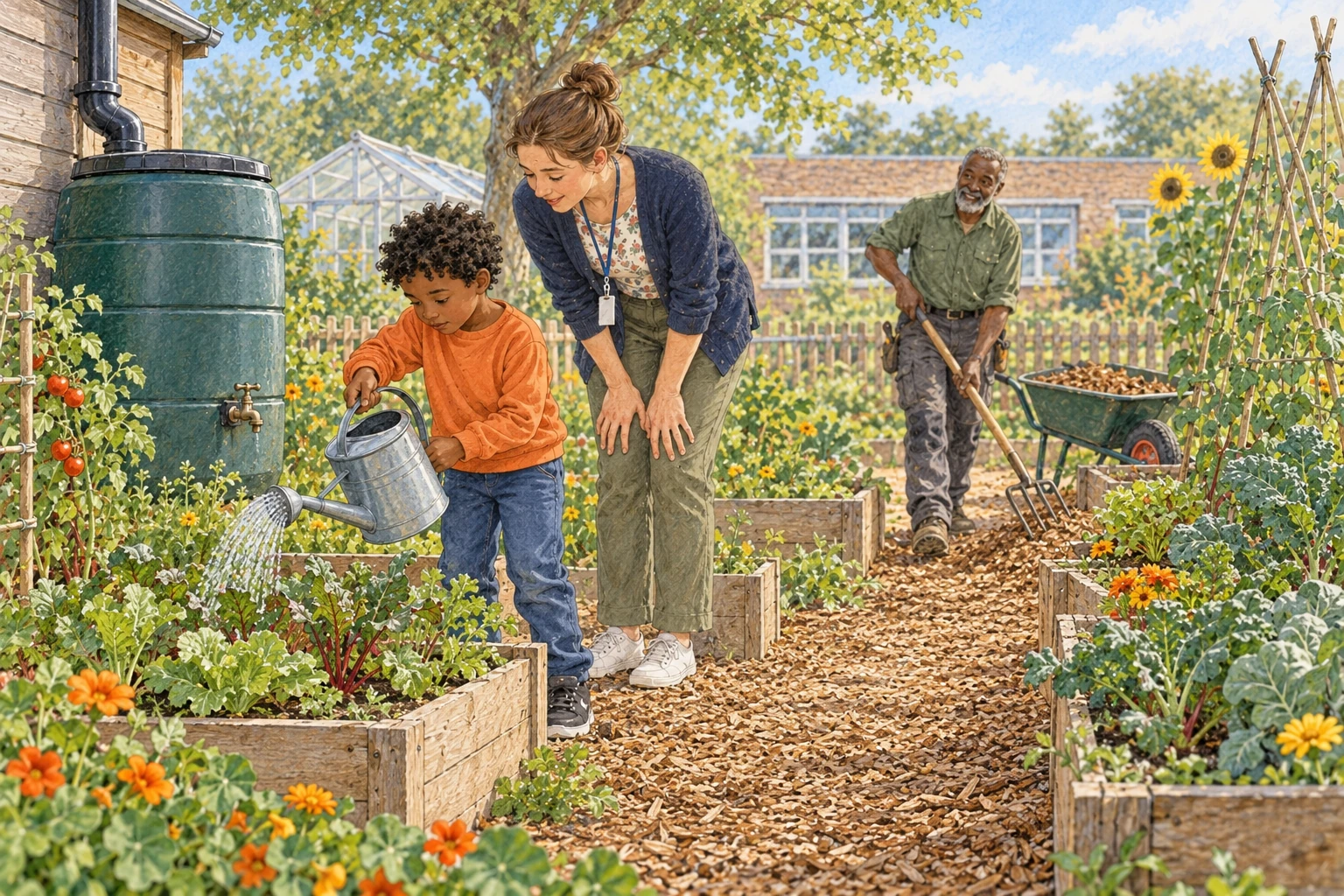
They agreed on a rota. With an adult, each group would check beds and water where needed. Mr Webb spread mulch around some plants to slow drying. The class kept paths clear and chose cans they could carry comfortably without spilling.
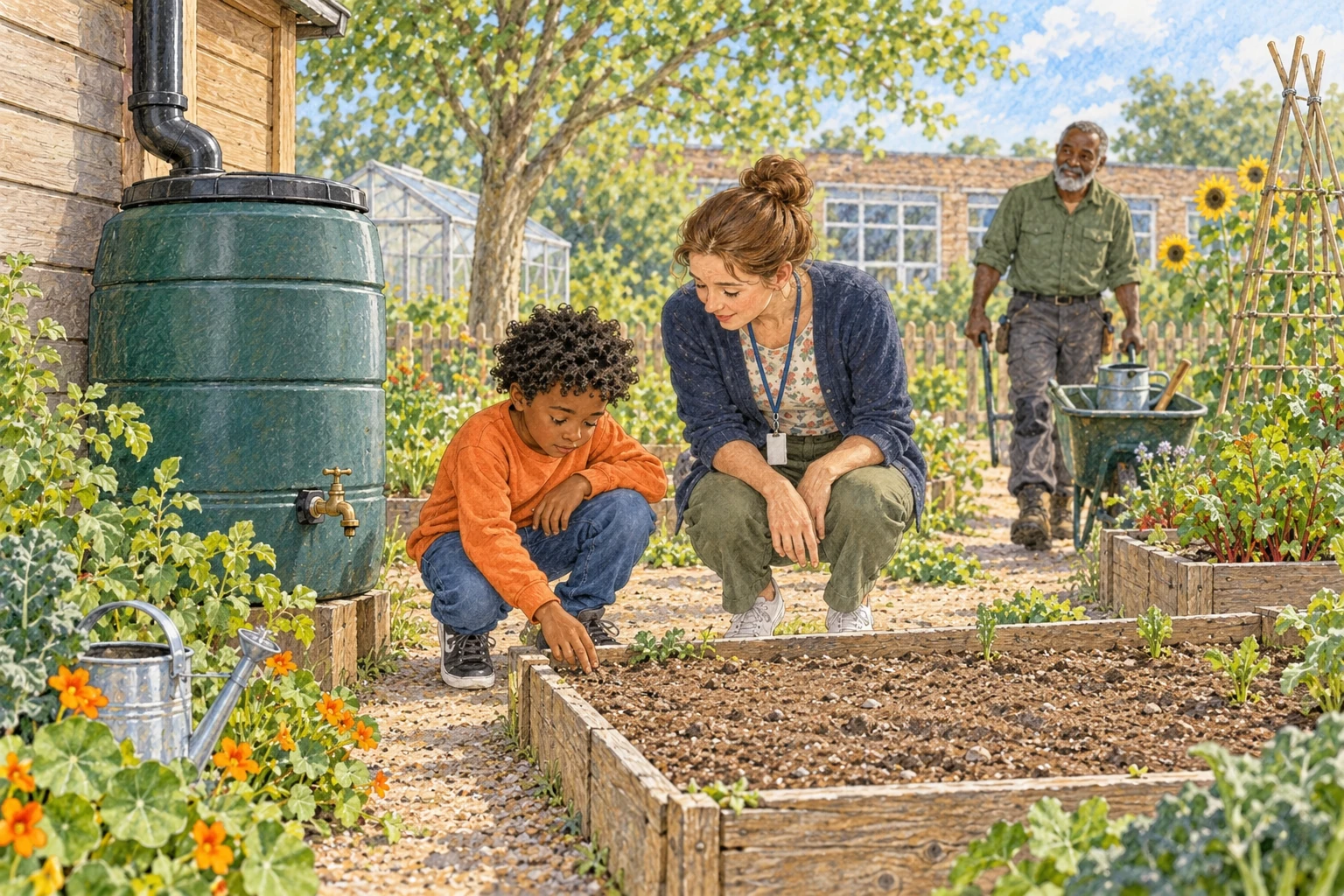
A week later, the repaired tap no longer dripped. Most plants looked healthy, but one sunny bed still dried quickly. The children changed their plan for that bed. “A plan needs checking,” said Noah. “It is not finished just because we wrote it.”
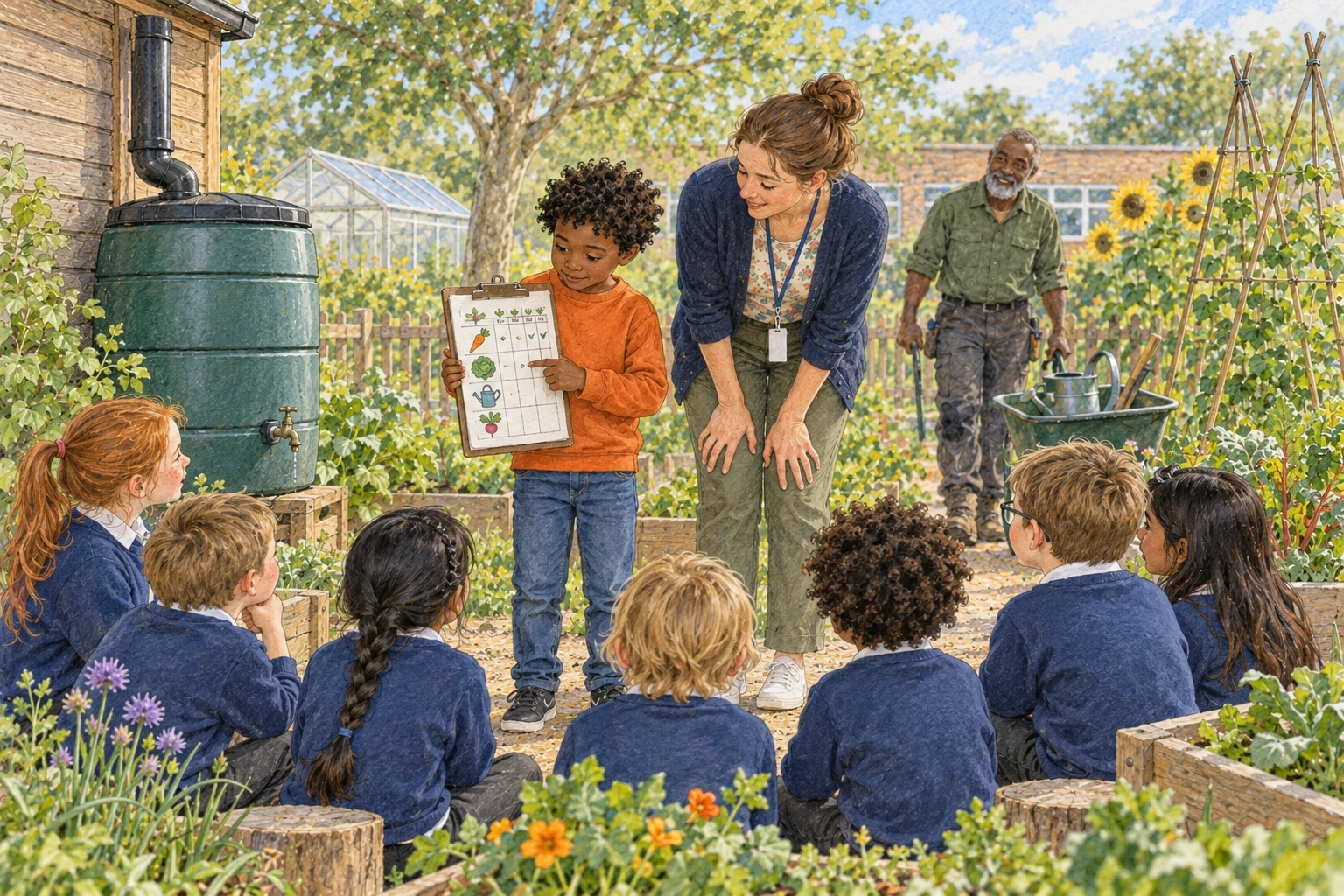
Noah showed another class the rota. He explained the barrel, soil checks and repaired tap. Saving water did not mean leaving plants thirsty. It meant noticing waste, listening to advice and sharing the work of caring for a place.