
The Garden Ledger
School Readers · Level 19Eric counts the coins from the school seedling stall twice. Both times, the total is smaller than the amount written in the ledger. Julia checks the empty trays beside him. They sold nearly all their young plants, so the stall should have been a success. Mrs Stone brings a calculator to the classroom table and asks them to explain what each part of their record shows.
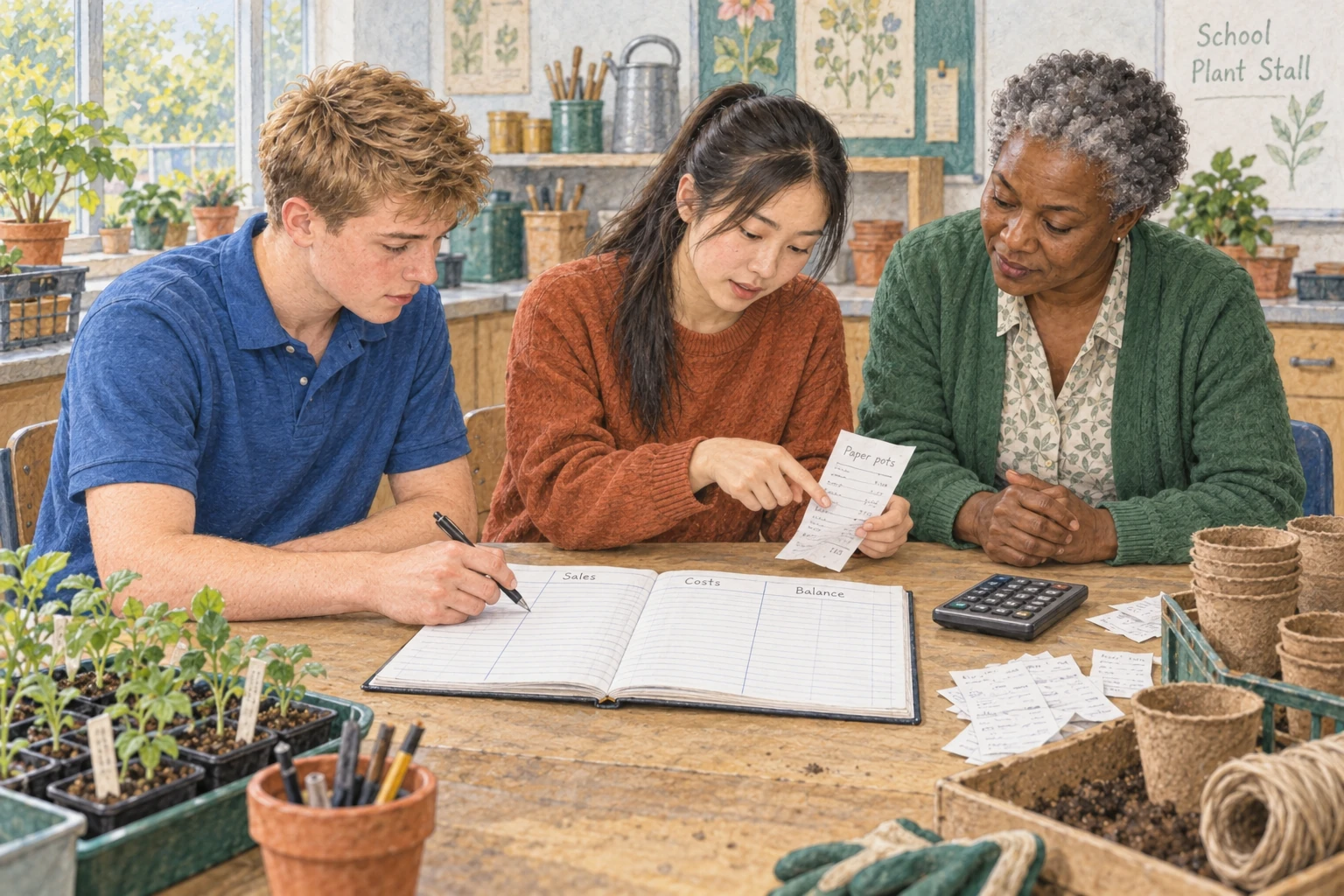
The ledger has three headings: sales, costs and balance. Eric has written every payment in the sales column. Julia points to a receipt for paper pots. “Did we pay for those from the stall money?” she asks. Eric remembers handing Mrs Stone some coins before lunch. He had planned to record the purchase later, but the next customer arrived before he reached for his pen.

They find the receipt beneath a tray label. Eric enters the cost and subtracts it from the sales total. Now the figures are closer, but they still do not match the coins. He feels his face grow warm. Julia suggests counting again, although they have already checked twice. Mrs Stone asks them to look at the records before doing the same task for a third time.

Julia places the order sheet beside the ledger. One row has a customer’s name and the words “collect tomorrow”. Eric remembers the order clearly. He added its price when the customer chose the plants, but no payment changed hands. The plants are still waiting in a separate tray. An order and a sale have become mixed together in the same column.

Eric crosses out that entry with one neat line, leaving the original figure readable. He writes a note explaining the change. Julia marks the order as waiting for collection and payment. When they calculate the balance again, it matches the coins on the table. Eric lets out a long breath. No money has vanished; their record had been telling two different stories at once.
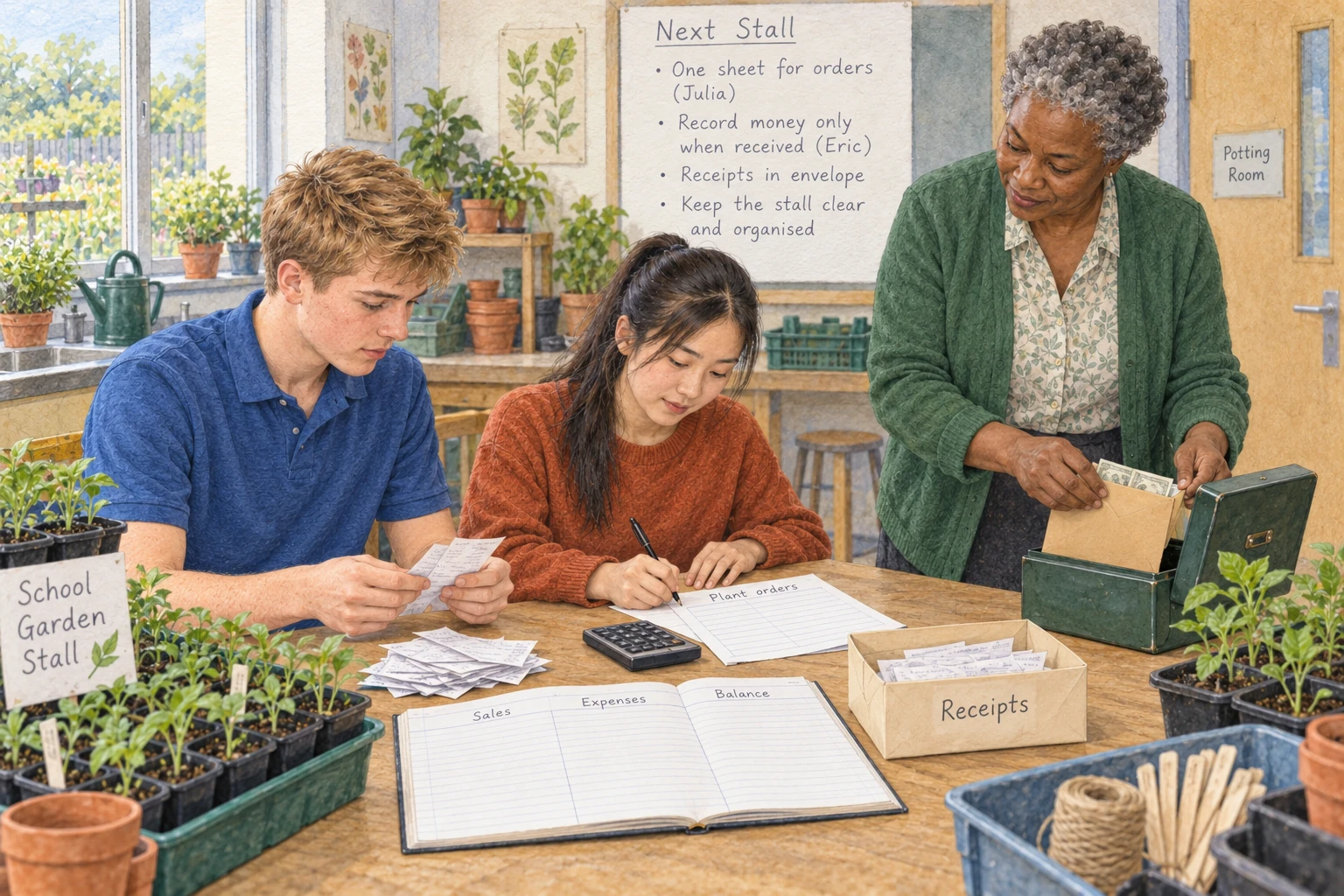
They decide how to keep the next stall clearer. Julia will write orders on one sheet, and Eric will record money only when it is received. Receipts will go in an envelope beside the ledger instead of under labels. Mrs Stone checks their plan and puts the stall money away. The students practise with pretend payments before packing the plants for the following day.

At lunchtime the next day, the customer returns for the reserved seedlings. Julia finds the correct tray while Mrs Stone handles the payment with Eric. This time, he enters the amount straight away. Julia draws a line through the completed order and adds a collection mark. The jobs take only a moment because they know which record each detail belongs in.

After the stall, Eric checks the new balance against the counted money. It matches on the first attempt. He shows Julia the envelope, with every receipt inside. She laughs when he checks beneath the tray labels as well. He is not expecting another hidden cost, but he wants to be sure that nothing has slipped out of their new system.
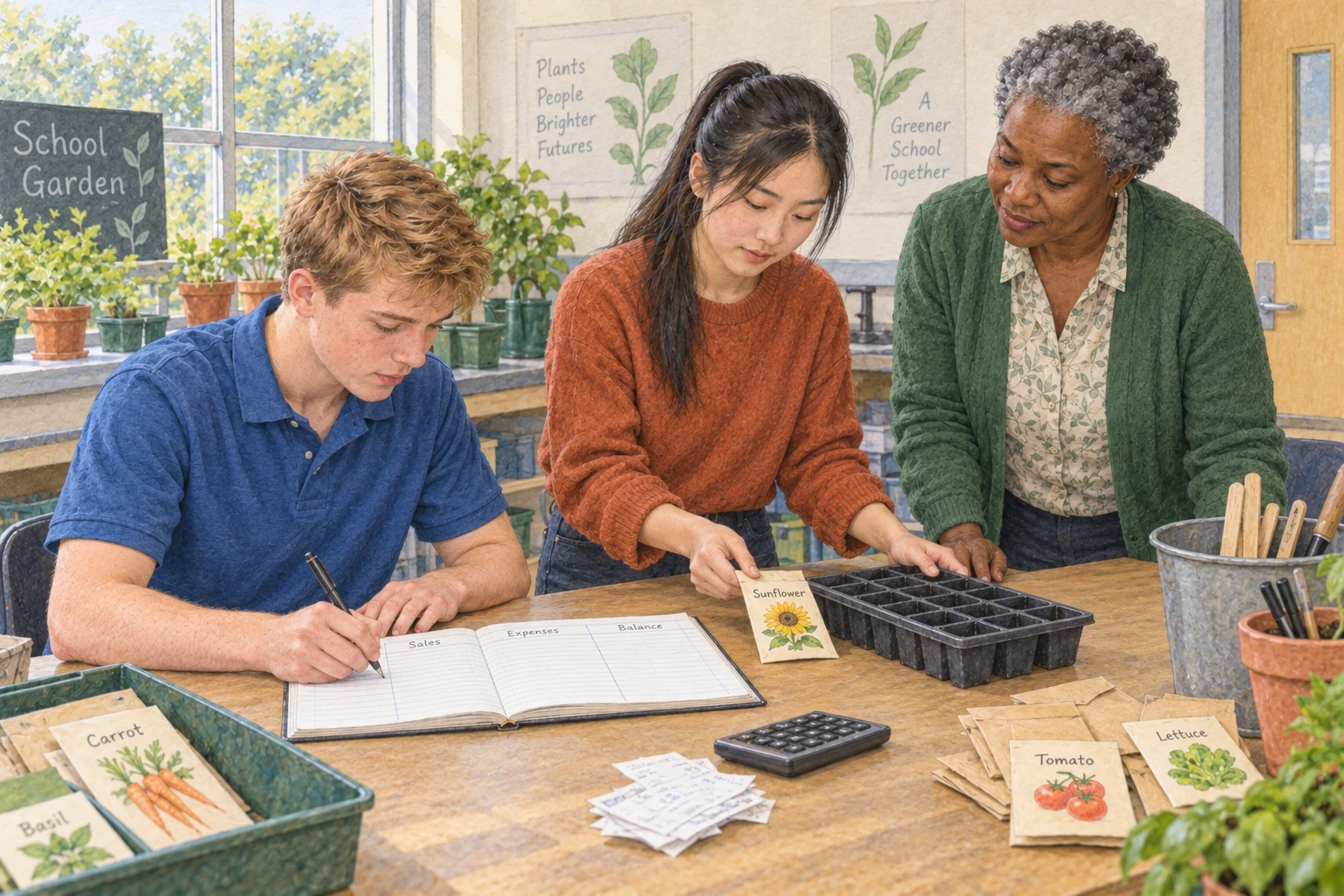
Their class uses the remaining money to buy more seeds through Mrs Stone. Eric writes the cost before putting down his pen. The ledger is not the most colourful part of the garden project, yet he understands its value now. A clear record helps the class know what it can do next. Beside the new seed packet, Julia places a clean tray ready for another beginning.